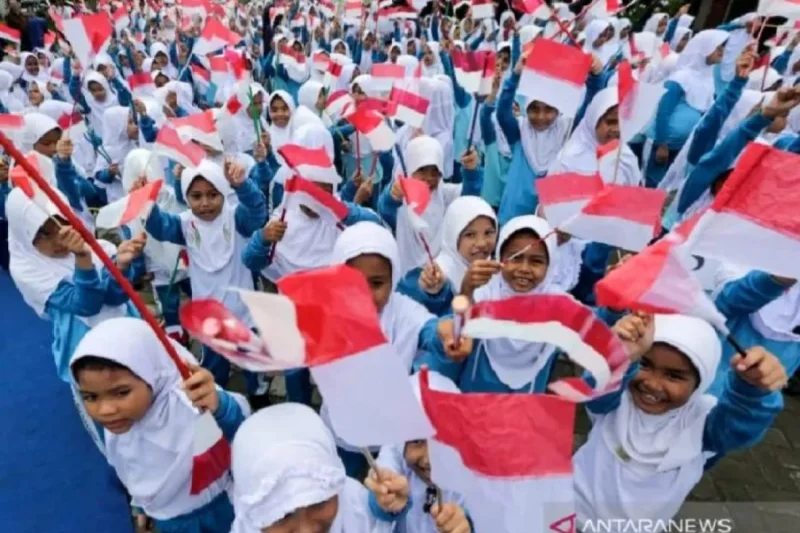
The annual commemoration of National Children’s Day (Hari Anak Nasional or HAN), observed every July 23, remains a pivotal moment for Indonesia to galvanize public awareness regarding the fulfillment of children’s rights and the necessity of robust protection mechanisms. In 2026, the 42nd anniversary of this national observance serves as more than a ceremonial date; it acts as a critical evaluation point for the nation’s progress in ensuring that every child can live, grow, develop, and be shielded from violence, discrimination, and exploitation. As Indonesia marches toward its "Golden Indonesia 2045" vision, the well-being of its approximately 80 million children has transitioned from a social concern to a core pillar of national security and economic stability.
The contemporary significance of National Children’s Day has evolved far beyond the festivities of decades past. Today, it represents a reinforced commitment from all sectors of society—government, private industry, and the grassroots community—to cultivate an environment that is safe, healthy, and child-friendly. This commitment is underpinned by the realization that the quality of today’s youth directly dictates the trajectory of the nation. By prioritizing children, Indonesia is essentially investing in its future human capital, ensuring that the next generation of leaders, innovators, and citizens are equipped with the physical health and psychological resilience necessary to navigate an increasingly complex global landscape.
Historical Foundations and Legislative Evolution
The roots of National Children’s Day are deeply embedded in Indonesia’s constitutional and legislative history. The fundamental mandate for child protection is enshrined in the 1945 Constitution of the Republic of Indonesia. Specifically, Article 28B, Paragraph (2) explicitly states that every child has the right to survival, growth, and development, as well as the right to protection from violence and discrimination. This constitutional bedrock has guided decades of policy-making aimed at elevating the status of children within the Indonesian legal framework.
A significant turning point occurred on July 23, 1979, with the enactment of Law Number 4 of 1979 concerning Child Welfare. This legislation was the first of its kind to comprehensively address the state’s responsibility in ensuring the welfare of children as an integral component of national development. To honor the spirit of this law, the government, under Presidential Decree Number 44 of 1984, officially designated July 23 as National Children’s Day. Since its inception, the day has functioned as a catalyst for social change, encouraging widespread participation in child-rearing practices that align with international standards of human rights.
Over the years, the legal landscape has continued to mature. The introduction of Law Number 23 of 2002 regarding Child Protection, which was later refined by Law Number 35 of 2014, marked a shift toward a more holistic and proactive approach. These updates clarified the specific responsibilities of the state, regional governments, families, and guardians. The revised laws expanded the scope of protection to address modern grievances, including human trafficking, economic exploitation, and the systemic abandonment of children. By 2026, these regulations have become the primary instruments for holding perpetrators of child abuse accountable and ensuring that victims receive the necessary rehabilitative support.
Addressing the Challenges of the Digital Frontier
In the current era, the definition of a "safe environment" for children has expanded significantly. While physical safety remains paramount, the digital landscape presents a new frontier of risks. The 2026 commemoration of National Children’s Day places a heavy emphasis on protection within the cyber realm. With the proliferation of internet access across the archipelago, children are increasingly vulnerable to online grooming, cyberbullying, and exposure to inappropriate content.
Data from various child protection agencies suggest that digital literacy for parents and guardians is now as critical as traditional education. The government has responded by integrating digital safety into the broader child protection agenda. This includes regulating digital platforms to ensure stricter age verification and promoting "healthy internet" initiatives. The 2026 agenda highlights that the right to protection now includes the right to a safe digital identity and the prevention of data exploitation involving minors.
The 2026 Theme: Love Children, Protect and Build the Future
For the 42nd anniversary, the government has introduced the theme "Sayang Anak, Lindungi dan Bangun Masa Depan" (Love Children, Protect and Build the Future). This theme is not merely a slogan but a strategic directive aimed at fostering a culture of compassion and vigilance. It calls for a paradigm shift in how society views child-rearing—moving away from authoritarian or neglectful models toward a nurturing approach that values the child’s voice and agency.
The "Love" aspect of the theme emphasizes the psychological necessity of a supportive family environment. Scientific research consistently shows that children raised in loving, stable homes exhibit higher cognitive functions and better emotional regulation. The "Protect" element focuses on the systemic safeguards required to prevent physical and mental harm, while "Build the Future" underscores the long-term goal of providing children with equal access to quality education and healthcare.
Strategic Initiatives and Field Implementations
The 2026 National Children’s Day is marked by several high-impact initiatives across the country. One of the most significant symbolic and practical gestures was the announcement by the Ministry of Immigration and Correctional Affairs regarding the reduction of sentences for 1,050 juvenile inmates (anak binaan). This move is part of a broader shift toward restorative justice, acknowledging that children who commit offenses are often victims of their circumstances and require rehabilitation rather than purely punitive measures.
In border regions, such as Sebatik, the government has accelerated the issuance of Child Identity Cards (Kartu Identitas Anak or KIA). The KIA is more than a piece of plastic; it is a gateway to state services, including health insurance and educational subsidies. By prioritizing children in remote and underdeveloped areas, the state is fulfilling its promise of inclusivity, ensuring that geographical distance does not equate to a lack of rights.
Furthermore, public infrastructure is being leveraged to educate the younger generation. In Jakarta, the Transjakarta bus system has launched programs to introduce children to public transportation and urban etiquette. These initiatives aim to foster a sense of civic responsibility and environmental awareness from an early age, demonstrating that every aspect of public life can be an educational opportunity.
Statistical Context and Socio-Economic Implications
To understand the magnitude of the task at hand, one must look at the data surrounding Indonesia’s youth. As of the mid-2020s, children make up approximately one-third of Indonesia’s total population. While the poverty rate has seen a gradual decline, millions of children still face nutritional deficits, commonly referred to as stunting. Reducing the stunting rate is a top priority for the administration, as it is directly linked to the future productivity of the workforce.
According to reports from the Ministry of Women Empowerment and Child Protection (KemenPPPA), there has been a recorded increase in the reporting of child abuse cases. While this may seem alarming, sociologists argue that it indicates a positive trend: the breaking of the "culture of silence." More families are now aware of their rights and are willing to engage with legal authorities to protect their children. This increase in reporting has necessitated an expansion of the Integrated Service Center for the Empowerment of Women and Children (P2TP2A) across various regencies.
The Role of Restorative Justice and Legal Reform
A key focus of the 2026 discussions is the "Restorative Path" for children in conflict with the law. Traditional incarceration has often been criticized for its high recidivism rates and the potential for young offenders to be influenced by hardened criminals. The Indonesian judiciary is increasingly leaning toward diversion programs, where minor offenses are handled through mediation and community service rather than court proceedings.
This restorative approach aligns with the 2026 theme of "Protecting and Building." By focusing on the root causes of juvenile delinquency—such as poverty, lack of education, or broken homes—the state aims to reintegrate these children into society as productive citizens. Legal experts suggest that this shift not only benefits the child but also reduces the long-term social and economic costs associated with adult criminality.
Synergy and Collective Responsibility
The ultimate success of National Children’s Day lies in the synergy between various stakeholders. The government cannot act in isolation; it requires the active participation of the private sector to eliminate child labor and ensure ethical supply chains. It requires schools to be safe havens from bullying and "predatory" behavior. Most importantly, it requires families to be the first line of defense.
In 2026, there is a growing movement to make child protection a "daily culture" rather than a once-a-year topic. This involves training teachers to recognize signs of trauma, encouraging neighbors to look out for one another’s children, and empowering children themselves to know their rights and how to report grievances.
Conclusion: A Vision for the Future
As National Children’s Day 2026 concludes, the message remains clear: the quality of Indonesia’s future is being forged in the classrooms, playgrounds, and homes of today. The theme "Sayang Anak, Lindungi dan Bangun Masa Depan" serves as a reminder that every child is a national asset. The transition from ceremonial observance to substantive policy action is well underway, but the journey toward 2045 requires constant vigilance.
The commitment to child protection is not a static goal but a dynamic process that must adapt to new social, technological, and economic challenges. By ensuring that every child in Indonesia—from the bustling streets of Jakarta to the remote villages of Papua—is given the opportunity to thrive, the nation is securing its place on the global stage. National Children’s Day is thus a testament to Indonesia’s resolve to build a civilization characterized by justice, humanity, and a profound respect for the next generation. Through continued collaboration and unwavering dedication, the vision of a Golden Indonesia 2045 remains within reach, carried on the shoulders of a healthy, educated, and protected youth.