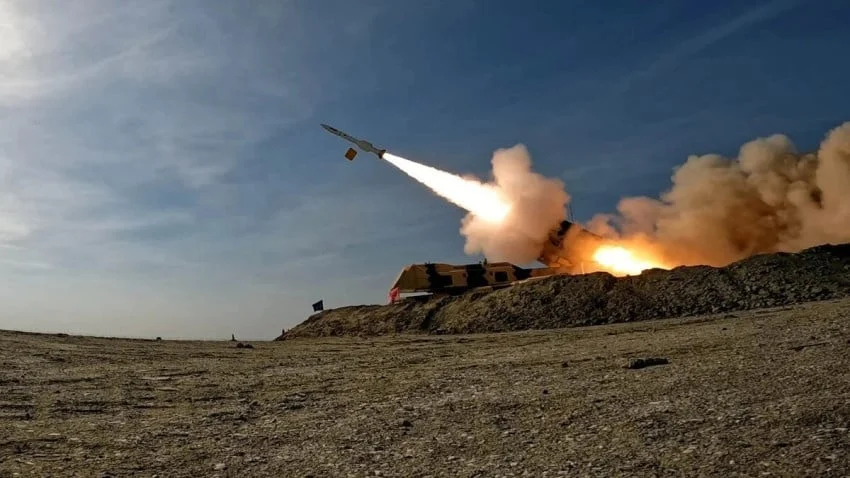
As the United States intensifies its campaign of economic sanctions and military posturing against Iran, Tehran has responded with a calculated strategy of retaliation, deliberately targeting civilian and military infrastructure across the Gulf states and Jordan, while conspicuously avoiding direct strikes against US naval assets stationed near its coasts and against Israel. This nuanced approach, according to military analysts and political observers, is designed to exert pressure on the administration of US President Donald Trump without inadvertently broadening the scope of the conflict into a full-scale regional war.
The tit-for-tat exchanges have seen Washington reportedly strike Iranian railway stations, power generation facilities, telecommunications networks, and critical drinking water infrastructure, aiming to cripple the nation’s ability to sustain its operations and daily life. In response, Iran’s Islamic Revolutionary Guard Corps (IRGC) has been observed launching counter-attacks against civilian airports, water treatment plants, and power generation facilities in neighboring Kuwait and Bahrain. This pattern of strikes reveals a strategic calculus that prioritizes regional, rather than direct superpower, confrontation, challenging the stability of the Gulf region without crossing what Iran perceives as a ‘red line’ that would provoke an overwhelming US military response.
The Rationale: Avoiding Direct Confrontation with US Naval Power
Military strategists offer several compelling reasons behind Iran’s decision to bypass direct engagement with US naval forces. The primary deterrent is the overwhelming firepower and advanced defensive capabilities of the US Navy, particularly the Fifth Fleet, headquartered in Bahrain, and its associated carrier strike groups operating in the Persian Gulf and Arabian Sea. Targeting such well-protected assets would almost certainly trigger a devastating, disproportionate response from the United States, a scenario Iran is keen to avoid.
Retired Lebanese Brigadier General and military analyst Elias Hanna articulated this logic, stating to Al Jazeera, "Targeting US naval assets would trigger a devastating American response." He further elaborated on the practical difficulties: "Another issue is that targeting naval assets is militarily difficult because they are protected and have advanced air defense systems." These naval platforms are equipped with sophisticated radar, missile defense systems like the Aegis combat system, and a formidable array of offensive capabilities, making any direct assault a high-risk, low-probability endeavor for Iran’s conventional forces. Moreover, a direct attack on US military personnel or hardware could escalate the conflict beyond the current shadow war, potentially inviting a comprehensive air campaign or even ground intervention, which Iran’s leadership is demonstrably seeking to prevent.
Targeting Regional Neighbors: A Complex Web of Justifications and Denials
The more perplexing aspect of Iran’s strategy is its consistent targeting of neighboring Arab states. Atifeh Taghiani, a professor of political science at the University of Tehran, offers a key justification for this approach. She argues that the United States has been utilizing Gulf states, particularly Kuwait, as staging grounds for its operations against Iranian civilian infrastructure. This perspective posits that Iran’s strikes on these countries are not unprovoked aggression but rather a defensive measure, aimed at disrupting the logistical and operational backbone of US military presence in the region.
During what Iranian officials termed the "first round of the US-Israel war against Iran" in March and April, Tehran explicitly justified its attacks on Gulf states by claiming that US operations were being launched from military bases within their territories. This argument has persisted, despite repeated and vehement denials from the Gulf states themselves. Countries like Kuwait, Bahrain, and the UAE have consistently affirmed their neutrality and asserted that they would not permit their sovereign territory to be used for launching attacks against Iran. This narrative, however, has only served to deepen the diplomatic chasm and exacerbate the sense of alienation between Tehran and its immediate neighbors, who perceive themselves as unwilling collateral in a larger geopolitical struggle. The strategic ambiguity created by Iran’s claims, regardless of their veracity, serves to complicate regional alliances and pressure these states to reconsider their level of cooperation with the US.
Escalating Tensions: A Chronology of the US-Iran Standoff
The current state of heightened US-Iran tensions is not an isolated incident but the culmination of a series of events stretching back years, significantly exacerbated by the Trump administration’s policies.
- May 2018: The US unilaterally withdraws from the Joint Comprehensive Plan of Action (JCPOA), the landmark nuclear deal signed in 2015. President Trump calls it "the worst deal ever" and announces a "maximum pressure" campaign to force Iran back to the negotiating table for a "better deal."
- August 2018 onwards: The US reimposes severe economic sanctions on Iran, targeting its oil exports, banking sector, and other vital industries. These sanctions devastate Iran’s economy, leading to a sharp currency depreciation, high inflation, and widespread public discontent.
- May 2019: Tensions escalate dramatically. The US deploys an aircraft carrier strike group, B-52 bombers, and Patriot missile systems to the region, citing unspecified threats from Iran. Multiple commercial oil tankers are attacked in the Gulf of Oman, with the US blaming Iran. Iran denies involvement.
- June 2019: Iran shoots down a US RQ-4 Global Hawk surveillance drone over the Strait of Hormuz, claiming it violated Iranian airspace. The US confirms the drone was shot down but insists it was in international airspace. President Trump reportedly orders retaliatory strikes but calls them off at the last minute, citing potential casualties.
- July 2019: Iran begins to incrementally breach the terms of the JCPOA, exceeding limits on uranium enrichment and stockpiles, stating these actions are in response to European nations’ failure to mitigate the impact of US sanctions.
- September 2019: Major drone and missile attacks target Saudi Aramco oil facilities, significantly disrupting global oil supplies. The US and Saudi Arabia blame Iran, which denies responsibility, with Yemen’s Houthi rebels claiming credit.
- January 2020: A US drone strike kills Qassem Soleimani, commander of the IRGC’s Quds Force, in Baghdad. Iran retaliates with ballistic missile strikes on two Iraqi bases housing US troops, causing no fatalities but numerous traumatic brain injuries. This period marks a peak in direct military confrontation.
- March-April 2020 (as referenced in the original article): This period likely refers to a phase where US "cyber-attacks" or covert operations targeting Iranian infrastructure intensified, leading to Iran’s "first round" of retaliatory strikes on Gulf states. This reflects a shift from overt military action to more covert and asymmetric forms of conflict.
The "Maximum Pressure" Campaign and Its Impact
The US "maximum pressure" campaign is a comprehensive strategy designed to isolate Iran economically and diplomatically, force it to renegotiate the nuclear deal, cease its ballistic missile program, and end its support for regional proxy groups. The economic impact on Iran has been severe. Oil exports, once Iran’s primary source of revenue, have plummeted from over 2.5 million barrels per day before sanctions to a fraction of that. The Iranian Rial has significantly depreciated, inflation has soared, and access to international financial markets has been severely curtailed. This economic strangulation has led to widespread discontent among the Iranian populace, exacerbating existing social and political tensions.
From Tehran’s perspective, the US campaign is an act of economic warfare, a deliberate attempt to destabilize the regime and inflict hardship on its people. This perception fuels Iran’s determination to resist and seek ways to retaliate without directly confronting the US military might. Its asymmetric strategy, targeting economic and civilian infrastructure in neighboring countries, serves multiple purposes: it demonstrates Iran’s capability to inflict pain, signals its unwillingness to be intimidated, and seeks to raise the cost of the US campaign for regional allies, potentially pressuring them to distance themselves from Washington.
Official Reactions and Diplomatic Fallout
The diplomatic fallout from this escalating proxy conflict has been significant.
- United States: US officials have consistently condemned Iranian attacks, reiterating their commitment to protecting American interests and allies in the region. While maintaining a tough stance, the Trump administration has also signaled a willingness for de-escalation, often offering dialogue even amidst escalating tensions. They view Iran’s actions as destabilizing and a threat to global shipping and energy security.
- Iran: Iranian officials, while denying direct involvement in some attacks (e.g., Saudi Aramco), have openly asserted their right to self-defense against US aggression and sanctions. They frame their actions as proportionate responses to US provocations and economic warfare. They continue to call for the lifting of sanctions and adherence to the JCPOA.
- Gulf States (Kuwait, Bahrain, UAE, Saudi Arabia): These nations find themselves in a precarious position. While hosting US military bases and relying on American security guarantees, they are also geographically vulnerable to Iranian retaliation. Their official statements often express strong condemnation of Iranian aggression, call for regional de-escalation, and emphasize their sovereign neutrality. Their repeated denials of allowing their territory to be used for attacks on Iran underscore their desire to avoid becoming direct battlegrounds. The delicate balance they must strike between their alliance with the US and their immediate regional security is a constant challenge.
- Jordan: Jordan, geographically further from the immediate Gulf, has also found itself drawn into the Iranian narrative of potential targets. While not a direct party to the Gulf disputes, its stability is crucial for regional security.
- International Community: International bodies like the UN and the European Union have consistently called for de-escalation and a diplomatic resolution. European powers, keen on preserving the JCPOA, have attempted to mediate between the US and Iran, but with limited success, often caught between US sanctions and Iran’s demands.
Expert Analysis: Balancing Deterrence and De-escalation
Analysts widely agree that Iran’s strategy is a sophisticated form of asymmetric warfare, designed to impose costs on its adversaries while avoiding a catastrophic direct confrontation. "Iran’s tactics are a classic example of ‘deterrence by punishment’ coupled with ‘coercion by pain,’ " explains Dr. Sarah Ali, a Middle East security expert. "They can’t match the US militarily, so they choose targets where they have an advantage: vulnerable civilian infrastructure in allied states, proxies, and cyber warfare. This sends a clear message: ‘We can hurt you and your friends, so the cost of maximum pressure will not be borne by us alone.’ "
However, this strategy carries inherent risks. The potential for miscalculation remains high. A strike intended as a proportional response could inadvertently cause greater damage or casualties than anticipated, triggering an unintended escalation. The repeated targeting of Gulf states, even under the guise of responding to US operations, further alienates Iran from its neighbors, complicating any future attempts at regional de-escalation or cooperation. The narrative of US operations from Gulf bases, while serving as a domestic justification for Iran’s actions, is also a highly contentious claim that undermines trust.
Furthermore, the strategy tests the resolve of the US and its allies. If Iran’s attacks are perceived as ineffective or merely a nuisance, it may encourage further US pressure. Conversely, if they succeed in raising the cost for regional allies, it could strain the US alliance structure in the Gulf. The delicate balance Iran seeks to maintain between deterrence and de-escalation is a tightrope walk with severe consequences for any misstep.
Broader Implications for Regional Stability
The implications of this protracted standoff and Iran’s asymmetric response extend far beyond the immediate belligerents.
- Economic Instability: The persistent threat of attacks on oil infrastructure and shipping lanes in the Persian Gulf and Strait of Hormuz creates immense volatility in global energy markets, impacting oil prices and supply chains worldwide.
- Humanitarian Concerns: Prolonged economic sanctions on Iran exacerbate humanitarian crises, limiting access to essential goods, medicines, and services for the Iranian populace.
- Regional Proxy Wars: The US-Iran rivalry fuels proxy conflicts across the Middle East, from Yemen to Iraq and Syria, perpetuating instability and human suffering.
- Arms Race: The heightened tensions encourage regional states to invest more heavily in military capabilities, potentially leading to a dangerous arms race.
- Erosion of Trust: The constant accusations and counter-accusations erode trust among regional actors, making future diplomatic solutions more challenging.
In conclusion, Iran’s strategic choice to target its regional neighbors while avoiding direct military confrontation with the United States represents a calculated attempt to navigate a complex and dangerous geopolitical landscape. It is a strategy born of necessity, leveraging asymmetric capabilities to resist overwhelming US pressure. While effective in demonstrating resolve and imposing costs, it carries significant risks of miscalculation and further regional destabilization. The continued adherence to this strategy underscores the precarious balance of power in the Middle East, where the line between calculated pressure and outright conflict remains perilously thin. The ultimate outcome hinges on the ability of all parties to find a diplomatic off-ramp, a prospect that appears increasingly distant amidst the current cycle of escalation and retaliation.