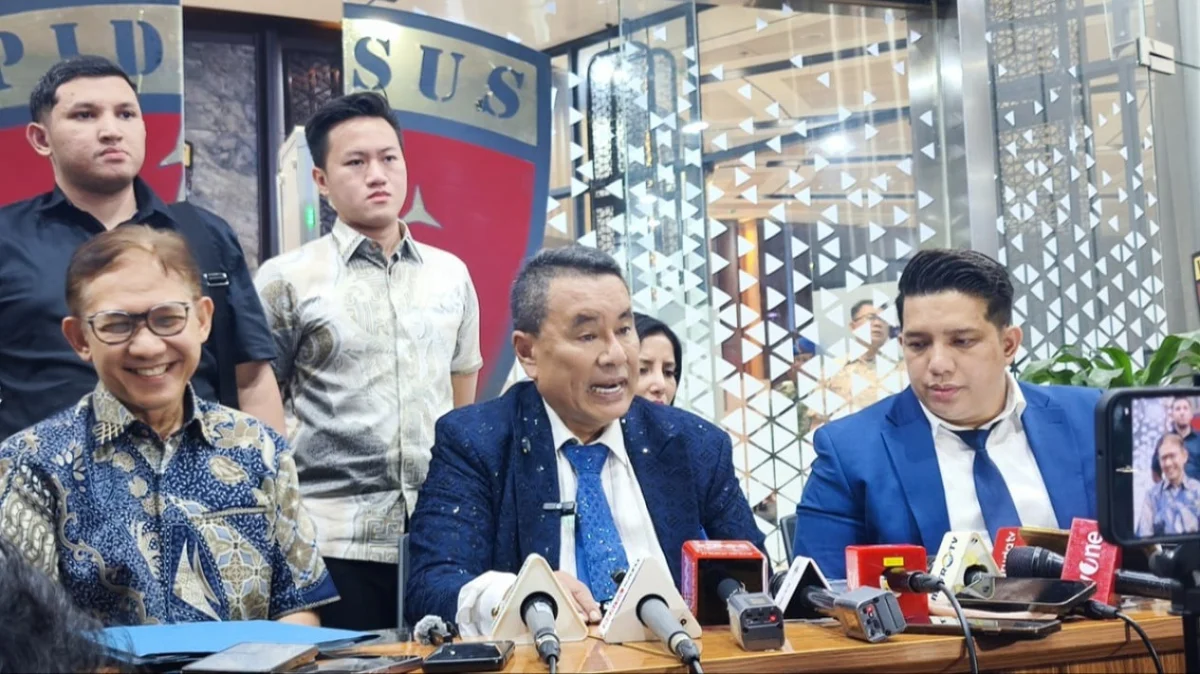
Jakarta, VIVA – The Jakarta Metropolitan Police (Polda Metro Jaya) has confirmed its intention to summon prominent lawyer Hotman Paris Hutapea for questioning regarding two separate reports filed against him by leading journalistic organizations. The reports allege that statements made by the celebrated attorney were demeaning to the journalistic profession, sparking a significant legal and public debate concerning freedom of expression versus professional dignity. The police affirmed that while a summons is imminent, investigators are currently in the initial phase of thoroughly reviewing the complaints and evidence.
Komisaris Besar Polisi Budi Hermanto, Head of Public Relations for Polda Metro Jaya, stated on Wednesday, July 22, 2026, that "Yes, (the reported party will be summoned)." However, he clarified that the summons for Hotman Paris is not expected in the immediate future. The investigative process mandates an initial period for detectives to meticulously examine the received reports, including scrutinizing the statements provided by the complainants and evaluating the supporting evidence submitted. This preliminary phase is crucial for building a robust understanding of the allegations before proceeding with further interrogations. "Investigators will review the report and will delve deeper into the complainants and evidence," Kombes Pol Budi Hermanto explained, emphasizing the methodical approach being taken.
Chronology of Allegations and Formal Complaints
The controversy surrounding Hotman Paris began to escalate publicly when his statements, perceived as disparaging towards journalists, drew the ire of the Persatuan Wartawan Indonesia (PWI), the nation’s largest and oldest professional organization for journalists. Despite an apology issued by Hotman Paris, the PWI deemed his retraction insufficient to address the gravity of the perceived insult to their profession.
On Monday, July 20, 2026, the PWI officially lodged a complaint against Hotman Paris at Polda Metro Jaya. The report, registered under number LP/B/5291/VII/2026/SPKT/POLDA METRO JAYA, was filed by Anrico Pasaribu, the Head of Legal Defense and Guidance for PWI Pusat. The complaint cited Article 242 of Law Number 1 Year 2023, which pertains to the new Criminal Code (KUHP). While Article 242 typically relates to false testimony, the PWI’s decision to invoke this specific article suggests a strategic legal interpretation of how Hotman Paris’s public statements could be construed within the framework of the new legislation.
Edison Siahaan, Director of Anti-Violence for PWI Pusat, elaborated on the organization’s rationale for pursuing legal action. He stated, as quoted on Tuesday, July 21, 2026, "The Central Indonesian Journalists Association wants to report someone who said that journalists don’t have brains, you know. As we know, journalists are very intelligent." Siahaan stressed that the legal recourse was imperative because the organization viewed Hotman’s remarks as a direct assault on the dignity and intellectual capacity inherent in the journalistic profession. He firmly articulated that a mere apology, in this context, could not adequately resolve the profound offense caused by the statements.
Adding to the legal pressure, a second journalistic organization, Media Independen Online (MIO) Indonesia, followed suit a day later. On Tuesday, July 21, 2026, MIO Indonesia also reported Hotman Paris to Polda Metro Jaya for similar allegations of insulting the journalistic profession. Their report was registered under number LP/B/5298/VII/2026/SPKT/POLDA METRO JAYA. MIO Indonesia’s complaint invoked a broader range of legal provisions, including Articles 433, 436, and 441 of Law Number 1 Year 2023 (the new KUHP), which generally address defamation, insult, and public incitement. Crucially, MIO Indonesia also cited Article 18 Paragraph (1) Juncto Article 4 Paragraph (2) and Paragraph (3) of Law Number 40 Year 1999 concerning the Press. These articles are specifically designed to protect the freedom of the press and prevent actions that hinder journalistic work or undermine the dignity of the profession.
Asep Yusuf Setyabudi Prayogie, Chairman of MIO Indonesia, articulated the organization’s position, stating that Hotman Paris’s public statements "have exceeded the limits of criticism against journalistic work." This sentiment underscores a core contention in the case: the distinction between legitimate critique of media practices and what is perceived as an outright attack on the fundamental integrity and intelligence of journalists.
Background and Context: The Prominence of Hotman Paris Hutapea
Hotman Paris Hutapea is one of Indonesia’s most recognizable and flamboyant lawyers. Known for his high-profile celebrity clients, luxurious lifestyle, and frequent appearances in mass media, including television talk shows and social media, he has cultivated a public persona that often courts controversy. His outspoken nature and willingness to engage in public discourse on various legal and social issues have made him a household name. This high visibility means that any statement he makes carries significant weight and can quickly gain widespread attention, both positive and negative.
His legal career spans decades, marked by involvement in numerous landmark cases, often representing powerful individuals and corporations. This extensive experience and public presence have solidified his status as a legal luminary. However, this same prominence also places him under intense scrutiny, particularly when his remarks touch upon sensitive professional ethics or public sentiment. The current dispute with journalistic organizations highlights the delicate balance public figures must maintain between exercising their freedom of expression and respecting the professional dignity of other societal pillars, such as the press.
The Legal Framework and Broader Implications
The legal articles cited in the complaints provide insight into the specific grievances of the journalistic organizations and the potential ramifications for Hotman Paris.
-
Law No. 1 Year 2023 (New Criminal Code – KUHP): This new legislation, recently enacted, replaces the colonial-era Criminal Code and introduces several updated provisions.
- Article 242 (cited by PWI): As mentioned, this article typically deals with false testimony or perjury. While its application to "demeaning statements" might appear indirect, PWI’s legal team may be arguing that Hotman’s statements, if proven to be knowingly false or made with malicious intent to misrepresent the profession, could fall under a broader interpretation of this article’s spirit regarding public trust and factual integrity.
- Articles 433, 436, 441 (cited by MIO Indonesia): These articles generally pertain to offenses against honor and reputation, including defamation, insult, and public incitement to hatred or contempt. Such provisions aim to protect individuals and groups from malicious statements that could harm their standing in society. MIO’s invocation of these articles directly addresses the perceived attack on the journalistic profession’s dignity.
-
Law No. 40 Year 1999 on Press: This foundational law is crucial for safeguarding press freedom and regulating journalistic conduct in Indonesia.
- Article 18 Paragraph (1): This article outlines penalties for those who unlawfully hinder or obstruct the implementation of journalistic work, which is deemed an essential public function. While Hotman Paris’s statements are not direct physical obstruction, MIO might argue that his remarks create an environment of hostility or disrespect that indirectly hinders the effective and respected practice of journalism.
- Article 4 Paragraph (2) and (3): These paragraphs enshrine the right of the national press to seek, obtain, and disseminate ideas and information, and stipulate that the national press has the function of controlling, criticizing, correcting, and building public opinion. By allegedly demeaning journalists, MIO argues that Hotman Paris undermines these fundamental roles of the press in a democratic society.
The core of this legal dispute lies in the tension between freedom of speech, a right guaranteed to all citizens, and the protection of professional groups from unwarranted insults or attacks that could undermine their credibility and ability to perform their duties. While public figures are often subject to media scrutiny and criticism, and they, in turn, have the right to respond, there are legal boundaries that prevent outright defamation or the systematic demeaning of an entire profession. This case could set an important precedent for how such boundaries are interpreted and enforced under Indonesia’s new legal framework and existing press laws.
Reactions, Broader Context, and Potential Impact
Hotman Paris’s initial apology, which was not accepted by the journalistic organizations, indicates a perceived lack of sincerity or an underestimation of the offense caused. For PWI and MIO Indonesia, the issue transcends a personal slight; it represents a defense of the collective dignity and professionalism of all journalists in the country. Their determined stance underscores the vital role these organizations play in advocating for press freedom, protecting their members, and upholding ethical standards within the industry.
This incident is not isolated. There have been previous instances in Indonesia where public figures, including politicians and legal professionals, have faced criticism or legal action for statements perceived as insulting to various professions or groups. Such cases highlight a societal sensitivity towards maintaining mutual respect among different professional sectors, particularly those that serve the public interest.
The outcome of this investigation and potential legal proceedings could have several significant implications:
- Clarification of Legal Boundaries: The case may provide clearer judicial interpretations of what constitutes an "insult to a profession" under the new KUHP and the Press Law, particularly in the context of public statements made by prominent figures.
- Reinforcement of Press Dignity: A favorable outcome for the journalistic organizations could reinforce the protected status and professional dignity of journalists, sending a strong message that attacks on the profession will not be tolerated.
- Influence on Public Discourse: The case could influence how public figures engage with the media, potentially encouraging more measured and respectful criticism while still allowing for legitimate scrutiny.
- Role of Professional Organizations: It will further highlight the critical role of professional organizations like PWI and MIO in defending their members’ rights and upholding professional standards in the face of public challenges.
Next Steps and Outlook
As the Polda Metro Jaya continues its initial investigation, the focus remains on gathering and analyzing all pertinent information and evidence. The examination of the complainants and the submitted documents is a crucial precursor to the summoning of Hotman Paris. Once this preliminary phase is concluded, investigators will proceed with issuing the official summons.
The subsequent interrogation of Hotman Paris will be a pivotal moment, allowing him to provide his account and explanation regarding the controversial statements. Depending on the findings, the case could either be escalated to a formal investigation, potentially leading to a prosecution, or it could be dropped if insufficient evidence is found to support the allegations. The legal battle, if it proceeds to court, is likely to attract considerable public and media attention, given the high profile of the individuals and organizations involved, and the fundamental issues of press freedom and professional respect at stake. The judicial process will ultimately determine whether Hotman Paris’s remarks crossed the line from protected speech into legally actionable offense.