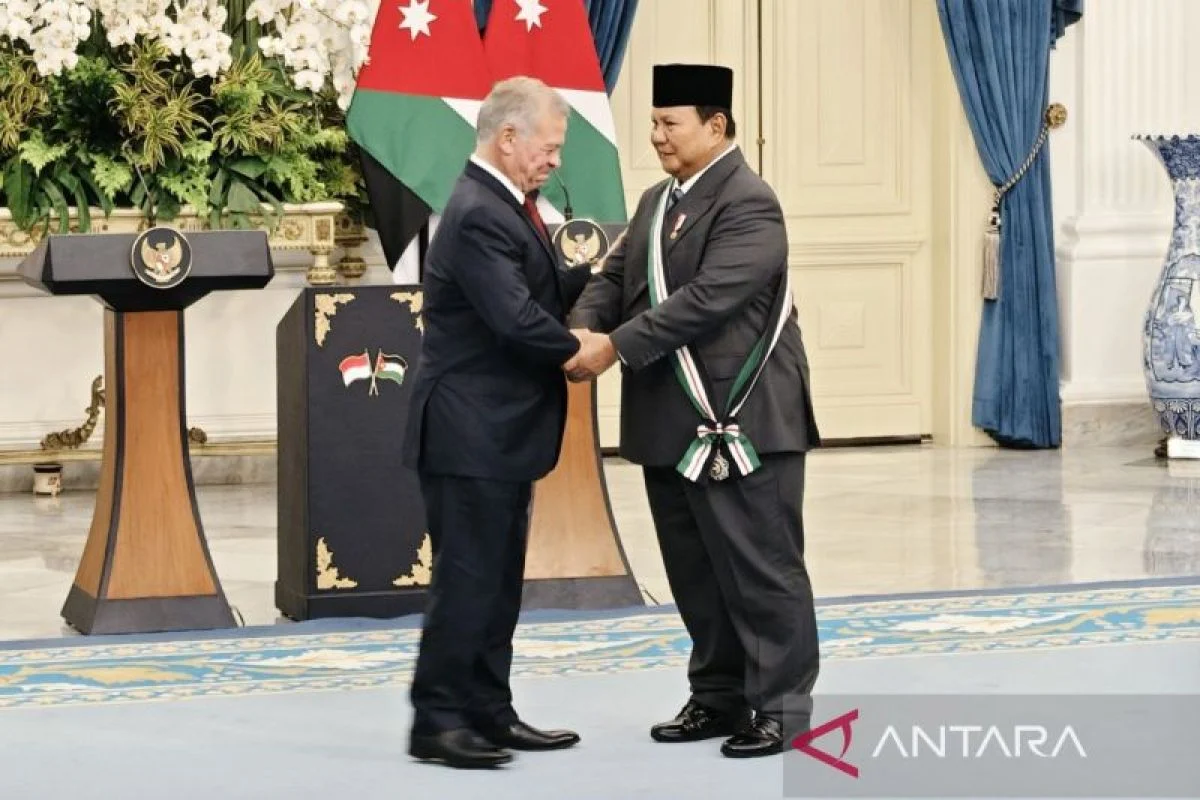
The King of the Hashemite Kingdom of Jordan, His Majesty Abdullah II bin Al-Hussein, is scheduled to arrive in Jakarta on Friday afternoon for a high-profile state visit aimed at cementing diplomatic relations and expanding economic cooperation between the two nations. The visit marks a significant milestone in the bilateral relationship, as it brings together two leaders who share a profound and well-documented personal history spanning over three decades. During his stay, King Abdullah II is slated to hold a restricted meeting with President Prabowo Subianto at the Merdeka Palace, followed by a series of high-level discussions with representatives from Danantara, Indonesia’s newly established investment management agency. The visit will culminate in the signing of several Memoranda of Understanding (MoU) designed to enhance cooperation in strategic sectors, including defense, food security, and investment.
This diplomatic mission to Jakarta is part of a broader Asian tour by the Jordanian monarch, which includes scheduled stops in Japan, Vietnam, Singapore, and Pakistan. The tour underscores Jordan’s strategic "Look East" policy, seeking to diversify its international partnerships and tap into the economic dynamism of the Asia-Pacific region. For Indonesia, the visit represents an opportunity to consolidate its influence in the Middle East and secure vital resources necessary for its national development programs.
A Meeting of Strategic Interests: The Role of Danantara and Phosphate Cooperation
One of the primary focal points of the King’s visit is the engagement with Danantara, the Indonesian Investment Authority (BPI) that functions as a super-holding company for state-owned enterprises. According to statements from the Indonesian Ministry of Foreign Affairs, a key agenda item involves the exploration of large-scale cooperation in the phosphate industry. Jordan is home to some of the world’s largest phosphate reserves, ranking as a top global producer and exporter of the mineral, which is a critical component in the production of NPK (nitrogen, phosphorus, and potassium) fertilizers.
For President Prabowo Subianto, whose administration has placed a heavy emphasis on national food security and the revitalization of the agricultural sector, securing a stable supply of phosphate is a matter of strategic importance. Indonesia’s massive agricultural expansion projects, particularly in regions like Merauke, require a consistent and affordable supply of fertilizer. By partnering directly with Jordan, Indonesia aims to bypass market volatilities and ensure the long-term viability of its domestic food production. The discussions with Danantara are expected to move beyond simple trade, potentially involving joint ventures in fertilizer production facilities and infrastructure development.
The Chronology of a Lifelong Friendship: From Fort Benning to the Presidency
The relationship between King Abdullah II and President Prabowo Subianto is unique in the world of international diplomacy, rooted not just in statecraft but in a personal bond that predates their current roles as heads of state. Both leaders are alumni of the prestigious United States Army Ranger School at Fort Benning (now Fort Moore), Georgia. This shared experience in one of the world’s most grueling military training programs forged a mutual respect and a common "warrior ethos" that has defined their interactions for thirty years.
The timeline of their friendship is marked by several key historical moments:
- December 1995: The First Meeting. The two leaders first met officially in Jakarta on December 4, 1995. At the time, Abdullah II was the Commander of Jordan’s Special Operations Command, while Prabowo Subianto was being inaugurated as the Commandant General (Danjen) of the Indonesian Special Forces (Kopassus). The meeting established a rapport based on their shared background in special operations.
- 1998: A Period of Exile and Hospitality. Following the political upheaval in Indonesia in 1998, Prabowo Subianto left the country and spent a significant period in Jordan. During this challenging time, King Abdullah II (then Prince) and his father, the late King Hussein, provided Prabowo with a warm welcome and high-level protection. Reports from that era suggest that Prabowo was even offered Jordanian citizenship as a gesture of ultimate trust and friendship, though he chose to remain an Indonesian citizen. This period solidified a "brotherhood" that transcended political tides.
- 1999: Accession to the Throne. Abdullah II became the King of Jordan in February 1999 following the passing of King Hussein. Throughout his reign, he has maintained a consistent dialogue with Prabowo, regardless of the latter’s political standing in Indonesia at any given time.
- 2014: State Visit to Indonesia. King Abdullah II visited Indonesia in 2014, where he again met with Prabowo. Their public displays of camaraderie served as a reminder of the enduring nature of their bond.
- April 2024: The Pre-Inauguration Visit. On April 14, 2025, shortly after his election victory, Prabowo Subianto traveled to Amman to meet with King Abdullah II. In a gesture that went viral on social media and was widely reported by international media, the King personally drove Prabowo from the Al Husseiniya Palace to his hotel in central Amman. This act of "driving a friend" is considered a high honor in Middle Eastern culture, symbolizing deep personal affection and equality.
Defense and Security: Shared Expertise in Counter-Terrorism
Beyond the personal and economic ties, the visit is expected to touch upon defense cooperation. Both Indonesia and Jordan have faced significant challenges related to regional stability and the threat of transnational terrorism. As former commanders of their respective special forces, both leaders possess a deep understanding of unconventional warfare and counter-insurgency.
Jordan has long served as a "bastion of stability" in the volatile Middle East, maintaining a professional military that collaborates closely with Western and regional allies. Indonesia, under Prabowo’s leadership as the former Minister of Defense and now President, has sought to modernize its military hardware and enhance its domestic defense industry. The signing of the MoU during this visit is expected to include provisions for joint military exercises, intelligence sharing, and potentially the exchange of defense technology, particularly in areas related to special operations and border security.
Humanitarian Concerns and the Gaza Crisis
The geopolitical context of the visit is further heightened by the ongoing humanitarian crisis in Gaza. King Abdullah II, as the Custodian of the Hashemite Holy Sites in Jerusalem, plays a central role in Middle Eastern diplomacy and humanitarian efforts. Indonesia, the world’s most populous Muslim-majority nation, has been a vocal supporter of the Palestinian cause and has consistently called for a two-state solution.
Recent statements from Indonesian Foreign Minister Sugiono indicate that Indonesia is actively coordinating with Jordan regarding the delivery of humanitarian aid to Gaza. President Prabowo has expressed Indonesia’s readiness to deploy medical personnel, field hospitals, and potentially a peacekeeping contingent if mandated by the United Nations. Jordan’s logistical expertise and its established "Jordan Hashemite Charity Organization" (JHCO) corridors are vital for the successful delivery of Indonesian aid. The meeting on Friday is likely to involve a deep dive into how both nations can synchronize their efforts to alleviate the suffering of civilians in the Palestinian territories.
Economic Data and Bilateral Trade Outlook
While the personal bond between the leaders provides a strong foundation, the economic relationship between Indonesia and Jordan has significant room for growth. Current trade data suggests that bilateral trade volume hovers around $500 million to $800 million annually, with a trade balance often favoring Jordan due to Indonesia’s heavy imports of phosphates and chemicals.
Indonesia’s exports to Jordan primarily consist of palm oil, wood products, textiles, and processed foods. Analysts suggest that this visit could act as a catalyst to diversify trade. With the involvement of Danantara, there is potential for Indonesian state-owned enterprises (BUMN) to participate in Jordanian infrastructure projects, particularly in water management and renewable energy—sectors where Jordan is seeking international investment.
Furthermore, the "halal industry" presents a burgeoning opportunity. Both nations are looking to standardize halal certifications to facilitate the flow of consumer goods. As Indonesia moves toward becoming a global halal hub, Jordan serves as a strategic gateway for Indonesian products into the broader Levant and North African markets.
Broader Implications for Indonesia’s Global Standing
The visit of King Abdullah II is a testament to President Prabowo Subianto’s "Good Neighbor" foreign policy, which seeks to maintain strong ties with all major global and regional powers. By hosting the Jordanian monarch so early in his presidency, Prabowo is signaling that Indonesia will not only focus on its immediate ASEAN neighbors or major powers like the U.S. and China but will also play a proactive role in the Islamic world and the Middle East.
For King Abdullah II, the visit reinforces Jordan’s relevance in a shifting global order. As traditional alliances evolve, Jordan is looking toward Southeast Asia as a reliable partner that shares its values of moderation, tolerance, and multilateralism.
Conclusion: A Partnership Built on Trust
The arrival of King Abdullah II in Jakarta is more than a routine diplomatic event; it is the culmination of a thirty-year narrative of loyalty and mutual support. The transition of their relationship from fellow military officers to heads of state provides a rare level of "personal diplomacy" that can bypass bureaucratic hurdles and foster rapid cooperation.
As the two leaders sit down to sign MoUs and discuss the future of the phosphate trade, defense, and humanitarian aid, the underlying theme will be one of continuity. The strategic alignment between Jakarta and Amman, bolstered by the personal chemistry between Prabowo and Abdullah II, suggests that the coming years will see a marked increase in the depth and frequency of Indonesia-Jordanian collaboration. This partnership is poised to contribute not only to the prosperity of both nations but also to the stability of their respective regions in an increasingly complex global landscape.