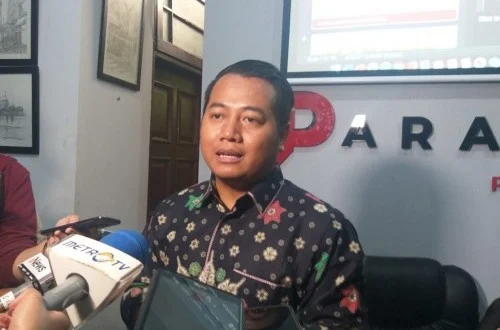
Taj Yasin Maimoen, the former Deputy Governor of Central Java for the 2018–2023 term, has emerged as the most recognized figure among potential candidates for the upcoming Central Java Gubernatorial Election, according to the latest findings from the research institute Parameter Politik Indonesia. The survey, conducted between May 15 and May 21, 2024, highlights a shifting political landscape in one of Indonesia’s most strategically significant provinces as it prepares for the concurrent regional head elections (Pilkada) scheduled for late 2024. Adi Prayitno, the Executive Director of Parameter Politik Indonesia, presented the data during a virtual press conference on Wednesday, May 29, 2024, noting that the recognition levels of various candidates provide a preliminary map of voter sentiment in the post-Ganjar Pranowo era.
The data collection process involved direct engagement with respondents across the province, utilizing a rigorous questioning technique to gauge public familiarity with potential contenders. Adi Prayitno explained that the survey team presented names individually to respondents, asking whether they were familiar with each specific figure. The results indicated that Taj Yasin Maimoen, often affectionately referred to as Gus Yasin, holds a popularity rating of 52.1 percent. This figure places him at the top of the list, a position likely bolstered by his five-year tenure as the deputy to former Governor Ganjar Pranowo and his deep-rooted connections within the influential Nahdlatul Ulama (NU) community in Central Java.
Trailing behind the former deputy governor is Hendrar Prihadi, the current Head of the National Public Procurement Agency (LKPP) and the former Mayor of Semarang. Prihadi, widely known by his nickname Hendi, secured a popularity rating of 40 percent. In third place is Dico Ganinduto, the current Regent of Kendal, who garnered 38.1 percent. These figures represent the initial "popularity threshold" that candidates must cross to become viable contenders for the governorship. Adi Prayitno emphasized that these individuals are currently the most talked-about figures and are frequently associated with the gubernatorial race in public discourse. However, he also noted a critical observation: despite their relative popularity, none of these figures can yet be described as "dominant" or "mentereng" (illustrious/outstanding) in a way that guarantees an easy path to victory.
Detailed Breakdown of Candidate Popularity and Profiles
The high popularity of Taj Yasin Maimoen is largely attributed to his unique political and social standing. As the son of the late charismatic cleric Maimun Zubair, Gus Yasin commands significant respect among the "santri" (Islamic boarding school students) and the broader religious demographic in Central Java. His previous role as Deputy Governor allowed him to travel extensively across the province’s 35 regencies and cities, building a grassroots network that remains largely intact. His popularity reflects a desire among a segment of the electorate for a leader who bridges the gap between nationalist administrative governance and traditional religious values.
Hendrar Prihadi’s 40 percent popularity rating stems from his successful decade-long leadership in Semarang, the provincial capital. During his time as mayor, Hendi was credited with modernizing the city’s infrastructure and improving public services, earning him a reputation as an effective technocrat within the Indonesian Democratic Party of Struggle (PDI-P). His transition to a national role at the LKPP has kept him in the public eye, though his challenge remains expanding his appeal beyond the urban centers of the northern coast (Pantura) to the more rural, southern regions of Central Java.
Dico Ganinduto, representing the younger generation of politicians, has utilized a mix of digital engagement and local governance to achieve his 38.1 percent rating. As a member of the Golkar Party, Dico’s presence in the top three suggests that the electorate is open to youthful leadership. His visibility has been further enhanced by his frequent appearances alongside national figures and his active social media presence, which resonates with the Millennial and Gen Z demographics that constitute a significant portion of the voting bloc.
Methodology and Context of the Parameter Politik Indonesia Survey
The survey conducted by Parameter Politik Indonesia utilized a multi-stage random sampling method, ensuring that the 1,200 respondents represented a cross-section of the Central Java population in terms of age, gender, religion, and socio-economic status. With a margin of error of approximately 2.9 percent and a confidence level of 95 percent, the data provides a statistically significant snapshot of the political climate in mid-May 2024. The timing of the survey is crucial, as it follows the 2024 General Elections, where the national political dynamics have begun to trickle down into regional considerations.
Adi Prayitno clarified that popularity does not always equate to electability, but it is the essential first step. In the context of Central Java, which has long been considered the "Kandang Banteng" (the stronghold of the PDI-P), the popularity of non-PDI-P figures like Taj Yasin (who is associated with the United Development Party or PPP) and Dico Ganinduto indicates a potential for a more competitive and pluralistic race than in previous cycles. The survey also monitored other names such as Sudaryono, the Chairman of the Gerindra Party’s provincial chapter, and Ahmad Luthfi, the Central Java Regional Police Chief, both of whom have seen rising visibility in recent months.
The Political Landscape of Central Java Post-Ganjar Pranowo
For the past decade, Central Java’s political identity was synonymous with Ganjar Pranowo. His departure from the gubernatorial office to pursue a presidential bid has left a significant power vacuum. This vacuum has invited a diverse array of aspirants from across the political spectrum. The PDI-P, despite its historical dominance, faces the challenge of selecting a successor who can maintain the party’s grip on the province while navigating the fractured alliances that emerged during the presidential election.
The influence of the central government and national party leaders cannot be understated. The victory of the Prabowo Subianto-Gibran Rakabuming Raka ticket in the presidential race has emboldened parties within the Onward Indonesia Coalition (KIM), such as Gerindra and Golkar, to challenge the PDI-P’s hegemony in Central Java. Gibran Rakabuming Raka, as the outgoing Mayor of Solo and the Vice President-elect, remains a kingmaker in the region, and his endorsement or the "Jokowi effect" is expected to play a decisive role in swaying undecided voters.
Chronology of the 2024 Regional Election Cycle
The 2024 Regional Head Elections are set to be a landmark event in Indonesian democracy, marking the first time that governors, regents, and mayors across the country will be elected simultaneously. The General Elections Commission (KPU) has established a clear timeline for the process:
- Preparation Phase (Early 2024): Recruitment of regional election committees and updating of voter lists.
- Survey and Internal Party Deliberations (May – July 2024): This is the current phase, where institutes like Parameter Politik Indonesia release data to inform party decisions on which candidates to nominate.
- Candidate Registration (August 27–29, 2024): Political parties and coalitions will officially register their candidate pairs with the KPU.
- Campaign Period (September 25 – November 23, 2024): Candidates will have roughly two months to consolidate their bases and attract the 47.9 percent of voters who, according to analysts, remain undecided or flexible in their choices.
- Polling Day (November 27, 2024): Citizens across Central Java will cast their votes.
The release of the Parameter Politik survey in late May serves as a "litmus test" for potential candidates. For those like Taj Yasin, it validates their current strategy. For those lower on the list, it serves as a signal to intensify their public relations efforts before the official registration window opens in August.
Official Responses and Political Implications
While official party endorsements are still being finalized, the survey results have already sparked reactions within political circles. Representatives from the PDI-P have noted that while Hendrar Prihadi is a strong internal candidate, the party remains open to various mathematical possibilities, including coalitions that might pair a nationalist figure with a religious leader—a formula that proved successful in the Ganjar-Yasin era.
The Gerindra Party, buoyed by its national success, is reportedly evaluating whether to push a solo candidate or join a broader coalition. The rise of Ahmad Luthfi, the police chief, as a "dark horse" in other polls suggests that the electorate might also be considering figures with a background in security and law enforcement, particularly to address concerns regarding regional stability and bureaucratic efficiency.
Adi Prayitno’s assessment that no candidate is "mentereng" yet suggests that the race is wide open. "The popularity of these figures is still hovering around the 40 to 50 percent mark. In a province as large as Central Java, a truly dominant candidate would usually be well above 60 or 70 percent by this stage," Adi noted. This lack of a clear frontrunner means that the "swing voters" and the "undecided" will ultimately dictate the outcome. It also implies that the quality of the "vice-gubernatorial" pick will be more important than usual, as a balanced ticket will be necessary to capture the diverse demographics of the province.
Broader Impact and Future Outlook
The Central Java election is more than just a local contest; it is a barometer for the national political mood heading into 2025. As the third most populous province in Indonesia, the outcome in Central Java will influence national policy implementation and the stability of the incoming presidential administration. A victory for a candidate aligned with the national government could streamline coordination between Jakarta and Semarang, whereas a victory for an opposition-aligned figure could create a system of checks and balances.
Furthermore, the prominence of Taj Yasin Maimoen underscores the enduring relevance of religious identity in Indonesian regional politics. Despite the rise of social media and technocratic governance, the "blessing" of influential ulemas and the support of the NU base remain foundational pillars of political power in Central Java.
As the August registration deadline approaches, observers expect a flurry of political maneuvering. The current popularity rankings are a snapshot in time, but they set the stage for a high-stakes campaign where infrastructure, religious values, and the legacy of the previous administration will collide. For Taj Yasin, Hendrar Prihadi, and Dico Ganinduto, the challenge now lies in converting their recognition into a solid mandate, convincing the millions of Central Javanese voters that they are the right choice to lead the province into its next chapter.