The United States military has officially declared the successful implementation of a total naval blockade against Iran, effectively severing all maritime commercial activity entering and exiting the Islamic Republic through the Strait of Hormuz. In a move that has sent shockwaves through global energy markets and international diplomatic circles, the United States Central Command (CENTCOM) announced on Tuesday evening, April 14, 2026, that its forces have achieved "full maritime dominance" in the region. The operation, executed with unprecedented speed and precision, was completed in less than 36 hours following the initial issuance of the blockade order by Washington. This development represents one of the most significant escalations in Middle Eastern geopolitical tensions in decades, marking a shift from targeted sanctions to direct military intervention in Iran’s sovereign trade routes.
The Swift Execution of Maritime Hegemony
Admiral Brad Cooper, Commander of U.S. Naval Forces Central Command and the U.S. 5th Fleet, confirmed the status of the operation in a formal briefing relayed by various international news outlets. According to Admiral Cooper, the transition from a state of heightened surveillance to a total maritime lockdown was achieved with remarkable efficiency. "In less than 36 hours, U.S. forces have completely halted economic trade entering and leaving Iran by sea," Cooper stated. The Admiral emphasized that the U.S. Navy now maintains an absolute perimeter around the strategic chokepoint, ensuring that no vessel linked to Iranian commerce can traverse the narrow waters without being intercepted or turned back.
The speed of the blockade’s implementation suggests a high level of pre-positioning and readiness by the U.S. 5th Fleet, headquartered in Bahrain. Military analysts note that achieving such a comprehensive seal of the Strait of Hormuz—a waterway that at its narrowest point is only 21 miles wide—requires a sophisticated layer of surface combatants, aerial surveillance, and subsurface assets. The U.S. claim of "full maritime dominance" implies not only the presence of physical barriers in the form of warships but also the total control of the electronic and sensory spectrum, preventing Iranian naval assets from challenging the perimeter.
Chronology of the 36-Hour Lockdown
The timeline of the blockade illustrates a rapid transition from diplomatic friction to military enforcement. The sequence of events began early Monday morning when the White House issued an executive order authorizing the Department of Defense to "neutralize" Iran’s maritime economic capabilities.
- Monday, 04:00 AM: The blockade order is officially transmitted to CENTCOM. U.S. Navy Carrier Strike Groups already patrolling the Arabian Sea begin moving toward the mouth of the Persian Gulf.
- Monday, 09:00 AM: The first interceptions occur. The Wall Street Journal (WSJ) reported that at least eight oil tankers were intercepted within the first few hours of the operation. These vessels were reportedly ordered to change course and exit the exclusion zone immediately.
- Monday Evening: Reports emerge of "cat-and-mouse" maneuvers as several Iranian-linked vessels attempt to bypass the blockade. Among these were the Iranian-flagged cargo ship Kashan and the Comoros-flagged tanker Elpis. Both vessels reportedly attempted to utilize shallow coastal waters to evade radar detection, but were eventually shadowed by U.S. destroyers.
- Tuesday morning: The U.S. Department of Defense confirms that all major shipping lanes leading to Iranian ports, including Bandar Abbas and Bushehr, have been successfully patrolled and closed to commercial traffic.
- Tuesday, 08:00 PM: Admiral Brad Cooper delivers his official statement, declaring the blockade 100% effective and the economic isolation of Iran via sea routes complete.
Tactical Interceptions and the ‘Cat-and-Mouse’ Game
Despite the overwhelming presence of the U.S. Navy, the first 36 hours were not without friction. Intelligence reports indicate that several vessels attempted to test the resolve of the blockade. The Kashan, a large container ship owned by the Islamic Republic of Iran Shipping Lines (IRISL), reportedly ignored initial radio warnings and continued its heading toward the Strait. It was only after a U.S. Navy MH-60R Seahawk helicopter performed a low-level "show of force" and a destroyer moved into an intercepting path that the vessel complied and dropped anchor outside the exclusion zone.
The case of the Elpis, a tanker flying the flag of the Comoros, highlights the complexity of enforcing such a blockade on international shipping. While the vessel was not flying an Iranian flag, U.S. intelligence identified its cargo as being destined for Iranian refineries. This "shadow fleet" tactic—using third-party flags and obscured ownership—has long been a method for Iran to bypass sanctions. However, under the new blockade rules, the U.S. has asserted the right to intercept any vessel regardless of its flag if there is "credible evidence" of its involvement in Iranian trade. This move has drawn sharp criticism from maritime law experts who argue it challenges the traditional "freedom of navigation" principles enshrined in the United Nations Convention on the Law of the Sea (UNCLOS).
The Strategic Significance of the Strait of Hormuz
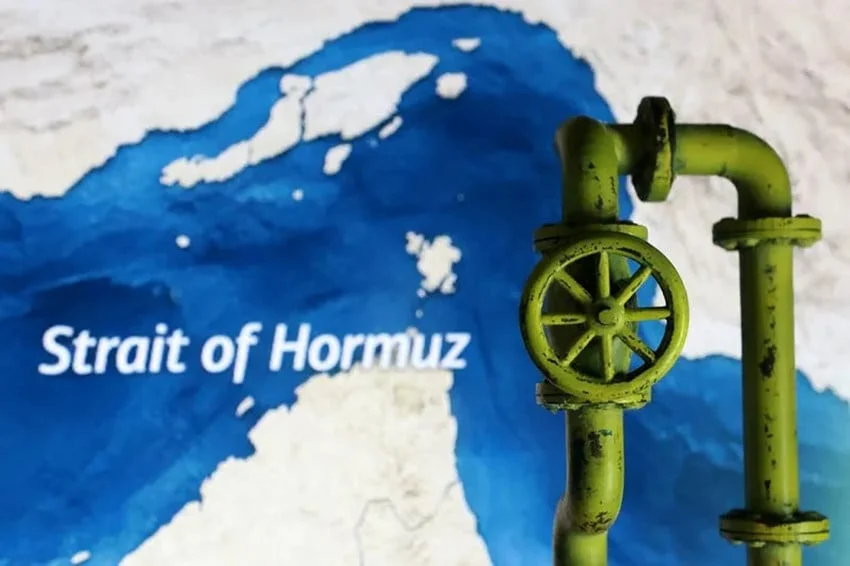
To understand the gravity of this blockade, one must look at the geographic and economic importance of the Strait of Hormuz. Often described as the world’s most important oil artery, the Strait connects the Persian Gulf with the Gulf of Oman and the Arabian Sea. Approximately 20% to 25% of the world’s total oil consumption passes through this narrow waterway daily.
For Iran, the Strait is the lifeblood of its economy. With its land borders often restricted by regional rivalries and its aviation sector hampered by long-standing sanctions, the sea remains the primary conduit for the export of crude oil and the import of essential goods, including refined fuel and industrial components. By sealing this route, the United States is essentially placing a "stranglehold" on the Iranian economy, aiming to force a domestic crisis or a significant shift in Tehran’s foreign policy.
Global Economic Shockwaves and Energy Markets
The immediate aftermath of the blockade announcement saw a volatile reaction in global markets. Brent Crude prices surged by nearly 12% within hours of Admiral Cooper’s statement, as traders feared a prolonged disruption to global energy supplies. While the blockade specifically targets Iranian trade, the proximity of the U.S. Navy to the shipping lanes used by Saudi Arabia, Kuwait, Iraq, and the United Arab Emirates has created a climate of extreme uncertainty.
Maritime insurance companies have already begun reclassifying the Persian Gulf as a "high-risk zone," leading to a projected 400% increase in war-risk premiums for any vessel entering the region. This "insurance wall" may prove just as effective as the physical blockade, as commercial shipping companies may refuse to enter the Gulf even if they are not carrying Iranian goods, fearing collateral damage or seizure in the event of an armed conflict.
The BRICS Response and the Shift Toward Eurasia
The blockade has not occurred in a vacuum. Even as U.S. ships tighten their grip on the Strait, a counter-alignment is forming among the BRICS nations, particularly Russia and China. In a parallel development, reports suggest that Moscow and Beijing are accelerating the development of the "Eurasian Axis"—a series of land-based trade routes and pipelines designed to bypass U.S.-controlled maritime chokepoints.
The "International North-South Transport Corridor" (INSTC), which links India to Russia via Iran, has become a focal point for this counter-strategy. By strengthening the Eurasian land bridge, BRICS nations hope to provide Iran with an economic "pressure valve." However, land routes currently lack the capacity to replace the massive volumes carried by sea. The "Lawan Blokade Barat" (Fight the Western Blockade) initiative mentioned in recent diplomatic circles suggests that China may increase its investment in Iranian infrastructure to ensure that energy supplies can continue to flow eastward via pipelines and rail, though such projects would take years to fully realize.
Legal and Geopolitical Implications of a Total Blockade
A total naval blockade is traditionally considered an act of war under international law. By moving from sanctions to a physical blockade, the United States has entered uncharted legal territory in the post-Cold War era. Washington justifies the move as a necessary measure to prevent "regional destabilization" and to halt the proliferation of advanced weaponry. However, critics at the United Nations have already voiced concerns that the blockade could lead to a humanitarian crisis within Iran, affecting the flow of food and medicine.
From a geopolitical standpoint, the blockade puts Iran’s regional rivals, such as Israel and Saudi Arabia, in a complex position. While both nations have long advocated for a "maximum pressure" campaign against Tehran, a total blockade increases the likelihood of a "symmetrical response." Iran has previously threatened that if it cannot export oil through the Strait, "no one will." This implies that Iran could use its vast arsenal of anti-ship missiles, fast-attack boats, and naval mines to disrupt all shipping in the Gulf, not just its own.
Official Responses and Regional Tensions
The Iranian government has condemned the blockade as "economic terrorism" and a "flagrant violation of international law." A spokesperson for the Iranian Ministry of Foreign Affairs stated that the Islamic Republic "reserves the right to take all necessary measures to protect its national interests and ensure the livelihood of its people." While Tehran has not yet launched a military counter-offensive, the Iranian Revolutionary Guard Corps (IRGC) has reportedly been placed on high alert, with drone swarms and missile batteries being deployed along the Iranian coastline.
In Washington, the blockade has received mixed reactions. Supporters in Congress argue that it is the only way to bring Iran back to the negotiating table without a full-scale ground invasion. Opponents, however, warn of "mission creep" and the potential for a localized naval incident to spiral into a broader regional war involving multiple global powers.
Future Trajectory: De-escalation or Conflict?
As the 36-hour mark passes and the blockade remains firmly in place, the world watches to see how the "cat-and-mouse" game evolves. The presence of the U.S. Navy in such force makes a successful Iranian breakthrough unlikely in the short term. However, the sustainability of such a blockade remains in question. Maintaining a full maritime perimeter is an incredibly resource-intensive endeavor that could strain the U.S. Navy’s operational capacity if it persists for months.
The coming days will be critical. If Iran chooses to challenge the blockade through asymmetric warfare—using mines or drones—the situation could quickly escalate into a direct kinetic conflict. Alternatively, if the economic pressure proves too great, it may lead to a new round of high-stakes diplomacy. For now, the Strait of Hormuz remains a silent, guarded corridor, and the global economy waits with bated breath to see if this 36-hour success story becomes the prelude to a much larger global crisis.