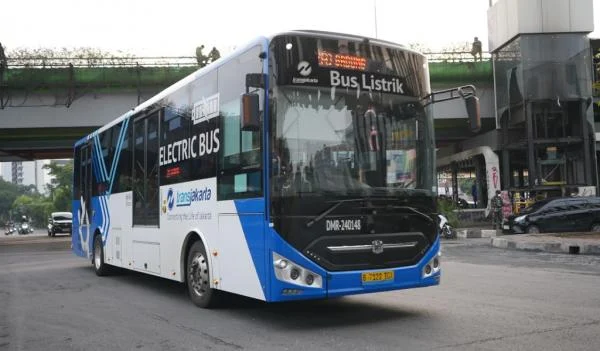
The Jakarta Provincial Government has officially confirmed that public transportation services operated by PT Transportasi Jakarta (Transjakarta) will remain fully operational and maintain standard service levels throughout the 2027 fiscal year. This commitment follows public discourse regarding potential adjustments to the Public Service Obligation (PSO) budget, which faces a potential reduction of approximately Rp237 billion after an initial proposal for a Rp300 billion cut.
Despite the fiscal tightening, the administration emphasizes that the mobility of millions of daily commuters remains a top priority. As the backbone of Jakarta’s integrated public transit system, Transjakarta serves as a vital lifeline for the workforce, students, and vulnerable populations, necessitating a robust financial strategy that balances fiscal discipline with social responsibility.
The Fiscal Context: Balancing Budgetary Constraints
The potential reduction in the Transjakarta subsidy budget is part of a broader effort by the Jakarta Provincial Government to optimize regional financial allocations. As the city navigates complex economic pressures and competing priorities in infrastructure and social welfare, the Department of Transportation (Dishub) has been tasked with ensuring that public services remain efficient.
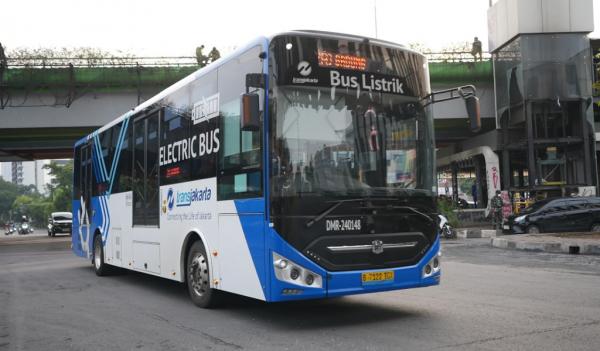
Budi Awaluddin, the Head of the Jakarta Transportation Agency (Dishub), stated that the current budget planning is reflective of the city’s financial capacity. However, he clarified that the potential reduction does not equate to a degradation of service. "The allocation is structured to align with our regional financial capabilities, but our commitment to providing safe, comfortable, and affordable public transport is non-negotiable," Awaluddin noted.
The challenge lies in managing the high operational costs associated with an expanding fleet, the maintenance of existing infrastructure, and the implementation of green energy initiatives. With the ongoing transition to electric buses (e-buses), the operational expenditure remains significant, requiring meticulous planning to ensure that service frequency and route coverage are not compromised.
Continuity of Social Welfare and Free Transit
A cornerstone of the Jakarta Provincial Government’s transport policy is the provision of free transit services for 21 specific categories of citizens. This social program covers a diverse demographic, including the elderly, persons with disabilities, military veterans, civil servants, and students. Under the leadership of Governor Pramono Anung, the government has recently expanded these benefits to include six new categories of beneficiaries, reinforcing the city’s commitment to social inclusion.
The assurance that these services will continue unabated is critical for the thousands of low-income families who rely on the Transjakarta system to access employment and educational opportunities. By maintaining these subsidies, the government is effectively preventing a surge in living costs for its most vulnerable residents, thereby mitigating the potential negative impacts of broader economic adjustments.

Timeline of Service Evolution
The history of Transjakarta is marked by consistent expansion and adaptation. Since its inception in 2004, the system has grown to become the longest Bus Rapid Transit (BRT) system in the world. Recent milestones in 2026 have highlighted the operator’s focus on technological integration and accessibility:
- November 2026: Transjakarta announced a strategic partnership with Telkomsel Enterprise to introduce the "TJ GO" bundling package. This initiative aims to support low-emission mobility by providing seamless digital connectivity for commuters, encouraging the use of public transport over private vehicles.
- Early November 2026: The operator prioritized inclusive infrastructure by commissioning new elevator facilities at the Dukuh Atas transit hub. This development specifically targets accessibility for the elderly and commuters with mobility impairments, marking a shift toward more human-centric urban design.
- Ongoing (2026-2027): The provincial government has continued to audit and evaluate the Minimum Service Standards (SPM) for all routes, ensuring that the reduction in subsidy does not affect the safety or punctuality of the fleet.
Strategic Analysis: The Future of Urban Mobility
The decision to adjust the subsidy while maintaining service levels suggests a pivot toward operational efficiency. Analysts suggest that the Jakarta government may be looking to optimize revenue through non-farebox sources, such as advertising, retail space rentals in bus stops, and private-sector partnerships like the aforementioned Telkomsel deal.
Furthermore, the integration of the Transjakarta network with other transit modes, such as the MRT Jakarta and LRT Jabodebek, requires a unified financial approach. By streamlining the subsidy model, the government hopes to create a more sustainable long-term funding mechanism that is less dependent on direct budget injections and more reliant on operational productivity and integrated ticketing systems.
Official Response and Administrative Coordination
To ensure the stability of the system, the Dishub is maintaining rigorous communication with both the regional legislative body (DPRD) and the management of PT Transportasi Jakarta. According to Budi Awaluddin, the agency is actively preparing to request budget revisions should the "real needs" of the operational data—such as passenger volume, route coverage, and the rising costs of energy—exceed current projections.

"We understand that Transjakarta is a fundamental service. We are constantly evaluating the operational needs based on actual passenger data. We will not hesitate to coordinate with related regional agencies to ensure that any necessary budget top-ups are processed in a timely manner to prevent any disruption to the public," Awaluddin added.
Implications for the Commuter Experience
For the average Jakarta resident, the current situation raises questions about the future of transit reliability. However, the government’s proactive stance suggests that the "Standard Service Minimum" will remain the benchmark. This includes maintaining:
- Fleet Reliability: Ensuring that bus maintenance cycles are adhered to, preventing a decline in road-worthiness.
- Safety Protocols: Continuing the implementation of digital monitoring and driver training programs.
- Connectivity: Preserving the current network density, which connects the satellite cities of Bogor, Depok, Tangerang, and Bekasi to the heart of Jakarta.
Conclusion: A Test of Fiscal Resilience
The fiscal maneuvering of the Jakarta Provincial Government serves as a litmus test for the city’s ability to manage large-scale public utilities amidst tightening budget cycles. By prioritizing Transjakarta as a "basic service," the government is signaling that public transit is not a discretionary expense but a prerequisite for urban economic vitality.
As the city enters 2027, the success of this strategy will depend on the ability of the Department of Transportation to accurately predict demand and the flexibility of the city’s financial planning. For now, the administration has successfully quelled concerns regarding potential service cuts, providing a sense of stability for the millions of commuters who depend on the iconic orange-and-blue buses every single day. The focus now shifts to the actual execution of these budget allocations and the continued modernization of the fleet, ensuring that Jakarta remains a city defined by its accessibility rather than its traffic.