The quiet midnight hours in Kampung Cipaler Girang, located within the traditional Kanekes Village of Leuwidamar District, Lebak Regency, Banten Province, were violently disrupted on Thursday, November 19, when a massive fire
tore through the indigenous settlement. The catastrophic blaze reduced dozens of traditional structures to ash, leaving the resilient Baduy customary community grappling with sudden displacement and profound material loss. In the wake of this disaster, humanitarian organizations, faith-based networks, and local disaster management agencies have mobilized a coordinated response to address the immediate emergency needs of the affected population, while highlighting the unique vulnerabilities and cultural preservation challenges faced by indigenous communities in modern Indonesia.
According to rapid assessment data compiled by the Regional Disaster Management Agency (BPBD) of Banten Province, the midnight inferno severely impacted 48 heads of households, translating to 132 individuals who found themselves abruptly rendered homeless. The victims, predominantly members of the Outer Baduy (Baduy Luar) community, were forced to seek temporary shelter with relatives or in makeshift communal spaces as authorities and humanitarian volunteers began trickling into the remote terrain. Despite the dramatic scale of the destruction and the highly combustible nature of traditional architecture—which heavily relies on bamboo, timber, and palm fiber—local authorities confirmed the fortunate absence of any fatalities or severe physical injuries, a detail that provided a glimmer of relief to a community otherwise in deep mourning for their lost heritage.
Chronology of the Disaster: From Midnight Spark to Total Destruction
Piecing together the chronology of the disaster reveals how swiftly vulnerability can turn into tragedy in densely packed indigenous settlements. Local resident Santa recounted that the incident began at approximately 11:30 PM on Thursday, November 19. The fire is believed to have originated from a domestic hearth inside one of the traditional homes, where a resident reportedly forgot to extinguish an open flame used for boiling water before retiring for the night.
Because traditional Baduy homes are constructed in close proximity to one another using highly flammable organic materials, the unattended flame rapidly ignited structural elements. Fueled by dry timber and a gentle nocturnal breeze, the flames swept through the neighborhood with terrifying speed. Within minutes, the blaze transformed into a towering wall of fire that illuminated the dark rural landscape and sent residents fleeing into the safety of the surrounding hills.
By the time local efforts and limited firefighting resources could respond—hampered heavily by the remote geographical location and lack of modern infrastructure typical of customary territories—the damage had been done. Santa noted that a total of 23 residential structures sustained varying degrees of damage. Three homes were completely gutted, suffering structural collapse and total devastation, while twenty others sustained moderate to heavy damage that rendered them temporarily uninhabitable, though local carpenters and community members hope some might be salvageable.
Beyond residential properties, the fire consumed critical agricultural assets that form the economic lifeblood of the community. Three traditional rice barns, locally known as leuit, were completely destroyed alongside a saung lisung, a communal structure utilized for pounding rice. The loss of leuit holds profound cultural and economic significance for the Baduy, as these structures are used to store communal and household rice reserves meant to sustain families through lean agricultural seasons. The destruction of these storehouses compounds the crisis, transforming a housing emergency into a broader livelihood threat.
Humanitarian Mobilization and the Delivery of Emergency Relief
In response to the escalating crisis, Lazismu—the official philanthropic arm of Muhammadiyah—swiftly mobilized its networks under the banner of the Indonesia Siaga (Indonesia Alert) program. Recognizing the urgency of the situation, a dedicated response team traveled to the remote disaster zone just days after the incident on Sunday, November 22, to provide direct relief and conduct a comprehensive on-site assessment of the damage.
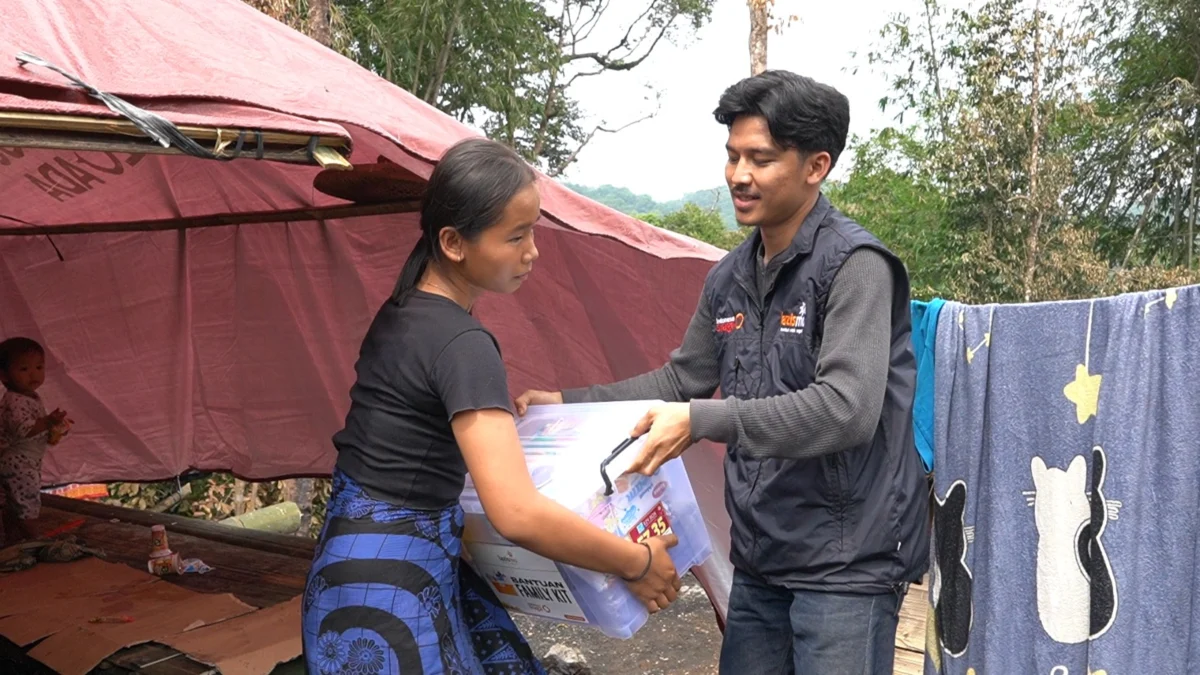
Rizky Saragih, representing the Central Board of Lazismu’s Distribution and Utilization Team, made the grueling trek directly to the charred remains of Kampung Cipaler Girang. Alongside his team, Saragih personally handed over humanitarian packages to the displaced families and inspected the scorched landscape to evaluate long-term recovery requirements. The relief supplies were specifically tailored to meet immediate survival needs, comprising staple food items (sembako), ready-to-eat packaged rendang, and comprehensive family kits containing hygiene supplies, blankets, and essential daily living tools.
The distribution effort was executed in close synergy with key community stakeholders, notably Ustaz Muhammad Kasja, a prominent preacher from the Da’wah Bureau (LDK) of the Muhammadiyah Central Board who also serves as the Coordinator for Baduy Muslim Converts. Arriving alongside the Lazismu delegation, Ustaz Kasja extended heartfelt condolences to the victims, emphasizing the spiritual and moral obligation of the broader society to stand in solidarity with marginalized indigenous populations during times of crisis.
“We share a deep emotional and spiritual grief over the tragic fire that has struck our brothers and sisters in Kampung Cipaler, Outer Baduy,” Ustaz Kasja stated during the relief handover. “Alhamdulillah, today, alongside Lazismu, we have successfully channeled essential logistics, including staple foods and family kits. We pray that this assistance brings tangible relief and eases the heavy burdens carried by our family members who are currently enduring this severe trial.”
Community Resilience and Traditional Governance in Recovery
Despite the profound losses they have suffered, the people of Kampung Cipaler Girang have exhibited remarkable stoicism and resilience, deeply rooted in their ancestral philosophy of living in harmony with nature and accepting life’s trials with spiritual fortitude.
Speaking on behalf of the local community, Santa expressed profound gratitude to the continuous influx of volunteers, humanitarian agencies, and private donors who have stepped forward to alleviate the suffering of the displaced villagers. He highlighted that while the material losses are staggering, the community remains united by its cultural bonds and spiritual traditions.
“This is a trial that we must endure,” Santa reflected calmly. “We pray to the Almighty that we are granted the strength to persevere, and that our homes can be rebuilt as soon as possible.” He emphasized, however, that any structural rehabilitation and physical reconstruction efforts must strictly adhere to customary laws (adat) and proceed under the direct guidance of the kolokot (traditional elders) and the village head. For the Baduy, architectural rebuilding is not merely a logistical exercise of throwing up walls and roofs; it is a sacred ritual bound by strict spatial, environmental, and spiritual regulations that dictate how materials are sourced, where structures are positioned, and how the community interacts with its ancestral domain.
Broader Implications: Vulnerability, Infrastructure, and Disaster Resilience in Indigenous Territories
The fire in Kampung Cipaler Girang brings to light broader structural vulnerabilities confronting indigenous and remote communities across Indonesia, particularly regarding disaster preparedness, risk mitigation, and infrastructure limitations. While Indonesia boasts a robust national disaster management framework overseen by the National Disaster Management Agency (BNPB) and provincial BPBDs, remote traditional villages often fall outside the reach of rapid-response firefighting infrastructure.
Geographical isolation, narrow access roads unsuitable for heavy emergency vehicles, and the complete absence of localized water hydrants or fire suppression systems mean that fires in such settlements frequently result in total structural loss before external help can arrive. Furthermore, the reliance on open-flame traditional stoves (haur or wood-burning hearths) housed within highly combustible timber and bamboo dwellings creates an enduring, systemic fire hazard, particularly during dry spells or late-night cooking hours.
From a socio-economic perspective, the destruction of agricultural assets like the leuit underscores the cascading vulnerabilities triggered by localized disasters. In indigenous economies where modern banking and insurance systems are non-existent or rejected due to cultural tenets, traditional storage systems serve as the sole financial and nutritional safety net. The loss of harvested rice reserves threatens food security in the medium term, raising concerns about community dependency on external food aid until the next agricultural cycle yields a successful harvest.
Furthermore, the incident highlights the vital role played by faith-based humanitarian networks like Lazismu and community-embedded religious leaders in bridging the gap between state-led disaster relief and marginalized populations. Indigenous groups, who often maintain distinct cultural or religious identities that separate them from the urban mainstream, can occasionally experience bureaucratic friction or communication barriers when interacting with formal government disaster agencies. The intervention of trusted intermediaries—such as Ustaz Kasja and Muhammadiyah’s local da’wah networks—ensures that aid is delivered with cultural sensitivity, mutual respect, and a deep understanding of local social hierarchies.
Looking Forward: A Call for Sustainable Mitigation and Long-Term Solidarity
As the smoke clears over Kampung Cipaler Girang and emergency relief transitions into early recovery, attention must pivot toward sustainable long-term solutions. Humanitarian organizations have pledged continued monitoring and support as the community navigates the complex process of rebuilding. Lazismu has reiterated its institutional commitment to maintaining a presence in disaster-hit regions across the archipelago, operating under humanitarian principles that transcend ethnic, religious, or cultural divides.
However, experts argue that emergency aid alone is insufficient to prevent future tragedies. Moving forward, stakeholders, local governments, and traditional authorities must engage in constructive dialogues regarding fire safety education, the introduction of safer cooking technologies that respect customary architectural norms, and the establishment of localized early-warning and community-based fire suppression mechanisms. By blending traditional wisdom with modern disaster risk reduction strategies, communities like the Baduy can better safeguard their invaluable cultural heritage and physical safety against the unpredictable hazards of the modern era.
For now, the immediate focus remains on restoring a sense of normalcy and dignity to the 132 displaced souls of Cipaler Girang. Through the collaborative efforts of Lazismu, Muhammadiyah’s dakwah cadres, local government agencies, and sympathetic citizens nationwide, the path toward healing has begun—proving once again that in times of catastrophe, human solidarity remains the most potent remedy against despair.