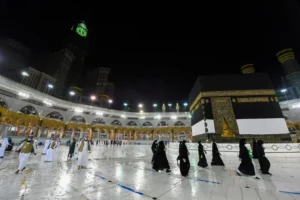
Traveling has evolved into one of the most popular leisure activities of the modern era. Across the globe, millions of people pack their bags annually to escape the monotony of daily routines, seek psychological refreshment, and immerse themselves in new cultures. However, beyond the contemporary motivations of leisure, photography, and stress relief, travel holds a profound and multidimensional significance in Islamic tradition. Far from being a mere pursuit of worldly pleasure, a journey undertaken with righteous intentions and proper ethical boundaries can serve as a powerful medium for intellectual expansion, spiritual renewal, and the strengthening of faith in Allah SWT.
In Islamic discourse, the concept of travel is multifaceted, encompassing spiritual reflection, historical investigation, the acquisition of knowledge, and the fulfillment of religious duties. Far from encouraging isolation, Islamic teachings actively prompt adherents to venture beyond their local communities, observe the universe, and draw lessons from both the natural world and the remnants of past civilizations. By examining the linguistic roots, historical precedents, and explicit directives found within the Quran and Hadith, scholars have long argued that travel is not a distraction from spiritual life, but rather a vital component of it.
Etymological Roots: Siyahah and Safar in Islamic Tradition
To fully comprehend the depth of travel within the Islamic framework, one must examine the specific terminology utilized in classical Arabic texts. The tradition recognizes two primary concepts associated with journeys: siyahah and safar.
Siyahah generally denotes wandering or traveling to various corners of the earth for contemplation and spiritual devotion. While monastic asceticism is generally discouraged in Islam, siyahah in a broader sense involves observing the creation of Allah and recognizing His omnipotence across different landscapes.
Meanwhile, safar refers explicitly to a journey undertaken for a specific, purposeful objective. This includes traveling for the sake of acquiring sacred knowledge, engaging in righteous commerce, fulfilling familial obligations, participating in diplomatic missions, or propagating the message of faith. Unlike aimless wandering, safar requires intentionality, preparation, and adherence to specific Islamic guidelines, such as the shortening of prayers (qashar) and the combining of prayers (jam’) under prescribed conditions.
The Quranic Imperative: Exploring the Universe as a Sign of Divine Power
The holy Quran contains numerous verses that explicitly command humankind to travel across the earth. These directives go beyond routine geographic movement; they constitute a spiritual and intellectual invitation to observe the signs of Allah’s dominion scattered throughout the cosmos. The act of moving through space is tied directly to the expansion of human consciousness and moral awareness.
One primary example is found in Surah Al-An’am, verse 11, where Allah SWT commands the Prophet Muhammad (PBUH) to instruct humanity: "Katakanlah (Muhammad), ‘Berjalanlah di bumi, kemudian perhatikanlah bagaimana kesudahan orang-orang yang mendustakan itu.’" In English translation: "Say, ‘Travel through the land and observe how was the end of the deniers.’"
This verse encapsulates a recurring theme in the Quran: traveling as historical investigation. The physical ruins of ancient civilizations—such as the dwellings of Thamud, Aad, and other historical communities—stand as physical reminders of the consequences of arrogance, tyranny, and the rejection of ethical truths. By visiting these historical sites, travelers are expected to move past aesthetic appreciation and engage in deep historical and moral reflection.
The Prophetic View: Jihad, Effort, and Spiritual Journey
The significance of travel is further elevated through the traditions and sayings of Prophet Muhammad (PBUH). In a well-documented narration recorded by Imam Abu Dawud, the Prophet stated: "Sesungguhnya wisata umatku adalah berjihad di jalan Allah" ("Indeed, the tourism of my nation is jihad in the way of Allah").
Scholars of Hadith have interpreted this statement not as an endorsement of leisure tourism, but as a recognition of the hardship, endurance, and noble purpose inherent in purposeful travel. Just as a journey in the path of righteousness requires sacrifice, physical stamina, and dedication, the traveler stepping out into the world with the intention of seeking knowledge or spreading peace engages in a noble endeavor that mirrors the spiritual resilience of jihad.
Furthermore, Islamic history is rich with accounts of early Muslims undertaking monumental journeys. The pursuit of religious scholarship, particularly the verification and collection of Hadith, institutionalized travel as an academic necessity.
The Historical Tradition of Rihlah in Pursuit of Knowledge
During the formative centuries of Islamic civilization, travel became the backbone of academic and scientific advancement. This phenomenon gave rise to the literary and cultural tradition known as Rihlah—journeys undertaken specifically for the acquisition of knowledge.
Scholars of the early Islamic period routinely crossed vast deserts, seas, and mountain ranges, moving between major intellectual hubs such as Medina, Damascus, Baghdad, Cairo, and Córdoba. These journeys were often perilous, fraught with the dangers of harsh weather, banditry, and limited resources. Yet, the thirst for authentic knowledge drove individuals to extraordinary lengths.
A notable figure in this tradition was Al-Khatib Al-Baghdadi, a prominent 11th-century scholar who authored the seminal work Ar-Rihlah fi Thalab al-Hadits (The Journey in Search of Hadith). This historical text chronicles the immense sacrifices made by early scholars who would travel for weeks or months—sometimes journeying from one end of the Islamic world to the other—solely to verify a single narration or meet a surviving companion of a scholar.
This relentless pursuit of truth laid the groundwork for modern empirical research and scientific methodology. Figures such as Ibn Battuta and Ibn Khaldun further expanded the boundaries of travel writing, blending geography, sociology, anthropology, and theology into comprehensive accounts of the known world. Their writings demonstrated that travel in Islam is inherently interconnected with the documentation of human societies, ecological observation, and cultural exchange.
Contemporary Relevance: Mindful Tourism and Spiritual Renewal in the Modern Era
In the contemporary context, the intersection of tourism and Islamic values has gained renewed attention among sociologists, psychologists, and religious leaders. As modern life becomes increasingly dominated by digital connectivity, fast-paced work environments, and urban stress, the necessity for psychological and spiritual detachment has grown exponentially.
Modern psychological research consistently highlights the benefits of travel in reducing stress, enhancing cognitive flexibility, and fostering empathy through exposure to diverse cultures. From an Islamic perspective, these psychological benefits align harmoniously with religious objectives. When a Muslim engages in mindful travel—often referred to today as halal tourism, ethical travel, or reflective tourism—the journey transcends consumption and enters the realm of spiritual rejuvenation.
Contemporary scholars and travel industry analysts point out several key implications of integrating Islamic principles into modern travel practices:
- Ethical Consumption and Respect for Local Cultures: Islamic teachings emphasize justice, stewardship (khalifah), and respect for local communities. Travelers are encouraged to support local economies, minimize environmental degradation, and treat host populations with dignity.
- Appreciation of Biodiversity and Ecology: Observing nature (tadabbur) encourages environmental consciousness. Recognizing the intricate balance of ecosystems reinforces the theological understanding of creation as a manifestation of divine wisdom.
- Historical Empathy: Visiting historical monuments provides tangible lessons in the rise and fall of civilizations, tempering human hubris and fostering a sense of historical accountability.
- Gratitude and Resilience: Experiencing different socio-economic conditions during travel cultivates gratitude (shukr) for one’s own blessings while building patience (sabr) in the face of logistical hardships.
Broader Implications and Societal Impact
The resurgence of interest in purposeful travel reflects a broader societal shift toward meaningful experiences over materialistic accumulation. As global tourism rebounds and diversifies, the philosophical framework provided by Islamic traditions offers a compelling model for travelers of all backgrounds. By anchoring travel in ethical responsibility, intellectual curiosity, and spiritual reflection, individuals can transform a standard vacation into a transformative human experience.
Ultimately, whether through exploring ancient historical sites as commanded in the Quran, following the footsteps of classical scholars in search of wisdom, or simply taking a moment to appreciate the natural beauty of the earth, travel remains one of the most effective instruments for human development. It challenges preconceived notions, bridges cultural divides, and reminds humanity of its place within the vast, intricate tapestry of the universe.