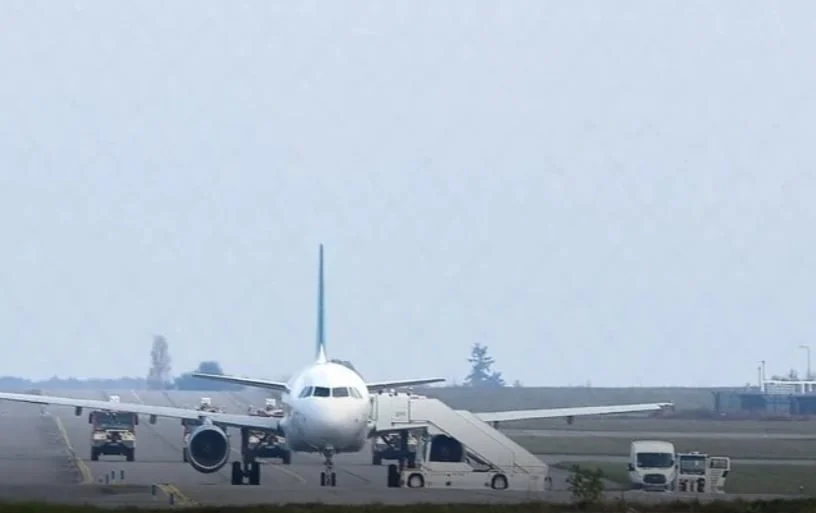
A severe and coordinated wave of security alerts has swept across the European continent, throwing international air traffic into unprecedented disarray. Over the course of consecutive days, commercial flights spanning at least sixteen nations were subjected to severe disruptions, including emergency diversions, ground stops, and high-stakes military interceptions by fighter jets. This alarming incident marks the second large-scale wave of false bomb warnings to plague European airspace within a single week, raising profound questions regarding the vulnerability of regional transportation infrastructure, the psychological impact of systematic hoax campaigns, and the readiness of multinational security apparatuses to handle synchronized hybrid threats.
The crisis began unfolding midweek, rapidly escalating into a complex logistical and security nightmare for aviation authorities, air traffic controllers, and airline operators. Flights departing from or transiting over numerous European jurisdictions—notably Ireland, the United Kingdom, Spain, Denmark, Hungary, Bulgaria, the Czech Republic, Italy, and Portugal—found themselves directly in the crosshairs of the threats. According to preliminary incident reports compiled by aviation safety bodies, the warnings were communicated through various channels, including direct phone calls to air traffic control towers, digital notifications, and airport operational desks.
Despite the widespread panic and the mobilization of elite counter-terrorism units, subsequent forensic sweeps, explosive ordnance disposal (EOD) team inspections, and tactical security clearances revealed that all threats processed thus far were hoaxes. No explosive devices, hazardous materials, or suspicious objects have been recovered from any of the targeted aircraft. Miraculously, no physical injuries have been reported among passengers or crew members, though hundreds experienced profound psychological distress, acute anxiety, and significant schedule disruptions.
Anatomy of the Crisis: A Chronological Overview of the Disruption
The timeline of the emergency underscores the methodical and widespread nature of the disruption. On Thursday, initial waves of threats targeted flights originating from or heading toward multiple Western and Northern European hubs. Air traffic management organizations across Ireland, the United Kingdom, Spain, and Denmark reported receiving specific warnings concerning airborne commercial aircraft, triggering immediate emergency protocols. Aircraft were ordered to divert to the nearest available secure airports, while others were held on tarmacs prior to departure pending comprehensive security re-screenings.
The crisis intensified significantly on Friday, transforming into a cross-border spectacle as multiple national air forces were forced to scramble combat aircraft to escort compromised commercial airliners. By midday GMT on Friday, at least seventeen high-profile international flights had suffered severe, verified disruptions.
Hungary’s Ministry of Defense confirmed that its military forces were compelled to scramble fighter jets on three separate occasions within a matter of hours. The Hungarian Air Force jets intercepted and escorted aircraft traversing national airspace after air traffic authorities received anonymous bomb warnings. Among the targeted flights was a Wizz Air service operating from Brussels, Belgium, to Sofia, Bulgaria, as well as scheduled flights traveling from Prague to Bucharest and various destinations in Cyprus.
Concurrently, Bulgarian transportation authorities reported receiving urgent alerts concerning two distinct incoming flights destined for Sofia. Prague’s Václav Havel Airport officials verified to international media that at least nine morning flights departing from the Czech capital were directly impacted by the coordinated threats, necessitating immediate ground interventions and passenger debarkation for secondary screening.
Further south, the situation manifested with equal intensity. A Ryanair flight operating a routine European route was forced into an emergency landing at Lisbon Airport in Portugal shortly after 8:00 AM local time. The landing followed a specific bomb threat communicated via telephone to local authorities. Ground operations at Lisbon were partially suspended as specialized tactical police units surrounded the aircraft, executing rigorous security checks on both passengers and cargo holds.
In Italy, air traffic control towers at Rome Fiumicino Airport received a high-priority warning regarding an alleged explosive device onboard a Wizz Air flight traveling from Paris to the Italian capital. Air traffic controllers immediately instructed the flight crew to divert. The aircraft safely landed at Venice Marco Polo Airport, where local law enforcement and border police established a secure perimeter, effectively sterilizing the area surrounding the aircraft while bomb-disposal technicians conducted a thorough sweep of the cabin and luggage compartments.
Meanwhile, Scandinavian authorities were forced to implement similar precautionary measures. Early Friday morning, the Copenhagen Police Department issued an official statement confirming that comprehensive tactical security sweeps conducted at Copenhagen Airport had concluded without incident, officially declaring that no credible danger existed to passengers or airport facilities.
Response of Aviation Authorities and Multinational Security Coordination
The sheer velocity and geographic spread of the threats necessitated unprecedented levels of cross-border intelligence sharing and tactical cooperation among European Union member states, non-EU nations, and civil aviation authorities, including the European Union Aviation Safety Agency (EASA) and Eurocontrol.
When an international flight receives a bomb threat while airborne, a rigidly defined yet highly stressful multi-agency protocol is automatically initiated. Air traffic management services immediately clear surrounding airspace to create a sterile corridor around the affected aircraft. Simultaneously, military command centers are notified, frequently resulting in the deployment of Quick Reaction Alert (QRA) interceptor jets. These fighter aircraft visually inspect the commercial airliner, assess pilot responsiveness, and shepherd the aircraft toward a designated diversion airfield equipped with specialized counter-terrorism infrastructure.
Upon landing, the aircraft is taxied to an isolated area of the airfield—often referred to as an isolation bay—far away from passenger terminals and refueling infrastructure to mitigate potential blast radius damage. Local law enforcement agencies, federal police forces, and military explosive ordnance disposal teams assume tactical control of the scene, utilizing specialized canine units and advanced robotic scanners to inspect the aircraft interior, overhead bins, cargo holds, and passenger baggage.
Throughout this entire ordeal, civil aviation authorities and airline corporate communications teams face the daunting task of managing passenger welfare, communicating transparently with the public, and orchestrating massive re-booking and logistical recovery operations for delayed or stranded travelers. Major carriers such as Wizz Air and Ryanair issued statements expressing full cooperation with law enforcement agencies, emphasizing that the safety and security of passengers and crew remain their absolute paramount operational priorities.
Broader Economic and Logistical Implications of Systematic Hoaxes
While the immediate physical threat was neutralized by the absence of actual explosives, security analysts and aviation economists warn that the broader implications of such coordinated hoax campaigns are profound, highly damaging, and unsustainable for the European transport ecosystem.
First and foremost, the financial toll on commercial airlines and airport operators is staggering. Scrambling military fighter jets incurs massive operational expenses for national defense budgets. Furthermore, emergency flight diversions, unscheduled ground stops, fuel burn adjustments, passenger accommodation, and compensation claims cost the aviation sector millions of euros per incident. The ripple effect of delayed aircraft creates scheduling bottlenecks that can destabilize airline network operations for days, affecting dozens of subsequent flights and thousands of connecting passengers.
Secondly, the psychological strain placed on passengers and aviation personnel cannot be overstated. Experiencing an in-flight security scare or witnessing heavily armed tactical police units storm an aircraft leaves lasting psychological impacts. Cabin crew members, already operating under high-stress environments, are forced to manage panicked passengers while executing complex emergency procedures.
Thirdly, security experts highlight the severe risk of "alert fatigue." When security apparatuses are repeatedly forced to respond to large-scale waves of false alarms, there is a latent danger that complacency could develop within the operational chain of command. A systematic campaign of hoaxes functions essentially as a denial-of-service attack against the state, potentially consuming critical intelligence and law enforcement resources that might otherwise be required to counter genuine, credible security threats.
Attribution Challenges and the Threat of Hybrid Warfare
As law enforcement agencies across multiple European jurisdictions launch comprehensive criminal investigations into the origin of the bomb threats, investigators face immense technical and jurisdictional hurdles. The utilization of encrypted communication channels, spoofed telephone numbers, virtual private networks (VPNs), and anonymized digital platforms complicates efforts to trace the perpetrators.
Counter-terrorism analysts are currently examining whether these coordinated incidents are the work of organized cyber-criminals, disgruntled individuals, extremist networks, or state-sponsored actors engaging in hybrid warfare tactics. Hybrid warfare often encompasses non-kinetic actions designed to disrupt critical infrastructure, sow societal discord, undermine public trust in democratic institutions, and strain the economic and military resources of target nations without crossing the threshold of conventional armed conflict.
The fact that this wave represents the second occurrence within a single week strongly points toward a deliberate, highly organized effort rather than random, isolated pranks. The timing, coordination across multiple linguistic and political borders, and the specific targeting of vital European aviation corridors suggest a sophisticated malicious intent aimed at testing the response speed and resilience of European security frameworks.
Path Forward: Strengthening Resilience in European Airspace
In the wake of these disruptive events, international pressure is mounting on governments and aviation safety regulators to re-evaluate existing security protocols and enhance cross-border intelligence-sharing mechanisms. Discussions are already underway among European transport ministers regarding the implementation of advanced threat-filtering algorithms, enhanced digital communications tracing capabilities, and standardized protocols for rapid threat verification to minimize the necessity of disruptive military interventions whenever possible.
Ultimately, while the recent wave of bomb threats has exposed vulnerabilities in the psychological and logistical armor of European aviation, it has simultaneously demonstrated the robust operational readiness and seamless coordination of the continent’s military and civil security forces. As investigations deepen, the international community remains resolute in its commitment to tracking down the culprits behind these malicious disruptions, ensuring that Europe’s skies remain secure, resilient, and open to the global community.