JAKARTA — The ongoing investigation into high-level corruption and institutional breaches within Indonesia’s law enforcement and land administration sectors has taken a dramatic turn following new disclosures regarding alleged internal sabotage. Boyamin Saiman, Coordinator of the Indonesian Anti-Corruption Society (MAKI), has publicly revealed the initials of specific employees within the Corruption Eradication Commission (KPK) who are strongly suspected of leaking confidential documents and maintaining clandestine communications with suspects tied to an active graft investigation.
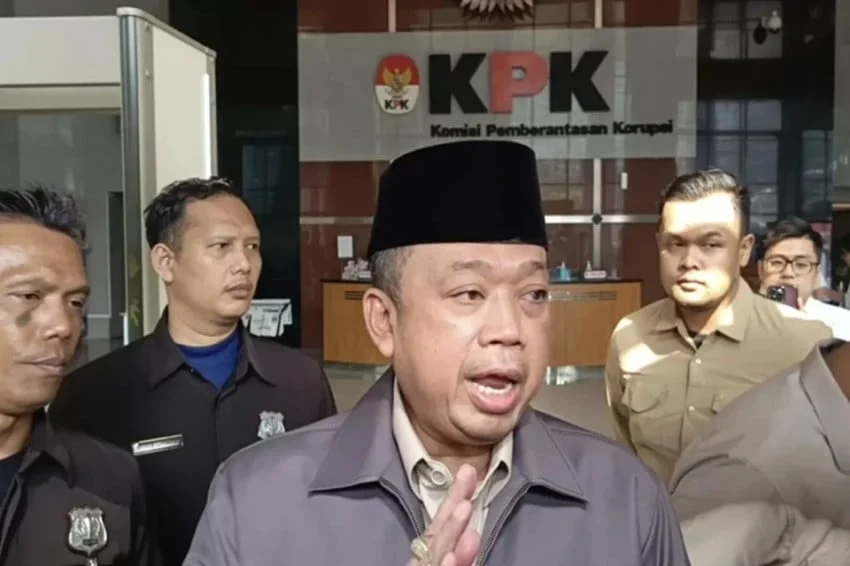
The leaked materials and unauthorized communications are directly linked to an ongoing corruption case centered around the Ministry of Agrarian Affairs and Spatial Planning/National Land Agency (ATR/BPN). The unfolding scandal has already prompted high-level scrutiny, including the recent appearance of ATR/BPN Minister Nusron Wahid before KPK investigators to clarify financial flows involving his inner circle. As public pressure mounts, anti-corruption watchdogs are demanding immediate institutional accountability and a zero-tolerance approach to integrity violations within the nation’s premier anti-graft body.
Unveiling the Insiders: The Initials TS and MS
Speaking from abroad on Friday, November 6, 2026, Boyamin Saiman detailed the alleged involvement of internal actors who supposedly acted as informants or "insiders" for suspects caught in a high-stakes KPK Operation Hand Catch (Operasi Tangkap Tangan – OTT). According to the MAKI coordinator, the compromised individuals played a pivotal role in tipping off suspects and compromising the confidentiality of investigative strategies.
"From Tajikistan, where the air is still rather warm, I am disclosing the initials of alleged KPK employees suspected of leaking documents and communicating with parties associated with Arif Sugianto, a suspect detained in a KPK OTT regarding ATR/BPN cases. The initials are TS, TS, and another is MS—TS and MS," Boyamin stated.
Further elaborating on the identities based on preliminary findings and internal intelligence gathered by watchdog groups, Boyamin specified the institutional placement of the implicated personnel. The first individual, identified by the initials TS, is reportedly an official within the KPK’s Directorate of Investigation—noted as a staff member who previously resigned from another institution before joining the commission. The second individual, also bearing the initials TS, alongside a third party designated as MS, belongs to the KPK’s Directorate of Coordination and Supervision (Korsup) and originates from an external law enforcement agency seconded to the commission.
These revelations suggest a sophisticated breach of institutional security, raising serious questions about how confidential investigative files, surveillance notes, and tactical operational plans found their way outside the secure perimeters of the KPK headquarters in South Jakarta.
Background Context: The ATR/BPN Graft Probe and the Arif Sugianto OTT
The genesis of this internal leak scandal traces back to a major enforcement action launched by the KPK targeting corrupt practices within the agrarian and land registry sectors. The ATR/BPN has long faced public scrutiny regarding bureaucratic inefficiencies, illicit land-certificate issuance, and systemic extortion. The investigation intensified following an OTT that netted several key figures, including Arif Sugianto, who has since been designated as a prime suspect.
As investigators probed the networks facilitating land-mafia operations and administrative corruption within the ministry, they discovered that vital operational details were consistently leaked ahead of execution. This compromise not only jeopardized the safety and efficacy of field operations but also allowed suspects to conceal assets, destroy evidence, and alter communications trails.
The gravity of the situation prompted investigators to expand their inquiry beyond the civilian targets at ATR/BPN, pulling in institutional leadership for questioning. Most notably, ATR/BPN Minister Nusron Wahid was summoned to the KPK Red and White Building to undergo intensive questioning regarding his knowledge of suspicious financial transactions and the flow of funds allegedly received by his trusted confidants and close aides.
Formal Complaints and the Call for Dewas Intervention
Recognizing that internal leaks represent an existential threat to the credibility of the anti-corruption campaign, MAKI did not rely solely on public statements. Boyamin Saiman confirmed that a formal, comprehensive report detailing these allegations has been officially lodged with the KPK Supervisory Board (Dewan Pengawas – Dewas).
MAKI has formally petitioned Dewas KPK to treat the matter with the utmost urgency, calling for a swift commencement of hearings, witness summons, and forensic audits of digital communications belonging to the accused personnel. The transparency and speed withid Dewas handles this internal disciplinary and ethical breach will serve as a critical litmus test for the oversight body’s independence and effectiveness.
"We urge the KPK Supervisory Board to apply a strict zero-tolerance policy toward these integrity violations," Boyamin emphasized. He noted that public trust in the KPK relies entirely on the institution’s ability to police its own ranks with the same vigor it applies to external targets.
Chronology of Events
- Phase 1: The ATR/BPN Investigation and OTT: The KPK initiates a wide-ranging probe into corruption within the Ministry of ATR/BPN, culminating in an Operation Hand Catch (OTT) that arrests key figures, including suspect Arif Sugianto.
- Phase 2: Discovery of Institutional Breakers: During subsequent interrogations and forensic digital analysis, investigators discover that sensitive case documents and raid plans were systematically leaked to external parties connected to the suspects.
- Phase 3: Ministerial Scrutiny: As part of the widening financial investigation, ATR/BPN Minister Nusron Wahid fulfills a summons from KPK investigators to clarify his knowledge concerning illicit funds managed by his inner circle.
- Phase 4: MAKI’s Whistleblowing Action: MAKI Coordinator Boyamin Saiman formally submits a dossier to Dewas KPK containing evidence and identifying the suspected insiders.
- Phase 5: Public Disclosure: On November 6, 2026, Boyamin publicly announces the initials TS and MS, detailing their departmental affiliations within the Directorate of Investigation and the Directorate of Coordination and Supervision.
Institutional Implications and the Threat to Anti-Corruption Credibility
The revelation that active KPK personnel—some seconded from other elite law enforcement bodies—are allegedly collaborating with graft suspects strikes at the core of Indonesia’s legal reform architecture. Analysts point out several profound implications arising from this scandal:
- Erosion of Operational Security: When investigators cannot trust the security of their own database and communication channels, tactical operations become virtually impossible to execute without compromise. This directly endangers undercover agents and allows criminal syndicates to evade justice.
- Crisis of Public Confidence: The KPK was established as an independent bastion of integrity designed to bypass corrupted traditional systems. When internal corruption and betrayal occur within its walls, public disillusionment deepens, threatening the broader social contract supporting anti-corruption efforts.
- Inter-Agency Friction: Because personnel within agencies like the Directorate of Coordination and Supervision often originate from external institutions (such as the National Police or the Attorney General’s Office), allegations involving seconded officers can spark institutional friction and complicate disciplinary procedures.
- Reforms in Oversight: The case places immense pressure on Dewas KPK to prove its teeth. Critics have historically questioned whether the supervisory board possesses sufficient autonomy and investigative power to punish institutional insiders effectively. A transparent, harsh penalty for the individuals identified as TS and MS could help restore institutional deterrence.
Next Steps and Outlook
As the investigation heads into the following week, all eyes remain fixed on the KPK Supervisory Board. Legal experts and civil society organizations anticipate that Dewas will soon issue formal summonses for the personnel identified in the MAKI report. Concurrently, the broader corruption case involving ATR/BPN and the financial queries directed at Minister Nusron Wahid will continue to progress through the investigative directorate.
Whether the KPK can successfully cleanse its ranks while prosecuting external actors remains one of the most significant challenges facing Indonesia’s legal landscape in 2026. For now, the imperative from watchdog groups is unequivocal: absolute accountability, transparent proceedings, and the unyielding application of zero tolerance for those entrusted with upholding the law.