Widodo Testimony in Jakarta District Court Diploma Dispute
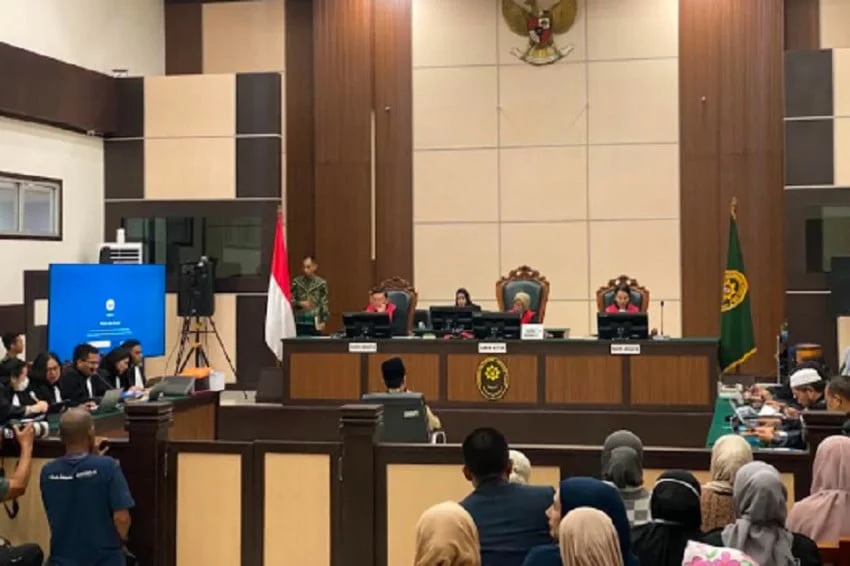
The legal proceedings surrounding allegations of fraudulent academic credentials involving the seventh President of Indonesia, Joko Widodo, reached a notable juncture at the Jakarta District Court. Tifauzia Tyassuma, widely known as Doctor Tifa and appearing as a defendant in the high-profile case, publicly outlined what she characterized as profound procedural and documentary discrepancies following a court session. The focal point of the recent hearing was the physical presence and testimony of the former head of state, who appeared as a witness to defend the authenticity of his undergraduate records from Universitas Gadjah Mada (UGM).
The courtroom confrontation underscores a prolonged public and legal controversy regarding the authenticity of university documents allegedly belonging to the former president. While the judiciary works to establish the factual baseline of these claims through formal legal channels, the defense has consistently challenged the validity and completeness of the evidentiary materials presented by prosecutors. Following the adjournment of the session, the defense highlighted specific evidentiary gaps that they argue undermine the integrity of the academic history in question.
Core Arguments Presented by the Defense
In her statements to the press outside the Jakarta District Court courtroom, Doctor Tifa specified three primary areas of contention concerning the educational background of Joko Widodo during his years as a forestry student at the Yogyakarta-based institution. According to the defense team, the examination of evidence produced during the trial failed to satisfy standard verification benchmarks expected of a university graduate.
The primary point of contention raised by the defense centers on the absence of a formal academic transcript. Doctor Tifa asserted that the documentation presented by the public prosecutor as a key piece of physical evidence consisted exclusively of a Kartu Hasil Studi, or Study Result Card (KHS), rather than the comprehensive cumulative transcript customarily issued upon graduation. In the Indonesian higher education system, a KHS reflects semester-by-semester course performance, whereas a final academic transcript provides a cumulative record of all completed courses, credit accumulations, and the final grade point average required for degree conferral.
Furthermore, the defense claimed to possess comparative documentation from other graduates of the same forestry faculty who completed their studies during the identical academic cohort year. Doctor Tifa maintained that these comparative documents highlight structural and formatting discrepancies when placed alongside the records attributed to the former president. The inability of the witness to produce a definitive, cumulative transcript during the proceedings was framed by the defense as a critical vulnerability in the prosecution’s evidentiary portfolio.
Chronology of the Diploma Controversy
To understand the gravity of the recent courtroom developments, it is necessary to examine the timeline of events that propelled this dispute from online speculation into a formal judicial matter. The allegations concerning the authenticity of the former president’s university credentials first gained traction on various social media platforms several years ago, propagated by various critics and independent commentators, including Doctor Tifa and digital forensic figures.
- 2019–2021 (Initial Rumors): Unverified claims began circulating across digital platforms suggesting that the university credentials utilized by Joko Widodo during his political career, including his mayoral and presidential registration files, were fabricated or belonged to another individual.
- Late 2022 (Formal Legal Challenges): Civil lawsuits and administrative complaints were filed by various activists seeking formal verification of the educational documents. UGM repeatedly issued official statements confirming that the alumnus in question graduated from the Faculty of Forestry in 1985.
- 2023–2025 (Escalation to Criminal Investigation): As public discourse intensified and counter-allegations regarding defamation and the spread of misinformation emerged, law enforcement agencies initiated investigations. Statements made on public forums and broadcasts led to formal criminal charges against several prominent critics under applicable electronic information and transactions regulations.
- November 2026 (Judicial Proceedings at Jakarta District Court): The trial entered a crucial evidentiary phase with the direct testimony of the former president as a testifying witness. The appearance was designed to place testimony on the official judicial record and permit direct questioning by both the prosecution and the defense counsel.
Emotional Testimony and Personal Impact
The tension inside the courtroom extended beyond technical academic record-keeping into deeply personal territory. During the proceedings, the former president expressed profound emotional distress regarding the ongoing nature of the controversy, specifically addressing how the allegations have impacted his family lineage and his deceased parents.
Testifying under oath, Joko Widodo conveyed deep indignation that the dispute over his university credentials had expanded to involve his parents. He remarked on the profound hurt caused when family members who are no longer living are dragged into political and legal disputes, questioning the humanity of continuous public attacks on personal heritage. Legal analysts observed that while emotional testimony does not substitute for physical documentary evidence, it serves to humanize the witness and highlights the severe social toll exacted by prolonged, unverified public accusations in the digital age.
Legal representatives for the state argued that the continued insistence on questioning authentic university records—despite official institutional confirmations issued multiple times by UGM authorities—constitutes a deliberate campaign to undermine public trust in established democratic institutions and educational bodies.
Institutional Verification and Legal Implications
Universitas Gadjah Mada, as one of Indonesia’s premier institutions of higher education, has repeatedly intervened in the public discourse to clarify its administrative history. University officials have previously stated on multiple occasions that the alumnus successfully completed his studies, defended his undergraduate thesis, and received his bachelor’s degree in forestry in accordance with the academic regulations applicable during the mid-1980s.
However, the transition of this administrative verification into a criminal courtroom setting elevates the evidentiary standard. In a criminal proceeding, the burden of proof rests heavily on establishing every element of the charges beyond a reasonable doubt, while the defense evaluates the admissibility and completeness of physical exhibits presented by the prosecution.
The specific distinction raised by Doctor Tifa regarding the KHS versus the final transcript introduces a technical legal debate over documentary standards from an era when record digitization was largely nonexistent. Archival practices in Indonesian universities during the 1980s relied heavily on physical ledger books, paper grade sheets, and manual transcript compilation. Experts in higher education administration note that historical records from that period often exhibit variations in physical formatting compared to modern, automated academic administration systems.
Broader Societal and Political Impact
The ongoing legal battle carries significant implications for the broader political landscape of Indonesia. The case tests the boundaries of free speech, the accountability of public figures, and the legal consequences of disseminating unverified claims regarding the personal backgrounds of state officials.
As the trial at the Jakarta District Court continues, judicial observers are closely monitoring how the panel of judges will weigh the physical documentary evidence—including the disputed study result cards—against the oral testimony of the former president and the institutional certifications provided by university officials. The final verdict is anticipated to set a significant legal precedent regarding the verification of historical academic records and the legal liability associated with challenging the educational credentials of prominent political figures in Indonesia.