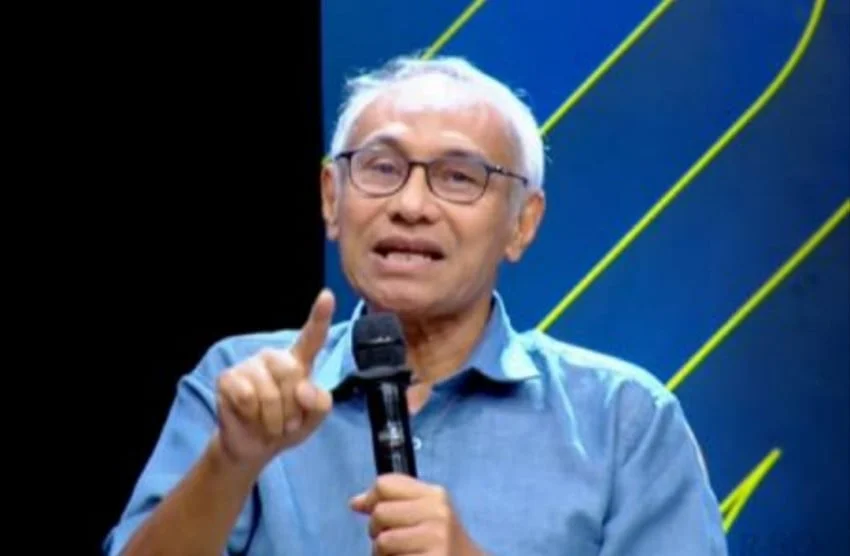
The landscape of Indonesian civil activism suffered a profound loss on Friday, November 13, 2026, with the passing of Rizal Fadillah, a prominent legal scholar, outspoken critic, and tireless campaigner. Fadillah, who gained national prominence for his relentless pursuit of transparency regarding the academic credentials of the nation’s political elite, breathed his last at the Muhammadiyah Hospital in Bandung, West Java. He had been rushed to the Intensive Care Unit (ICU) earlier in the day following a sudden and critical deterioration in his health.
His death marks the quiet departure of one of the most persistent legal minds involved in several high-profile civic controversies over the past decade. Best known for his unwavering alliance with former Minister of Youth and Sports Roy Suryo, Dr. Tifa, and other members of the Petition 100 and the Association of Muslim Intellectuals (TPUA), Fadillah spent his final years challenging institutional authorities and demanding rigorous public accountability from state officials.
As tributes poured in from across the political opposition, legal aid networks, and civil society groups, colleagues emphasized that Fadillah’s legacy would endure through the legal arguments he helped formulate and the institutional questions he relentlessly pushed into the public sphere.
A Life Dedicated to Constitutional Law and Activism
Born into an academically and religiously inclined family, Rizal Fadillah dedicated the vast majority of his professional life to the study and practice of law. Holding advanced degrees in jurisprudence, he established himself early on as a respected legal counselor, author of numerous socio-political essays, and an active participant in public discourse.
Unlike many contemporary commentators who limited their critique to social media platforms, Fadillah frequently grounded his activism in constitutional theory and administrative law. He was a familiar figure in various legal advocacy groups, often utilizing formal petitions, judicial reviews, and open-letter campaigns to challenge government policies that he and his peers believed infringed upon democratic norms or transparency standards.
Over the decades, Fadillah’s career transitioned from general legal practice and Islamic jurisprudence toward high-stakes public interest litigation. He frequently collaborated with anti-corruption watchdogs, religious coalitions, and independent civic associations, positioning himself as a defender of grassroots interests against what he perceived as growing executive overreach.
The Battle for Academic Transparency: The Jokowi Credentials Controversy
Rizal Fadillah became a household name across Indonesia during his intensive involvement in the controversial legal challenges surrounding the university diplomas of former President Joko Widodo (Jokowi) and members of his immediate family. Alongside figures like Roy Suryo, Kurnia Tri Royani, and Rustam, Fadillah formed the intellectual and legal backbone of a coalition that questioned the authenticity of official academic records originating from Gadjah Mada University (UGM).
The controversy began to gain significant public traction when various activists alleged discrepancies in graduation timelines, formatting peculiarities in historical documents, and a lack of verifiable archival evidence regarding the former president’s undergraduate tenure. While university administrators and independent fact-checking bodies repeatedly affirmed the legitimacy of the credentials—presenting registrar ledgers, archival photographs, and official statements—Fadillah and his legal co-petitioners remained unconvinced.
As a core member of the TPUA (Front Pergerakan untuk Keadilan dan Persatuan / Front for Justice and Unity), Fadillah spearheaded several attempts to secure formal administrative disclosures. He argued that under Indonesia’s Freedom of Information Law, academic and professional records of high-ranking public servants should be subject to unconditional public verification. His confrontational legal stance placed him directly at odds with both government defenders and university legal teams, leading to numerous high-profile exchanges in the media and legal forums.
Chronology of the Final Days and Hospitalization
The final chapters of Fadillah’s life remained intensely bound to his activist commitments. According to statements released by close associates, Fadillah had been actively corresponding with legal teams and preparing documentation related to ongoing administrative petitions just days prior to his medical emergency.
On the morning of Friday, November 13, 2026, Fadillah experienced acute health complications while at his residence in Bandung. Family members immediately arranged for his transport to the Muhammadiyah Hospital in Bandung. Upon arrival, medical personnel assessed his condition as critical and immediately admitted him to the Intensive Care Unit (ICU).
Despite intensive medical intervention by the hospital’s cardiology and critical care specialists, Fadillah’s condition continued to decline rapidly throughout the afternoon. At approximately 5:00 PM Western Indonesia Time (WIB), attending physicians pronounced him deceased. Hospital representatives later confirmed that the cause of death was linked to multiple organ failure precipitated by underlying cardiovascular complications.
Tributes and Public Reactions
The announcement of Fadillah’s passing prompted an immediate wave of condolences from his fellow activists and political allies, many of whom took to digital media platforms to honor his memory.
Roy Suryo, his long-time collaborator in the diploma scrutiny campaigns, released a poignant video statement via his official YouTube channel shortly after receiving the news. Visibly shaken, Suryo reflected on the years of shared activism, noting the solidarity that bound the core group of critics together through numerous legal battles and public controversies.
"Ustaz Rizal Fadillah has been with me since the very beginning, alongside Dr. Tifa, Mas Rustam, Ibu Kurnia Tri Royani, and several others," Suryo stated in his digital tribute. "Together, we undertook the painstaking task of unpacking the Jokowi diploma case, which subsequently extended to other related inquiries. This afternoon, he was called home by the Almighty. We hope and pray for his husnulkhatimah [a good end]. Farewell, Ustaz Rizal Fadillah. Your struggle will certainly be carried on, and the Indonesian people are deeply proud of your steadfast commitment to upholding the truth without wavering."
Dr. Tifa, another prominent public intellectual who frequently aligned with Fadillah on academic transparency issues, also issued a statement highlighting his intellectual rigor and unwavering personal integrity. Similar sentiments were echoed by various religious organizations in West Java, where Fadillah had long been revered as a knowledgeable cleric, community leader, and defender of public morality.
Broader Implications for Civic Activism and Legal Oversight
The passing of Rizal Fadillah leaves a noticeable vacuum within Indonesia’s active dissident community. At a time when legal scrutiny of state institutions faces shifting political dynamics, figures who combined formal legal training with adversarial public advocacy played a unique role in shaping national conversations about accountability.
Analysts of Indonesian politics note that while Fadillah’s high-profile legal challenges—particularly regarding presidential credentials—rarely resulted in favorable rulings within the formal court system, they nonetheless served a vital function in maintaining public debate around the boundaries of transparency. By persistently testing the limits of freedom of information laws and administrative accountability, activists like Fadillah forced public institutions to adopt more rigorous standards of public documentation and communication.
However, critics of Fadillah’s methodology have long argued that protracted legal campaigns centered on personal credentials can distract from substantive policy debates and undermine institutional trust without sufficient evidentiary backing. The polarization surrounding his work reflects a broader challenge within modern Indonesian democracy: balancing the citizen’s right to critical inquiry with the need for institutional stability and respect for verified administrative records.
Looking Ahead: The Future of the Credential Scrutiny Movement
With one of its chief legal strategists now gone, the future of the coalition that pursued the academic credential cases remains uncertain. While figures like Roy Suryo have vowed to continue the investigative and legal efforts initiated by the group, the loss of Fadillah’s specific jurisprudential expertise will undoubtedly require adjustments within their operational framework.
As civil society organizations evaluate the legacy of Rizal Fadillah, discussions are already underway among academic circles regarding how universities, state bodies, and civil watchdogs can better bridge the gap between demands for absolute transparency and the protection of institutional integrity. Whether future legal scholars will adopt Fadillah’s combative approach to administrative oversight or forge new pathways of dialogue remains to be seen.
For now, family, friends, and followers are preparing for memorial services in Bandung, where Rizal Fadillah is expected to be laid to rest surrounded by colleagues, community members, and those who stood shoulder-to-shoulder with him throughout his decades-long career in public advocacy. His death closes a chapter on a distinct era of adversarial civic activism in Indonesia, leaving behind a complex legacy that will be debated by historians, legal scholars, and political analysts for years to come.