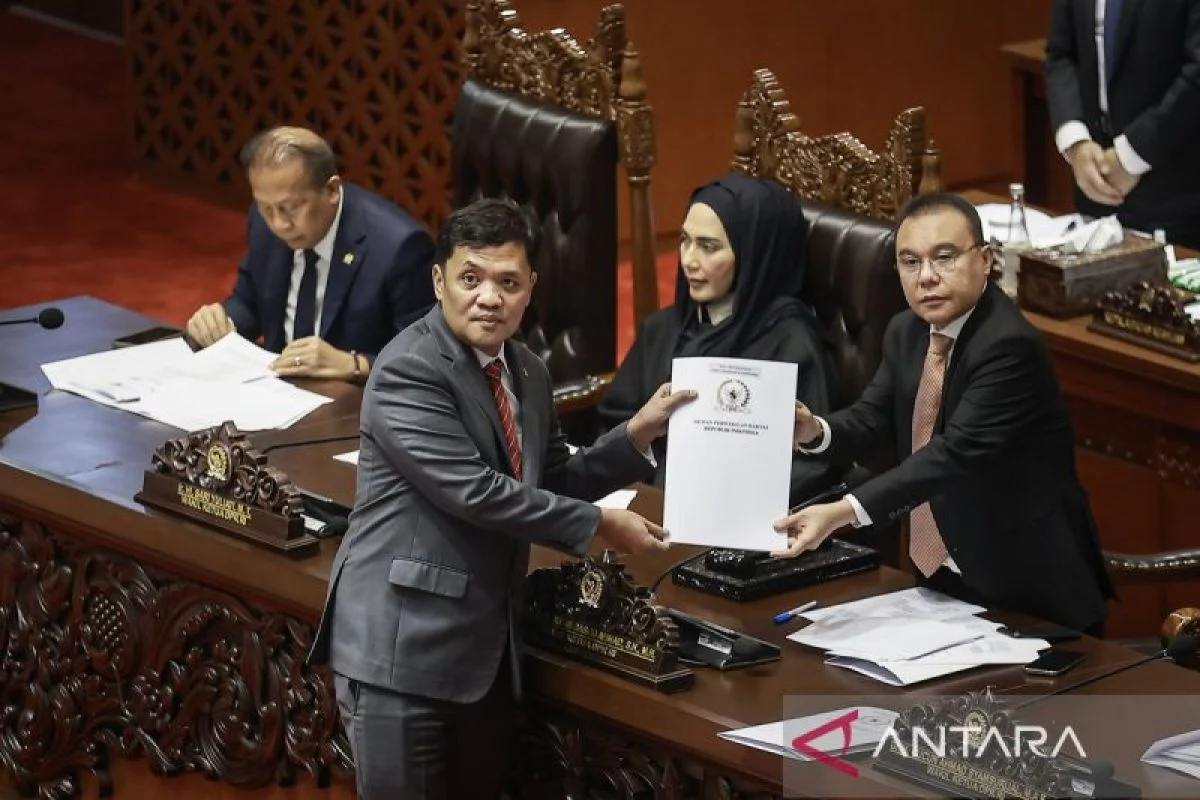
Jakarta – The retirement landscape for members of the Indonesian National Police (Polri) has undergone a formal structural shift following the enactment of Law Number 5 of 2026, which introduces the third amendment to Law Number 2 of 2002 concerning the Indonesian National Police. Officially taking effect on June 17, 2026, the updated legislation establishes a tiered retirement age framework that varies according to an officer’s rank and classification. This legislative adjustment marks a significant departure from the previous uniform retirement cap of 58 years, introducing nuanced provisions regarding specialized expertise, functional positions, transitional phases for near-retirement personnel, and concurrent legal challenges currently underway at the Constitutional Court.
Structural Breakdown of the New Retirement Age Framework
Under the provisions stipulated in Article 30, paragraph (5) of Law Number 5 of 2026, the maximum retirement age for Polri personnel is systematically categorized into distinct tiers based on rank groups. This structured approach aims to retain experienced institutional knowledge while balancing generational renewal within the police force.
The tiered system establishes the following thresholds:
- Enlisted personnel (Tamtama) and Non-Commissioned Officers (Bintara): Maximum retirement age set at 59 years.
- Junior Officers (Perwira Pertama): Maximum retirement age set at 60 years.
- Middle Officers (Perwira Menengah): Maximum retirement age set at 60 years.
- High-Ranking Officers (Perwira Tinggi): Maximum retirement age set at 60 years.
A notable exception exists for four-star general officers, who occupy the highest echelon of the institution. While their baseline retirement age is capped at 60 years, Article 30 provides a mechanism for service extension of up to one additional year. This extension is not automatic; rather, it is contingent upon institutional requirements and must be formalized through a Presidential Decree. This caveat ensures that retention at the pinnacle of police leadership remains an operational prerogative determined by executive oversight rather than an entitlement based purely on rank.
Special Expertise Extensions and Functional Positions
Beyond general rank classifications, the revised law addresses the operational realities of modern policing, which increasingly relies on specialized technical competencies, cyber defense capabilities, forensic sciences, and counter-terrorism expertise.
Article 30, paragraph (7) of the 2026 statute empowers the institution to grant extended service terms to personnel possessing critical, highly specialized skills that are deemed essential for police operations. Such extensions are capped at a maximum of one additional year, initiated via a formal proposal by the Chief of the Indonesian National Police (Kapolri) and validated through a Presidential Decree in accordance with prevailing statutory guidelines.
Furthermore, the legislation carves out specific exemptions for officers serving in functional roles. Members of the Polri who occupy designated functional positions are exempt from the standard age ceilings outlined in paragraph (5). Instead, their retirement timelines align directly with the statutory regulations governing functional officials across the broader civil and state apparatus, ensuring consistency for specialized professional tracks such as medical personnel, legal drafters, and forensic researchers.
Transitional Provisions for Personnel Nearing Retirement
To mitigate administrative friction and protect the career expectations of officers nearing the end of their service when the law took effect, the legislation incorporates a carefully structured transitional framework.
For officers who were already approaching their purnatugas (retirement phase) around the June 17, 2026 implementation date, the transition rules dictate specific adjustments:
- Personnel who had attained the age of 56 at the time of enactment are integrated directly into the new retirement age framework.
- Officers who were 57 years old when the rule took effect are granted extended service terms, allowing them to remain active until reaching the age of 59.
- Similarly, personnel scheduled to turn 58 in 2026 benefit from transitional protections that extend their active service eligibility up to 59 years, depending on their specific rank bracket and administrative evaluation.
These transitional safeguards were drafted to prevent sudden displacement within senior ranks and to provide predictable human resource planning for the internal command structure during the legislative rollout.
Constitutional Review and Legal Challenges at the Mahkamah Konstitusi
Despite its formal implementation, the constitutionality of the new retirement framework has faced immediate judicial scrutiny. On October 7, 2026, the Constitutional Court (Mahkamah Konstitusi or MK) convened its inaugural hearing for Case Number 362/PUU-XXIV/2026, a formal material judicial review petition challenging Article 30, paragraph (5) alongside the transitional provisions of Law Number 5 of 2026.
The petitioners in the case argue that differentiating the retirement age based on hierarchical rank creates structural inequalities within the civil-military-police spectrum and contend that a uniform retirement age ceiling of 58 years should be reinstated across all operational tiers. During the introductory session, the constitutional panel of judges evaluated the initial filings and provided technical guidance regarding the formal structure of the petition. The court granted the petitioners a statutory window of 14 working days to refine and resubmit their legal arguments.
Legal analysts emphasize that because the judicial review remains in its preliminary evidentiary and examination phases, Law Number 5 of 2026 remains fully valid and enforceable. The ongoing MK proceedings do not suspend the operational application of the statute, meaning police administration, personnel assignments, and retirement processing continue to adhere strictly to the 2026 law until a definitive, binding verdict is handed down by the constitutional bench.
Implications for Institutional Efficiency and Human Resources
The introduction of extended service years for police personnel carries wide-ranging implications for both internal organizational dynamics and broader public administration reform. Proponents of the policy argue that retaining veteran officers in middle and senior officer brackets helps maximize return on investment regarding specialized training, leadership development, and operational experience. In an era where law enforcement agencies face complex transnational crimes, digital financial fraud, and sophisticated security challenges, institutional memory is viewed as a critical asset.
Conversely, critics and internal reform advocates have raised concerns regarding promotion blockages for junior and middle-ranking officers. A higher retirement ceiling naturally slows the rate of attrition at command levels, potentially delaying career progression for mid-level personnel waiting to step into supervisory and strategic roles. Managing this delicate balance between retaining senior expertise and maintaining upward mobility for younger cadres remains one of the primary administrative tasks facing Polri’s Human Resources division.
As the Constitutional Court continues its deliberations on Case Number 362/PUU-XXIV/2026, the long-term permanence of the tiered retirement structure rests on judicial interpretation. For the foreseeable future, however, the Indonesian National Police will operate under the definitive guidelines of Law Number 5 of 2026, shaping the career arcs, operational readiness, and administrative planning of hundreds of thousands of personnel nationwide.