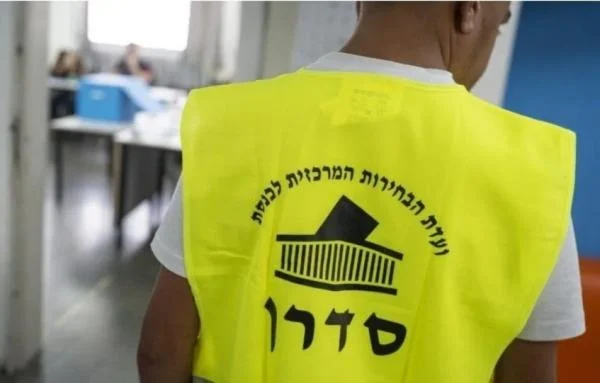
The prospect of a change in government within Israel has ignited intense debate regarding the future of the Israeli-Palestinian conflict, with analysts closely monitoring how a potential transition of power might alter the trajectory of humanitarian aid, cease-fire negotiations in Gaza, and the administrative pressure applied to the Palestinian Authority in the West Bank. While the political landscape remains in flux following recent electoral cycles, experts from international policy circles caution that a change in leadership may not necessarily equate to a paradigm shift in long-term peace prospects. The prevailing consensus suggests that while tactical approaches to security and governance may evolve under figures like Gadi Eisenkot, the structural barriers to a comprehensive resolution remain deeply entrenched.
The Political Landscape and Potential Leadership Shifts
The potential rise of a government led by opposition figures such as Gadi Eisenkot has drawn significant attention from the European Council on Foreign Relations (ECFR). Beth Oppenheim, a researcher at the ECFR, notes that a government coalition led by more centrist or moderate opposition elements could theoretically act as a bulwark against the influence of far-right factions that have historically championed the aggressive expansion of settlements in the West Bank. For years, these factions have exercised considerable leverage within Israeli coalition governments, pushing for policies that have been widely condemned by the international community as impediments to a two-state solution.
However, the efficacy of such a shift is subject to intense scrutiny. While an administration led by Eisenkot might adopt a more pragmatic stance—potentially reducing the frequency of contentious rhetoric and taking a more flexible approach to the humanitarian crisis in Gaza—analysts warn against premature optimism. The Israeli political system, currently characterized by fragmentation and a lack of a clear mandate from the electorate, creates an environment where even moderate leaders are often beholden to the demands of smaller, ideological parties, thereby limiting their ability to enact radical policy changes.

Chronology of Recent Political Instability
The current uncertainty is the culmination of years of political volatility in Israel. Following a series of inconclusive elections, the Israeli public has found itself in a recurring cycle of political gridlock.
- 2023–2024: The conflict in Gaza significantly reshaped the domestic political discourse, shifting priorities toward national security and the management of regional alliances.
- Late 2025: The failure of incumbent leadership to secure a decisive victory in parliamentary elections led to widespread civil frustration and demands for reform.
- October 2026: Following a series of failed coalition negotiations, political observers highlighted that the lack of a clear winner necessitates a potential restructuring of the Israeli cabinet, bringing figures like Gadi Eisenkot to the forefront of the national conversation.
- November 2026: As of early November, the possibility of a new government remains a focal point of international diplomacy, with stakeholders in Washington, Cairo, and Brussels watching for signs of a shift in policy toward the occupied territories.
Humanitarian Implications and the Gaza Crisis
One of the most pressing concerns for the international community is the status of the humanitarian corridor into the Gaza Strip. Under the current administration, the policy has been characterized by strict security protocols that have frequently resulted in delays for essential goods, medical supplies, and humanitarian workers.
If a new government were to take office, observers suggest that a more flexible approach could be implemented. This might include the easing of border restrictions, the streamlining of aid distribution processes, and a more open engagement with international aid agencies. Furthermore, a change in leadership could provide the necessary political cover to restart stalled cease-fire negotiations. Gadi Eisenkot, drawing on his background as a former high-ranking military official, is viewed by some as an individual who understands the limitations of military force and the necessity of diplomatic engagement. Nevertheless, the humanitarian situation in Gaza is inextricably linked to broader security concerns, and any transition of power is unlikely to resolve the fundamental ideological disagreements that drive the conflict.
The West Bank and the Palestinian Authority
The relationship between the Israeli government and the Palestinian Authority (PA) has reached a nadir in recent years. The PA, based in Ramallah, has faced significant challenges, including a lack of domestic legitimacy, financial insolvency, and the persistent expansion of Israeli settlements in the West Bank.

A government led by a moderate coalition could theoretically reduce the systemic pressure on the PA. This might manifest as the release of withheld tax revenues—a frequent point of contention—or a reduction in the frequency of military raids in civilian-governed areas. However, analysts point out that the institutional rot within the PA and the lack of a clear successor to current leadership pose as much of a hurdle as the policies emanating from Jerusalem. Without a concurrent renewal of political will on both sides, a change in the Israeli government is likely to be viewed as a cosmetic adjustment rather than a substantive change in the status quo.
Expert Analysis: The Limits of Policy Change
The caution expressed by Beth Oppenheim and other experts is rooted in a sober assessment of Israeli public opinion and the institutional realities of the Knesset. "There will not be a sea change," Oppenheim remarked, reflecting the view that the core tenets of Israeli national security policy are broadly shared across the political spectrum, regardless of who occupies the Prime Minister’s office.
Supporting this analysis is the fact that the Israeli electorate has shifted toward the right over the past two decades. Even in the event of an opposition victory, the governing coalition would likely be a patchwork of disparate interests. Such a government would struggle to pass legislation related to territorial concessions, the status of Jerusalem, or the rights of refugees, as any significant movement on these "final status" issues would likely trigger a collapse of the coalition itself.
Regional Reactions and Future Outlook
The international community, particularly the United States and the European Union, remains committed to the principle of a two-state solution. However, there is a growing recognition that the path to this outcome is obstructed by domestic political factors within Israel. Statements from international observers emphasize that while a change in government is a prerequisite for a new diplomatic chapter, it is not a guarantee.

The upcoming months will be critical. If a new administration emerges, its first 100 days will be analyzed for indicators of policy shifts. Key markers to watch include:
- Settlement Activity: Will the government freeze construction in isolated outposts?
- Gaza Border Management: Will there be a measurable increase in the volume of humanitarian aid permitted into the enclave?
- Diplomatic Tone: Will the new government re-engage in direct, high-level talks with the Palestinian Authority?
Ultimately, while the potential for change exists, the structural dynamics of the conflict—deep-seated historical grievances, security dilemmas, and the absence of a unified vision for peace—continue to outweigh the impact of any single electoral outcome. For the residents of the West Bank and Gaza, the wait for a transformative shift in their daily reality continues, as the political machinery in Israel moves slowly toward a resolution that remains, for now, on the horizon.
As the political maneuvering continues, it is clear that any future government will be forced to contend with a volatile domestic environment and a global community that is increasingly impatient for a sustainable, long-term solution. Whether the next iteration of the Israeli government can navigate these challenges remains the central question of the regional geopolitical landscape.