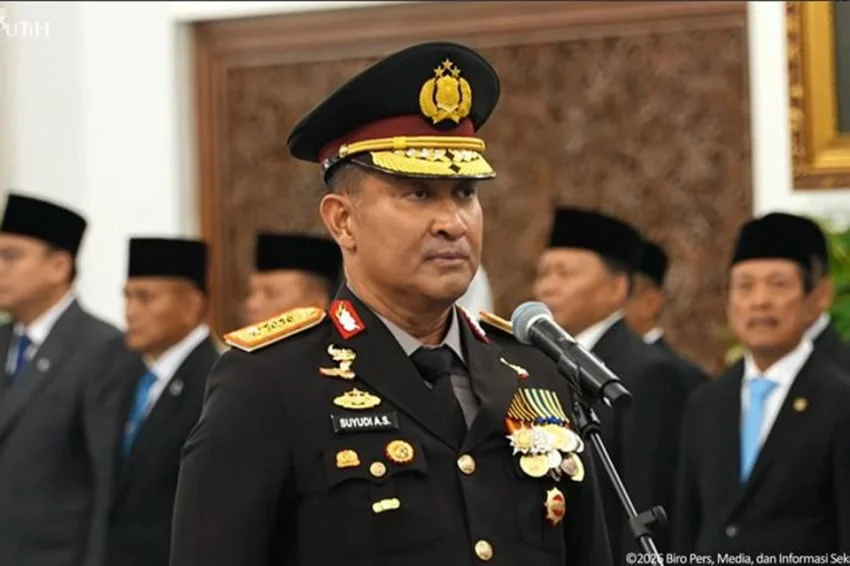
JAKARTA – The Indonesian National Police (Polri) has officially initiated a strategic reshuffle involving its high-ranking leadership, with Chief of Police (Kapolri) General Suyudi Ario Seto overseeing the reassignment of five Brigadier Generals to the Mobile Brigade Corps (Korbrimob) in early November 2026. This move, finalized through the issuance of Telegram Letter Number ST/2467/XI/KEP./2026 dated November 2, 2026, reflects a broader organizational transformation within the police force aimed at optimizing operational readiness and administrative efficiency.
The five officers appointed to the Korbrimob are Brigadier General Dadang Rahardja, Brigadier General Djadjuli, Brigadier General Mulyadi, Brigadier General Amostian, and Brigadier General I Ketut Gede Wijatmika. These appointments were part of a comprehensive restructuring process that involved 264 high-ranking (Pati) and middle-ranking (Pamen) officers across various divisions and regional commands.
The Scope of the November 2026 Reshuffle
The recent administrative action is not an isolated event but rather part of a systemic effort to address personnel management within the force. In total, the 264 officers included in the latest Telegram represent one of the most significant mass rotations conducted by the current administration. Beyond the five officers assigned to the Korbrimob, the same directive also saw 13 Brigadier Generals transferred to the Education and Training Institute (Lemdiklat Polri), indicating a concerted push to align leadership expertise with the specific needs of specialized units.
The Korbrimob, as the elite paramilitary wing of the National Police, requires specialized tactical expertise and high-level leadership. By rotating senior officers into this unit, the Polri leadership aims to reinforce command structures and infuse fresh strategic perspectives into the corps’ operational doctrines. The selection of these specific Brigadier Generals suggests a focus on seasoned personnel who have demonstrated proficiency in field operations and administrative management throughout their respective careers.
Chronology of Organizational Changes
The sequence of events leading up to this reshuffle began in late October 2026, when internal reviews of departmental performance were finalized by the National Police Headquarters. The formal announcement on November 2 served as the culmination of these assessments. By initiating these changes early in the month, the National Police leadership sought to ensure that new commanders and staff officers were positioned to implement their mandates before the year-end operational surge.
In the Indonesian policing context, "tour of duty" and "tour of area" policies are fundamental to the organization’s professional development cycle. These rotations are designed to prevent the stagnation of leadership and to ensure that officers gain diverse experience across different geographical and functional jurisdictions. This specific round of mutations is particularly notable for its scale, which experts suggest may be linked to the anticipated security challenges that the nation faces as it approaches the final quarter of the year.
Official Stance and Rationale
The Head of the Public Relations Division of the National Police, Inspector General Johnny Eddizon Isir, emphasized that these movements are a standard procedural element of organizational health. "This is a natural process within the Polri organization," Isir stated during a press briefing in Jakarta. "It serves as a form of organizational refreshment to ensure that the chain of command and the execution of police duties remain optimal in the face of increasingly complex security challenges."
The rationale provided by the police leadership underscores the necessity of institutional adaptability. As the role of the police force expands to include cybersecurity threats, counter-terrorism, and social conflict mitigation, the ability to deploy experienced leaders to key positions becomes a priority. The transfer to the Korbrimob, in particular, is viewed by security analysts as a strengthening of the force’s front-line response capabilities.

Broader Impact and Security Implications
The deployment of five Brigadier Generals to the Korbrimob carries significant implications for the force’s tactical posture. The Korbrimob is responsible for high-risk operations, including civil disturbances, search and rescue (SAR) missions, and counter-terrorism. The presence of high-ranking officers with deep operational backgrounds is essential for maintaining the readiness of personnel and the maintenance of sophisticated equipment.
Furthermore, the simultaneous movement of officers to the Lemdiklat Polri suggests that the leadership is prioritizing the modernization of training programs. By moving experienced officers into educational roles, the police are attempting to bridge the gap between field experiences and the pedagogical development of the next generation of officers. This creates a feedback loop where lessons learned in the field are directly integrated into the curriculum of the police academy and specialized training schools.
Analysis of the 264-Officer Rotation
The scale of the 264-officer rotation indicates a major realignment of human capital within the Indonesian police. Historically, such mass movements occur when the organization undergoes a change in strategic focus or in response to external environmental shifts. While the police have framed these as routine, the concentration of senior personnel movements suggests a deliberate strategy to place "the right people in the right places" to address specific administrative or operational deficits identified in the preceding year.
Data from the Police Human Resources Bureau shows that such mass rotations typically result in improved internal communication and better resource allocation. However, they also present challenges, particularly in maintaining continuity in ongoing investigations and long-term security programs. To mitigate these risks, the transition periods for these incoming officers are typically managed through strict handover protocols, ensuring that operational momentum is not lost.
Regional and National Perspectives
As Indonesia continues to navigate complex internal security dynamics, the role of the Korbrimob becomes increasingly vital. With the upcoming political calendar and the intensification of public demand for law enforcement, the National Police is under pressure to perform at peak efficiency. The decision to bolster the Korbrimob leadership suggests that the National Police Chief is preparing for potential spikes in security demands in the coming months.
The rotation also reflects the current administration’s emphasis on meritocracy. By circulating high-ranking officers, the organization provides opportunities for leaders to prove their capabilities in new environments, thereby creating a pool of diverse talent for future executive roles within the police structure.
Conclusion
The appointment of Brigadier Generals Dadang Rahardja, Djadjuli, Mulyadi, Amostian, and I Ketut Gede Wijatmika to the Korbrimob represents a tactical maneuver by General Suyudi Ario Seto to stabilize and strengthen one of the force’s most critical pillars. As the Indonesian National Police continues its evolution in the digital and social landscape of 2026, the success of these personnel shifts will be measured by the organization’s ability to maintain public order and security.
While the administrative process of shifting 264 officers is a standard feature of the Polri’s management cycle, its impact on the ground is profound. By fostering an environment of continuous learning and rotational experience, the police force remains committed to its mandate of serving the public while adapting to the evolving demands of modern law enforcement. The public, stakeholders, and internal observers will be closely monitoring how these new leadership placements manifest in the operational effectiveness of the Mobile Brigade Corps in the months ahead. As of early November 2026, the force remains in a transition phase, with the new appointees expected to assume their responsibilities immediately, ensuring that the integrity of the institution remains uncompromised during this period of transition.