The Indonesian automotive landscape is currently undergoing a transformative phase characterized by the aggressive entry of Chinese automotive manufacturers. As the market becomes increasingly saturated with diverse offerings, from internal combustion engine vehicles to cutting-edge electric vehicles (EVs), the pressure on pricing has intensified. Amid this environment, Indomobil Group, one of Indonesia’s largest automotive conglomerates, has officially declared its intention to steer clear of a "price war," prioritizing long-term brand equity, product quality, and consumer trust over short-term market share gains achieved through deep discounting.
This strategic pivot comes as Indomobil continues to expand its portfolio by acting as the distributor and partner for a suite of prominent Chinese brands, including GAC, Maxus, Changan, Hongqi, Leapmotor, Great Wall Motor (GWM), and JAC. The company’s stance highlights a growing maturity in the Indonesian market, where stakeholders are increasingly focused on the sustainability of the automotive ecosystem rather than mere volume.
The Evolution of the Chinese Automotive Presence in Indonesia
To understand the current competitive tension, one must look at the timeline of Chinese automotive expansion in Indonesia. Over the past decade, manufacturers such as Wuling and Chery paved the way, initially focusing on value-for-money propositions. However, as of late 2026, the landscape has shifted toward high-tech, premium, and sustainable mobility solutions.
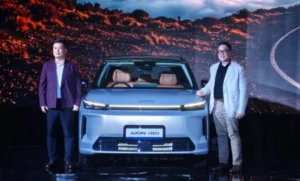
Indomobil Group’s strategic accumulation of brands like GAC, Aion, and GWM represents a calculated move to capture various segments of the market—ranging from mass-market SUVs to luxury electric vehicles. The introduction of the Aion i60, a premium electric SUV, serves as a litmus test for this strategy. Rather than competing with entry-level electric hatchbacks on price, Indomobil is positioning the vehicle as a premium experience, emphasizing engineering excellence, battery efficiency, and software integration.
Strategic Philosophy: Quality Over Aggressive Discounting
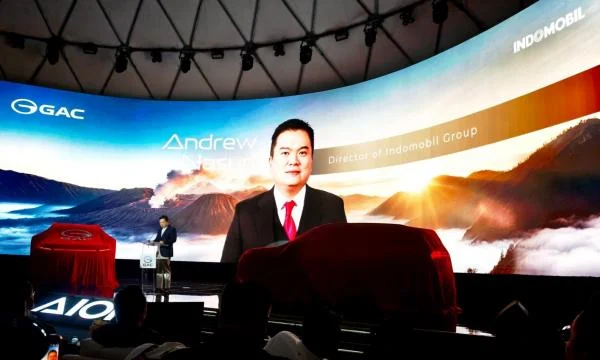
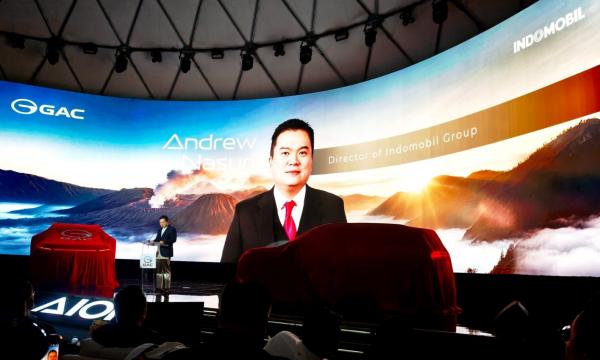
During the launch of the Aion i60 in Jakarta on Saturday, November 7, 2026, Director of Indomobil Group, Andrew Nasuri, provided clarity on the company’s vision. He articulated that the firm’s operational focus is centered on the total cost of ownership (TCO) and the long-term relationship between the brand and the consumer, rather than the immediate transactional price point.
"We do not view a price war as a sustainable or desirable path for our operations," Nasuri stated. "Our objective is to foster deep-rooted trust with the Indonesian consumer. This is achieved by ensuring that every vehicle we deliver meets stringent quality standards and is supported by a robust infrastructure of service centers and parts availability."
This philosophy addresses a common concern among Indonesian consumers regarding "orphan brands"—manufacturers that enter the market, capture sales, and subsequently fail to provide adequate service networks or spare parts. By emphasizing purnajual (after-sales) support, Indomobil is positioning its Chinese partners as reliable, long-term fixtures in the Indonesian automotive landscape.
Market Dynamics and Economic Implications
The Indonesian automotive market is historically price-sensitive, yet it is currently experiencing a divergence in consumer behavior. A growing middle-to-upper class is increasingly prioritizing vehicle safety features, digital connectivity, and environmental impact. Industry analysts observe that while price wars can temporarily boost sales figures for companies, they often lead to brand dilution and margin compression, which can jeopardize the ability of a distributor to fund its dealership network and service infrastructure.
Current market data indicates that Chinese brands have successfully captured a significant percentage of the electric vehicle market, challenging the long-standing dominance of Japanese manufacturers. However, this shift has led to a race to the bottom in terms of pricing among some new entrants. Indomobil’s refusal to participate in this race suggests a belief that the market is ready for a "value-added" competition model.

Strengthening the Service Ecosystem
A critical component of Indomobil’s strategy is the integration of its existing dealer network with the new Chinese brands. By leveraging its decades of experience in the Indonesian automotive sector, the group is able to provide a level of service standardization that newer, independent distributors may lack.
The strategy includes:
- Network Expansion: Rapidly scaling up service facilities for brands like GWM and Aion to ensure that parts are readily available.
- Technician Training: Investing in localized training programs to ensure that mechanics are proficient in the complexities of high-voltage electric propulsion systems.
- Customer Relationship Management: Implementing digital platforms to streamline the service booking experience and warranty management, thereby increasing brand stickiness.
Comparative Analysis: Short-Term Gains vs. Long-Term Viability
The decision to avoid a price war carries both risks and rewards. The primary risk is the potential loss of market share to competitors who are willing to sacrifice margins to achieve rapid penetration. In a market where price remains the primary determinant for the majority of the population, aggressive pricing can act as a powerful barrier to entry for higher-priced models.
However, the reward for Indomobil is the creation of a "prestige" association with its Chinese brands. By maintaining price integrity, the company avoids the stigma of a "cheap" product. Furthermore, this approach protects the resale value of vehicles—a key concern for Indonesian car buyers who traditionally consider the depreciation rate when making a purchase. If Indomobil succeeds in maintaining high resale values for its Chinese models, it will have solved one of the most significant psychological hurdles preventing mass-market adoption of these vehicles.
Industry Outlook and Future Trajectory
Looking ahead to 2027 and beyond, the Indonesian automotive sector is expected to see a consolidation phase. Smaller distributors or brands that rely solely on price-cutting may find themselves unable to sustain operations as economic conditions fluctuate and consumer demands for reliability increase.

Indomobil Group’s approach serves as a blueprint for institutional stability. By focusing on the "experience" of ownership rather than the "transaction" of buying, they are effectively bridging the gap between emerging technology and consumer confidence. As the government continues to incentivize the transition to green energy and EV adoption through tax policies and infrastructure support, Indomobil’s focus on long-term brand building appears well-aligned with the broader national agenda of promoting sustainable, high-quality automotive manufacturing.
Conclusion
The statement by Andrew Nasuri serves as a definitive marker in the evolving Indonesian automotive market. While the competition from Chinese manufacturers will undoubtedly continue to reshape the industry, Indomobil Group’s rejection of price wars signals a shift toward a more value-oriented, service-led competitive environment. By betting on the quality of its product portfolio and the strength of its after-sales network, the group is aiming to ensure that its Chinese automotive brands are not merely transient trends, but permanent, reliable, and respected components of the Indonesian transportation sector.
For the consumer, this indicates that the era of "cheap" may be evolving into an era of "better," as manufacturers and distributors alike recognize that the Indonesian market is becoming increasingly sophisticated and discerning in its automotive choices. As the market matures, the ability to deliver on promises of quality and service will likely become the ultimate competitive advantage, far outweighing the transient benefits of aggressive price discounting.