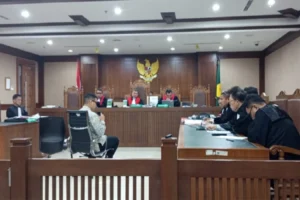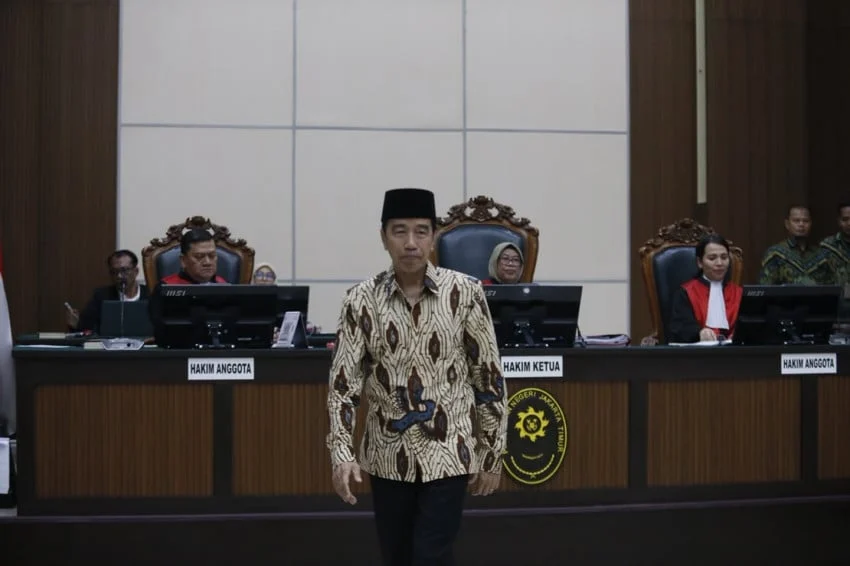
The sanctity of familial honor became the focal point of a tense legal proceeding at the East Jakarta District Court on Thursday, November 5, 2026, as the seventh President of the Republic of Indonesia, Joko Widodo, confronted the ongoing litigation regarding the authenticity of his educational credentials. While the legal dispute originally centered on the validity of his academic documentation, the courtroom atmosphere shifted significantly when the former head of state addressed the conduct of the defendant, Tifauzia Tyassuma, widely known as Doctor Tifa.
The proceedings took an emotional turn when Widodo, appearing as a witness, expressed his deep-seated resentment regarding the defendant’s decision to involve his deceased parents in the public discourse surrounding the case. For the former president, the controversy had transcended the bounds of political or legal critique, veering into what he characterized as a deeply personal and disrespectful affront to his family lineage.
A Breach of Ethical Boundaries in Litigation
The core of the grievance stems from allegations that Tifauzia Tyassuma visited the final resting place of Widodo’s parents as part of her broader campaign to challenge the provenance of his academic certificates. During his testimony, Widodo did not mask his disdain for these actions. "I am profoundly offended. I am deeply incensed because my parents—my biological mother and father—were subjected to such treatment," Widodo stated firmly before the bench.
For the former president, the intrusion upon his parents’ gravesite was not merely a matter of public debate but a violation of cultural and ethical norms deeply embedded in Indonesian society. He emphasized that his parents were the architects of his formative years, individuals who labored under significant economic constraints to ensure his education. The attempt to link his upbringing or their memory to a perceived conspiracy regarding his academic record was, in his view, a bridge too far.
Chronology of the Academic Credential Dispute
The legal saga involving Widodo’s credentials has spanned several years, evolving from online conjecture into a formal judicial process. The timeline of this dispute serves as a backdrop to the current hostility:
- Mid-2022: Initial viral allegations emerge on social media platforms, questioning the authenticity of the diploma issued by Gadjah Mada University (UGM) to Joko Widodo in 1985.
- October 2022: A formal lawsuit is filed at the Central Jakarta District Court, claiming that the president’s diploma was fabricated.
- Late 2022: Gadjah Mada University officially confirms the legitimacy of the degree, providing evidence of the president’s graduation, though the ruling failed to silence critics.
- 2024–2025: The discourse shifts as various figures, including Tifauzia Tyassuma, continue to propagate theories regarding the president’s background, leading to criminal defamation and hate speech charges.
- November 2026: The ongoing trial at the East Jakarta District Court reaches a boiling point, with the defendant’s unconventional tactics—including public visits to the family’s ancestral sites—becoming a matter of court record.
The Role of Digital Discourse and Public Figures
Tifauzia Tyassuma, a medical professional and public commentator, has utilized her platform to relentlessly challenge the integrity of the former administration. Her methodology has frequently involved unconventional rhetoric and actions that have drawn sharp rebukes from legal experts and the Public Prosecution Office (JPU).
During the November 5 hearing, the courtroom was reminded of the broader context of these provocations. Earlier in the proceedings, legal counsel for the defendant had even challenged the former president to modify his physical appearance—specifically suggesting he grow a mustache within a two-week timeframe—a demand that was swiftly dismissed and protested by the prosecution as irrelevant and intended to mock the judicial process.
Observers note that this behavior reflects a growing trend in Indonesian digital-age litigation, where the lines between political dissent and targeted harassment become increasingly blurred. The JPU has maintained that such actions serve no evidentiary purpose and are designed primarily to undermine the dignity of the judicial institution.
Societal and Legal Implications
The impact of this trial extends beyond the individual reputations of the parties involved. It touches upon the broader issue of how public figures are protected from malicious defamation and the extent to which the public interest justifies investigations into personal histories.
Legal analysts suggest that the court’s handling of this case will set a critical precedent for defamation laws in Indonesia. While the right to freedom of speech is protected under the Constitution, the courts are now grappling with the threshold at which speech becomes "malicious interference" or "defamation of the deceased."
Furthermore, the emotional reaction of Joko Widodo serves as a reminder of the human element behind high-stakes political conflict. In a culture that places a high premium on filial piety and the respect for ancestors, the decision by the defendant to incorporate the gravesite into her public campaign may have alienated segments of the public who might otherwise have been sympathetic to her skepticism regarding government transparency.
Responses from Legal and Academic Circles
The legal community has been largely critical of the defense’s tactics. Constitutional law experts have argued that the defense should remain strictly focused on evidentiary issues—such as the verification of archival documents and testimony from university officials—rather than performative acts.
"When a defense strategy moves from forensic analysis to the symbolic targeting of a defendant’s family, it loses its legal standing," noted a legal analyst following the case. "The court is a place for the adjudication of facts, not a stage for political theater that insults the personal dignity of citizens, whether living or deceased."
Moreover, the academic community at Gadjah Mada University has remained steadfast in its support of the original graduation records. Despite repeated challenges, the university has provided comprehensive documentation, including original class records and graduation photos, to support their position. The persistence of the defense in ignoring these institutional records suggests that the dispute is, in the eyes of many, less about academic truth and more about ideological conflict.
Looking Toward the Verdict
As the trial moves toward its closing stages, the focus will likely return to the veracity of the claims regarding the diploma. However, the emotional outburst by Widodo on Thursday has irrevocably altered the tone of the trial. The court must now weigh not only the criminal charges against the defendant for her public statements but also consider the impact of her unconventional actions on the judicial process itself.
The court is expected to deliver its ruling in the coming months. Regardless of the outcome, the case has already solidified its place in the annals of Indonesian legal history as a defining moment for the boundaries of political criticism and the protection of private family life in the digital era. For Joko Widodo, who governed the nation for a decade, this trial represents a personal struggle to separate his public life as a statesman from the sanctity of his private history.
The prosecution continues to build its case, emphasizing that the rule of law must be upheld through evidence, not through the systematic harassment of public figures or the desecration of familial memories. As the nation watches, the trial remains a testament to the ongoing challenges of maintaining civil discourse in a polarized political landscape.
Final Reflections on the Judicial Process
The incident at the East Jakarta District Court underscores the necessity for decorum in legal proceedings. As the defendant awaits the next phase of the trial, the broader question remains: can the Indonesian legal system effectively curb the influence of performative, digital-age harassment while maintaining its commitment to free expression?
The court’s eventual judgment will be viewed not only as a resolution to the diploma dispute but as a litmus test for the integrity of the judicial system. As it stands, the former president’s clear and forceful articulation of his grievances has provided the court with a stark reminder of the human stakes involved, setting a firm tone for the remainder of the legal proceedings. The public, the media, and legal practitioners alike remain focused on whether justice will be served in a manner that respects both the letter of the law and the fundamental human rights of those who have served in the highest office of the land.