
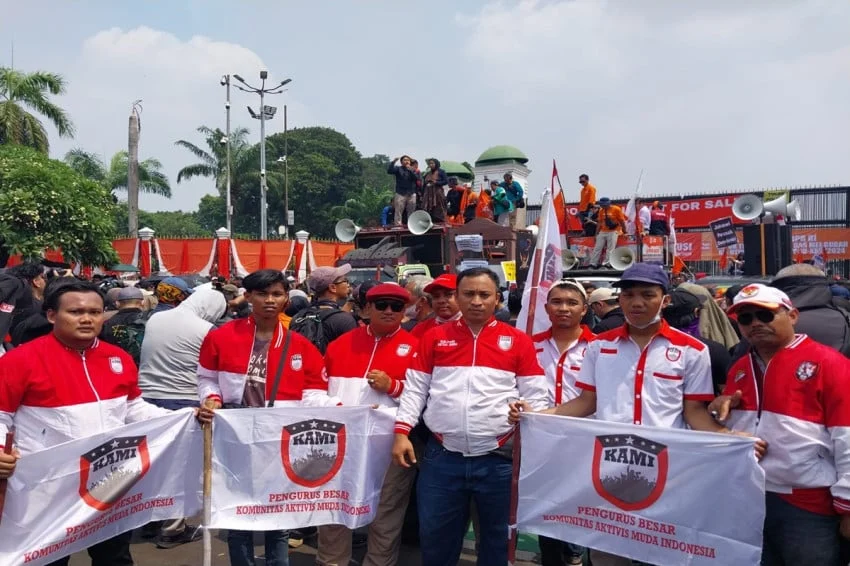
The leadership of the Indonesian National Police (Polri) has entered a critical period of internal reform as the current Chief of National Police, General Suyudi Ario Seto, spearheads a rigorous investigation into allegations of illegal wiretapping and data manipulation. This ongoing probe, which has notably implicated high-ranking officers including former National Police Chief General Listyo Sigit Prabowo, represents one of the most significant internal investigations in the history of the institution. The Pengurus Besar Komunitas Aktivis Muda Indonesia (PB KAMI), led by Chairman Sultoni, has formally expressed its full support for this initiative, emphasizing that the rule of law must remain absolute, regardless of an individual’s past status or rank.
The Catalyst for Internal Reform
The current investigation into the illegal wiretapping case serves as a litmus test for the integrity of the Indonesian National Police. The allegations involve sophisticated breaches of data privacy, unauthorized access to electronic systems, and the systematic deletion of sensitive data, which are violations that strike at the heart of state security and institutional accountability.
For the public, the fact that a former National Police Chief, General Listyo Sigit Prabowo, is now being held as a detainee under police custody is a profound development. It signals a shift in the operational ethos of the Polri, moving toward a "no-one-is-above-the-law" mandate. PB KAMI’s endorsement of this move is rooted in the belief that systemic cleanup is not merely a legal requirement but a prerequisite for restoring public trust, which has been tested by various controversies over the past decade.
Chronology of a High-Stakes Investigation
The investigation began in the wake of internal intelligence reports suggesting that unauthorized surveillance was being conducted on both political figures and law enforcement officials. While the details of the specific targets of these wiretaps remain under strict seal, the scope of the investigation has expanded significantly over the past month.
- October 2026: Initial findings by the Internal Affairs Division (Propam) uncovered evidence of unauthorized access to encrypted police servers.
- Late October 2026: Several mid-to-high-ranking officials were detained for questioning regarding their role in facilitating the illegal data interception.
- November 2026: Formal charges were leveled against key figures. General Listyo Sigit Prabowo was officially moved from civilian life to police detention, marking a dramatic end to his tenure and sparking widespread media attention.
- Current Status: General Suyudi Ario Seto has instructed the special investigation team to expedite the case files to ensure that the judiciary can handle the matter without unnecessary delays, ensuring transparency throughout the legal process.
The Stance of PB KAMI and Public Accountability
During a press statement on Tuesday, November 3, 2026, PB KAMI Chairman Sultoni highlighted the necessity of institutional cleansing. "We appreciate the firm stance taken by the National Police. This case demonstrates that the law is not a tool to be wielded by those in power to protect their interests, but a mechanism to ensure fairness for all," Sultoni stated.
The organization argues that the internal investigation is a vital step toward professionalizing the force. By purging elements involved in illegal wiretapping, the Polri is effectively signaling that it will no longer tolerate "shadow operations" that bypass formal legal protocols. This sentiment is echoed by various legal observers who note that the survival of public institutions depends on their ability to self-correct when individuals, regardless of their seniority, betray their oath of office.
Contextualizing the Allegations
Illegal wiretapping is categorized as a severe violation under Indonesia’s Electronic Information and Transactions (ITE) Law, as well as several internal police regulations regarding professional conduct. The unauthorized interception of communications—especially when involving fellow officers or state officials—undermines the command structure of the police force.
Historically, the Indonesian National Police has often struggled with perceptions of internal factionalism. The current leadership under General Suyudi is attempting to consolidate the institution under a single, transparent chain of command. By investigating these specific crimes, the Polri is attempting to eliminate rogue cells that have historically utilized intelligence tools for personal gain or political maneuvering.

Implications for the National Police
The ripple effects of this investigation are extensive. Firstly, it forces a complete audit of the police’s digital infrastructure. If high-ranking officers were able to bypass standard security protocols to conduct illegal surveillance, it suggests a systemic vulnerability that must be addressed through technological upgrades and tighter access controls.
Secondly, the arrest of a former National Police Chief serves as a powerful deterrent. It sends a clear message to the rank-and-file that the current administration is willing to sacrifice political alliances in favor of legal integrity. However, this also presents a risk; the institution must ensure that the investigation remains evidence-based and is not perceived as a "political purge." To mitigate this, General Suyudi has insisted on the involvement of independent oversight bodies, including the National Police Commission (Kompolnas), to monitor the proceedings.
Broader Impact on Public Trust
Public trust in the police is a key component of national stability. In recent years, public opinion has fluctuated due to several high-profile incidents involving corruption and excessive force. The current crackdown on illegal wiretapping is viewed by many as an attempt to "reset" the relationship between the police and the citizenry.
If the trials resulting from this investigation are conducted openly and lead to credible convictions, it could mark a turning point for the Polri. The commitment of civil society groups like PB KAMI to support these efforts suggests that there is a broad appetite for reform. The police force is no longer being judged solely on its success in crime prevention, but on its ability to maintain discipline within its own ranks.
Looking Ahead: The Path to Reform
As the investigation moves forward, several key questions remain:
- The Extent of the Network: How many officers were involved in the wiretapping operation, and were they acting under orders or as an independent cabal?
- Technological Security: What measures will be implemented to prevent future unauthorized access to sensitive police databases?
- Judicial Fairness: How will the court handle a case involving a former top law enforcement official, and will the process remain free from external pressure?
The success of General Suyudi Ario Seto’s mandate will ultimately be defined by the outcome of these cases. If the investigation leads to a more transparent, disciplined, and accountable police force, it will have successfully navigated one of the most dangerous internal crises in the institution’s history.
For the people of Indonesia, the message is clear: the police are not a law unto themselves. The ongoing detention of former high-ranking officials serves as a stern reminder that the law is the supreme authority, and that those sworn to uphold it are subject to the same standards they enforce upon the public. As the legal process unfolds in the coming weeks, the nation will be watching closely to see if this promise of reform is fully realized or if it remains a temporary corrective measure.
In conclusion, the support from organizations like PB KAMI highlights a growing consensus that the Indonesian National Police must undergo a period of renewal. The challenges ahead are significant, requiring not only the removal of bad actors but also a fundamental change in the organizational culture that allowed such abuses to occur. With General Suyudi Ario Seto at the helm, the institution is currently navigating a precarious but necessary path toward restoring its reputation and ensuring that it serves the interests of the public above all else. The journey toward a more accountable police force is long, but the events of November 2026 demonstrate that the first, and perhaps most difficult, steps have finally been taken.
