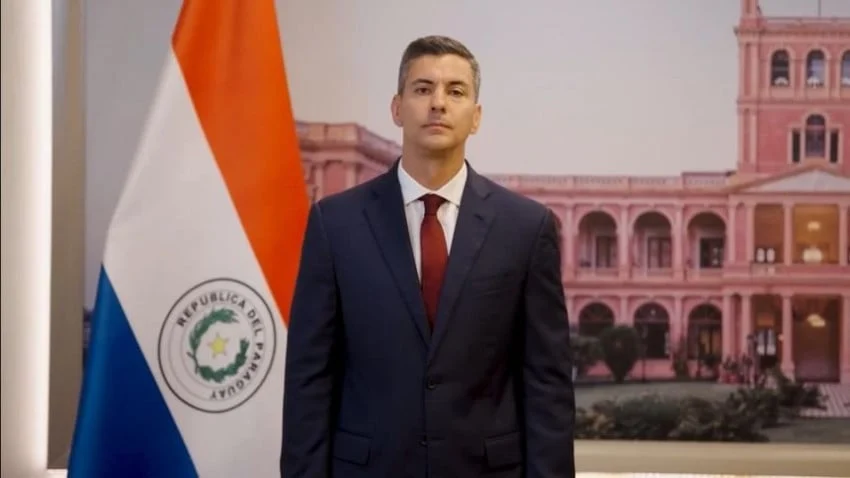
The political landscape of Paraguay has been plunged into severe turmoil following the dramatic resignation and subsequent impeachment of President Santiago Peña. In an unprecedented parliamentary session, the Paraguayan Senate voted overwhelmingly to remove Peña from office, culminating a rapidly escalating crisis sparked by the sudden and catastrophic collapse of Ueno Bank. The sweeping decision, supported by an overwhelming majority of lawmakers, has sent shockwaves through South America, raising profound questions about institutional stability, financial regulation, and executive accountability in the landlocked nation.
The political earthquake began to register on a national scale when Ueno Bank, a major financial institution with documented business connections to Peña, abruptly shuttered its operations due to an acute solvency crisis. The closure locked millions of depositors out of their accounts overnight, instantly evaporating life savings and paralyzing commercial transactions across the country. In response to the massive public outcry and financial panic, the Office of the Attorney General of Paraguay moved swiftly, launching three distinct criminal investigations targeting Peña and several high-ranking former administration officials.
Faced with mounting pressure, civil unrest, and a fractured political base, Peña announced his resignation. However, the executive’s departure did not halt the legislative machinery. The Senate proceeded with the impeachment process, securing a staggering 44 votes out of 45 in favor of removal. This decisive constitutional maneuver effectively stripped Peña of his presidential immunity from prosecution, paving the way for unrestricted criminal proceedings. Immediately following the conclusion of the impeachment vote, Vice President Pedro Alliana was sworn in as the new head of state in a solemn ceremony designed to project continuity and reassure a deeply rattled public.
Chronology of a Crisis: From Bank Collapse to Presidential Downfall
To fully understand the velocity of Santiago Peña’s downfall, one must examine the compressed yet intensely destructive timeline that unfolded over a matter of days. Peña, an economist and former central bank director who assumed the presidency in August 2023 for a constitutionally mandated five-year term, initially framed his administration as a technocratic engine for modernization and economic growth. However, underlying entanglements within the financial sector ultimately proved to be his undoing.
The first major tremor occurred when liquidity pressures at Ueno Bank breached a critical threshold, rendering the institution incapable of meeting withdrawal demands. Regulatory bodies intervened too late to prevent systemic failure, leaving millions of citizens stranded without access to capital. As protests erupted in the streets of Asunción, opposition legislators and dissenting members of the ruling Colorado Party united to draft formal articles of impeachment.
The lower house of Congress, the Chamber of Deputies, accused Peña of "gross and systematic dereliction of duty," citing severe conflicts of interest and regulatory negligence regarding his ties to the collapsed bank. As parliamentary debate intensified over a petition brought by 35 opposition and dissident lawmakers demanding his removal, Peña tendered his resignation. Defiant yet cornered, the former president claimed his departure was an act of statesmanship intended to prioritize national stability over personal political survival. Nevertheless, the Chamber of Deputies voted unanimously moments later to push forward with the impeachment, ensuring that the legal and political reckoning would proceed regardless of his resignation status. With the Senate’s 44-1 supermajority vote, the transition of power to Pedro Alliana was finalized, closing a tumultuous chapter for the executive branch.
Economic Background and Regulatory Vulnerabilities
The collapse of Ueno Bank and the subsequent downfall of the Peña administration highlight broader structural vulnerabilities within Paraguay’s rapidly evolving economy. Over the past decade, Paraguay has positioned itself as one of South America’s most economically resilient nations, boasting steady gross domestic product growth, low inflation, and a favorable environment for foreign investment. Agriculture, hydroelectric power generation, and a burgeoning financial sector have formed the backbone of this economic model.
However, the rapid expansion of the banking and financial services sector has occasionally outpaced regulatory oversight. Critics and financial analysts have long warned about the cozy relationships between political elites and private financial institutions in Paraguay. The integration of political power and commercial banking interests creates a fertile ground for conflicts of interest, where regulatory forbearance can mask underlying insolvency until it reaches catastrophic proportions.
The Ueno Bank crisis served as a textbook illustration of these systemic risks. When confidence in the bank evaporated, the lack of robust early-warning mechanisms and transparent disclosure protocols meant that depositors bore the brunt of the systemic failure. The economic fallout extends far beyond individual account holders; small and medium-sized enterprises, which rely heavily on consistent credit lines and liquid capital, faced immediate operational paralysis. The central bank and financial regulators were forced to inject emergency liquidity into the broader system to prevent a contagious panic from spreading to other major domestic lenders, though these measures did little to appease a citizenry demanding immediate accountability.
Political Fallout Within the Colorado Party
Santiago Peña’s rise to the presidency was heavily backed by the Asociación Nacional Republicana, commonly known as the Colorado Party, which has dominated Paraguayan politics for decades. Peña, a relatively fresh face who transitioned from technocratic roles into partisan politics, was seen by party power brokers—most notably former President Horacio Cartes—as a stable, business-friendly steward of the nation.
Yet, this very association became a double-edged sword. Cartes, a powerful and polarizing figure who remains a dominant force within the Colorado Party despite facing international sanctions and corruption allegations, has long cast a long shadow over Peña’s administration. The financial linkages that connected Peña to the banking sector were scrutinized not only by the opposition but also by internal factions within the Colorado Party seeking to distance themselves from potential criminal liabilities.
When the banking crisis broke out, the political consensus that had safely guarded the executive branch fractured almost overnight. Recognizing that public anger over lost savings could threaten the party’s electoral hegemony ahead of future midterms and municipal elections, pragmatic elements within the Colorado Party chose self-preservation over blind loyalty to Peña. By joining forces with the opposition to vote for impeachment, ruling party lawmakers signaled that systemic threats to the national economy would override internal party solidarity. This strategic realignment allowed the party to maintain control of the executive branch through the swift elevation of Vice President Pedro Alliana, a seasoned party loyalist, while simultaneously casting off a compromised leader.
Implications for Governance and the Rule of Law
The events in Asunción carry profound implications for the rule of law and the maturation of democratic institutions in Paraguay. On one hand, the rapid deployment of constitutional mechanisms—specifically the impeachment process and the immediate invocation of legislative oversight—demonstrates that the country’s democratic checks and balances possess the operational capacity to hold the highest executive authority accountable. The willingness of the legislature to strip a sitting president of his immunity and force a transition of power without resorting to extra-constitutional interventions or military intervention is viewed by legal scholars as a positive sign of institutional resilience.
Conversely, the crisis exposes deep-seated systemic corruption and ethical laxity within the upper echelons of government. The ease with which a major financial institution could collapse, dragging down the national leadership with it, underscores the urgent need for comprehensive legislative reforms. Observers point to several critical areas that require immediate attention:
- Strengthening the independence and enforcement powers of the Superintendency of Banks and financial regulatory agencies.
- Enacting stricter conflict-of-interest laws that prohibit high-ranking government officials from maintaining active business ties with regulated commercial entities.
- Reforming campaign finance and asset disclosure laws to ensure total transparency regarding the wealth and commercial dealings of elected representatives.
- Enhancing judicial independence to guarantee that criminal investigations against former high-ranking officials proceed transparently and without political interference.
International Reactions and Regional Stability
The sudden removal of Santiago Peña has inevitably drawn the attention of regional governments and international financial bodies. Paraguay is a founding member of Mercosur—the trading bloc that includes Argentina, Brazil, Uruguay, and associate members—and plays a strategic role in regional diplomacy and energy cooperation.
Neighboring countries have expressed cautious optimism regarding the peaceful and constitutional transfer of power to President Pedro Alliana, while closely monitoring the economic fallout of the banking crisis. International financial institutions, including the International Monetary Fund and the Inter-American Development Bank, have emphasized the importance of maintaining macroeconomic stability, fiscal discipline, and investor confidence in the wake of the upheaval.
Foreign investors, who have poured capital into Paraguay’s agribusiness and maquiladora sectors, are naturally jittery. However, analysts suggest that the swift replacement of Peña with Alliana—a continuity figure who is expected to maintain the previous administration’s pro-market economic policies—has helped mitigate panic among foreign stakeholders. Nevertheless, the looming criminal investigations against Peña and his associates ensure that political risk will remain elevated in the near term.
Looking Ahead: President Pedro Alliana’s Urgent Mandate
As Pedro Alliana assumes the presidency, his administration faces a daunting array of domestic and political challenges. With less than four years remaining in the presidential term, Alliana’s primary mandate is twofold: restoring public trust in the national financial system and steering the country through the stormy waters of post-impeachment politics.
The new president must immediately address the grievances of the millions of citizens affected by the Ueno Bank collapse. Establishing a transparent mechanism for asset recovery, ensuring that affected depositors receive equitable compensation or state-backed relief, and cooperating fully with the Attorney General’s ongoing criminal investigations will be the ultimate litmus test for his administration’s credibility.
Furthermore, Alliana must manage delicate internal dynamics within the Colorado Party. Healing the fractures exposed by the impeachment vote while projecting unity and reform-minded governance will require immense political dexterity. If the ruling party can use this crisis as a catalyst for genuine anti-corruption reforms and stricter regulatory oversight, Paraguay may emerge from this episode with stronger, more transparent democratic institutions.
However, if the transition merely represents a superficial reshuffling of political elites designed to shield systemic wrongdoings, public disillusionment could boil over into widespread social unrest. For now, all eyes remain fixed on Asunción as Paraguay navigates one of the most significant constitutional and financial crises in its modern history.