
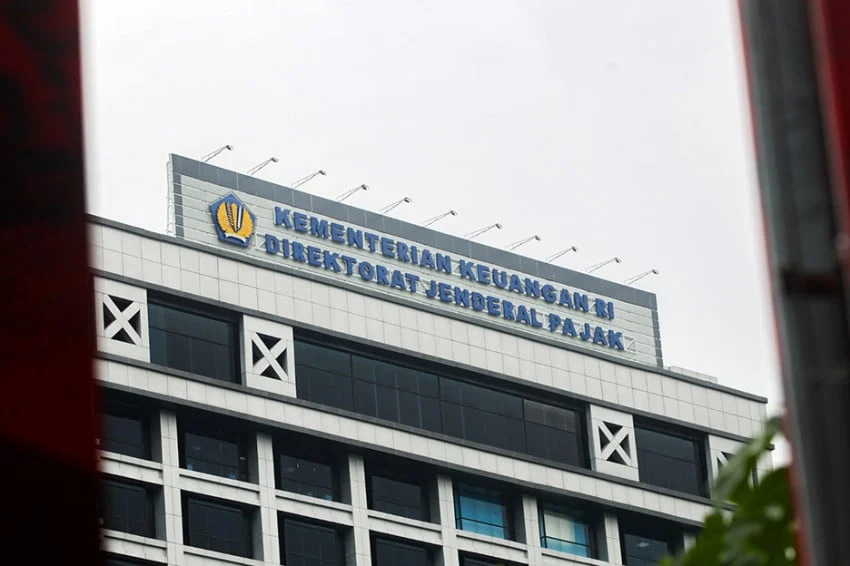
The Ministry of Finance of the Republic of Indonesia has officially ruled out any possibility of acquiring equity stakes in PT Bursa Efek Indonesia (BEI), the operator of the Indonesia Stock Exchange. This definitive stance was articulated amidst an ongoing structural evolution centered on the demutualization of the national bourse. Speaking at a press conference held by the Financial System Stability Committee (KSSK) in Jakarta, high-ranking officials firmly established the boundaries of state institutional involvement in commercial market infrastructure, emphasizing the ministry’s steadfast commitment to its core regulatory and fiscal mandate rather than direct commercial participation.
The announcement comes at a critical juncture for Indonesia’s capital markets, which are undergoing comprehensive regulatory and structural reforms orchestrated in tandem with the Financial Services Authority (Otoritas Jasa Keuangan or OJK). While other state-backed investment vehicles prepare to assume positions within the newly structured exchange, the Ministry of Finance remains resolute in maintaining its institutional neutrality. By explicitly declining to become a shareholder, the government aims to preserve clear institutional demarcation lines between policymaking authorities and commercial market operators, thereby bolstering investor confidence and reinforcing the integrity of Indonesia’s financial ecosystem.
Institutional Boundaries and the Principle of Separation
The rationale behind the Ministry of Finance’s decision is anchored in the fundamental separation of powers and responsibilities within the financial sector architecture. As the primary economic policymaker for the Indonesian government, the Ministry of Finance is tasked with formulating overarching fiscal strategies, managing state finances, and ensuring macroeconomic stability. In contrast, PT Bursa Efek Indonesia operates as a commercial entity responsible for organizing, facilitating, and regulating the day-to-day trading of securities within a structured marketplace.
During the KSSK press conference, government representatives underscored that acquiring equity in the stock exchange would present an inherent conflict of interest. A regulatory and fiscal policymaker cannot simultaneously function as an active equity owner in the commercial enterprise it indirectly oversees or regulates. This institutional distance is vital for preserving market neutrality. By abstaining from share ownership, the ministry ensures that its policy decisions regarding taxation, fiscal incentives, and economic governance remain entirely objective, uninfluenced by any direct financial interest in the profitability or valuation of the stock exchange.
Furthermore, this boundary reinforces the division of labor among Indonesia’s financial sector authorities. While the OJK maintains supervisory oversight over capital market activities, and the Indonesia Stock Exchange manages commercial operations, the Ministry of Finance provides the broader macroeconomic framework. Injecting fiscal administration directly into the capital structure of the exchange would blur these statutory lines, potentially complicating regulatory enforcement and market oversight.
The Context of Demutualization and Market Reform
The ongoing demutualization process of the Indonesia Stock Exchange represents a watershed moment for the country’s financial history. Traditionally structured as a mutual organization—where members, typically brokerage firms, owned and operated the exchange primarily for their own operational benefit—the demutualization shifts the bourse into a profit-seeking, corporate entity with a broader base of shareholders. This structural transformation aligns the Indonesian capital market with global standards, enhancing operational efficiency, attracting strategic foreign and domestic investments, and modernizing corporate governance frameworks.
As the exchange transitions toward this corporate model, its equity distribution has become a focal point of strategic planning. Other state-aligned entities, most notably Danantara—the newly empowered sovereign investment management agency—have positioned themselves to absorb or hold shares in the exchange once the demutualization process reaches its formal completion. Danantara’s anticipated participation reflects a strategic state presence aimed at safeguarding national economic interests while allowing the exchange to operate on commercial principles.
The Ministry of Finance’s deliberate exclusion from this shareholder lineup highlights a nuanced approach to state capitalism. While the Indonesian government recognizes the importance of strategic state positioning in vital national financial infrastructure through specialized investment arms like Danantara, it explicitly insulates the fiscal authority from direct corporate holdings. This distinction prevents the centralization of commercial risk within the central government’s direct balance sheet, mitigating potential fiscal vulnerabilities while still supporting the modernization of national market infrastructure.
Continuous Government Support and Monitoring
Despite declining direct ownership, the Ministry of Finance has made it unequivocally clear that its withdrawal from the shareholder registry does not translate into disengagement from the broader capital market reform agenda. On the contrary, the ministry remains deeply committed to fostering a robust, transparent, and resilient financial sector. Government representatives have pledged to maintain rigorous coordination with the OJK and BEI leadership to ensure that the ongoing reforms achieve their intended developmental milestones.
The ministry’s involvement will manifest primarily through policy alignment, inter-agency cooperation, and continuous performance monitoring. By tracking the execution of strategic action plans designed by financial regulators, the Ministry of Finance will ensure that the modernization of the stock exchange aligns with national economic growth targets, financial deepening initiatives, and investor protection standards. This collaborative oversight guarantees that the exchange receives the necessary macroeconomic backing without compromising the governance standards demanded by international institutional investors.
Implications for the Indonesian Capital Market
The official confirmation that the Ministry of Finance will remain outside the ownership structure of the Indonesia Stock Exchange carries profound implications for market participants, institutional investors, and regulatory stakeholders.
First and foremost, the decision enhances market clarity. Uncertainty regarding the ultimate distribution of shares during major structural transitions often introduces market friction. By definitively establishing that the fiscal authority will not hold equity, the government removes potential ambiguities surrounding regulatory capture or preferential treatment. Investors can take comfort in knowing that the regulatory apparatus governing the market remains entirely independent of the exchange’s commercial ownership.
Secondly, the policy reinforces the credibility of Indonesia’s reform trajectory. International rating agencies and foreign portfolio investors consistently emphasize the importance of transparent institutional frameworks and robust corporate governance. The clear demarcation between fiscal policymaking and commercial exchange ownership aligns with global best practices observed in major international financial centers. This transparency is expected to attract higher volumes of foreign direct investment into the Indonesian capital market, deepening liquidity and expanding the breadth of financial instruments available to the public.
Finally, the setup allows specialized entities like Danantara to execute their mandates effectively without overlapping with core fiscal functions. By leaving commercial equity holdings to designated investment management institutions, the state optimizes its institutional efficiency. The Ministry of Finance can concentrate its full administrative capacity on maintaining fiscal health, managing national debt, and designing pro-growth economic policies, leaving the commercialization and governance of financial market infrastructure to specialized market players and sovereign investment funds.
Conclusion
The statement delivered by high-ranking ministry officials marks a definitive chapter in the ongoing evolution of Indonesia’s financial architecture. As the Indonesia Stock Exchange navigates the complex phases of demutualization and structural modernization, the decision of the Ministry of Finance to forgo equity ownership stands as a testament to good governance, institutional separation, and regulatory integrity. By choosing the role of an objective policymaker and supportive overseer over that of a commercial stakeholder, the government has laid a secure foundation for the sustainable growth, transparency, and international competitiveness of the Indonesian capital market for years to come.