The global educational landscape has witnessed a significant transformation in how foundational mathematics is taught, largely driven by the consistent top-tier performance of Singaporean students in international assessments. The Singapore Math method, a pedagogical approach that prioritizes conceptual understanding over rote memorization, has transitioned from a localized curriculum to a globally recognized standard. For parents and educators, this method offers a structured alternative to traditional instruction, moving away from abstract calculations toward a deep, intuitive grasp of mathematical logic.
The genesis of this methodology dates back to the early 1980s. Following a decline in national mathematical proficiency, the Singaporean Ministry of Education tasked the Curriculum Development Institute of Singapore with creating a syllabus that focused on problem-solving as the primary goal of the subject. By the early 1990s, students in Singapore began consistently ranking at the top of the Trends in International Mathematics and Science Study (TIMSS). This success prompted educational institutions in the United States, United Kingdom, and Australia to adopt or adapt these materials, marking a pivotal shift in pedagogical strategy.
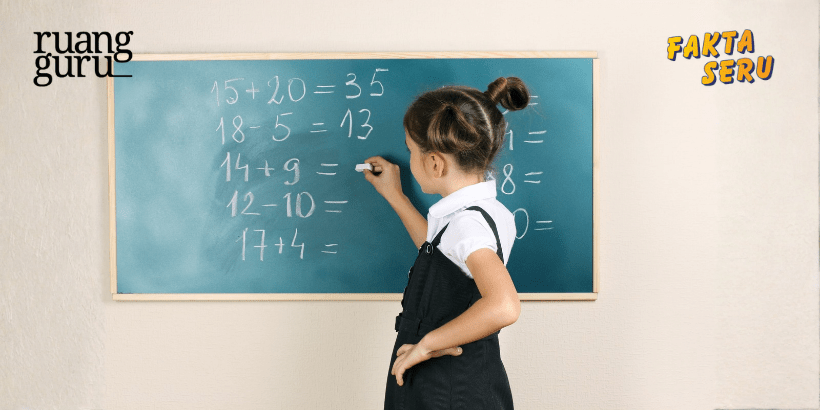
At the heart of this success is the Concrete-Pictorial-Abstract (CPA) sequence, a framework rooted in the psychological theories of Jerome Bruner. This hierarchy dictates that learning should progress from physical manipulation of objects to visual representations, and finally to symbolic notation.
The Concrete stage involves the use of manipulatives—such as counters, blocks, or geometric shapes—that allow students to physically interact with mathematical quantities. This tactile engagement builds the necessary neural pathways for understanding basic operations like addition, subtraction, multiplication, and division. Once a student demonstrates a physical understanding, the Pictorial stage introduces diagrams, such as the widely acclaimed bar model, to represent those quantities visually. This stage acts as a bridge, teaching students how to translate real-world scenarios into structured visual data. Only after mastery of these two stages is the Abstract level introduced, where students use standard numerical symbols and algorithms.
The implications of this transition are substantial. Traditional methods often prioritize the "how" of mathematics—teaching algorithms as fixed procedures to be memorized. Singapore Math, conversely, prioritizes the "why." By the time a student reaches the abstract stage, the numerical symbol is no longer a foreign character to be memorized, but a shorthand representation of a concept they have already experienced and visualized.

Data from the Organisation for Economic Co-operation and Development (OECD) consistently highlights the efficacy of this approach. In the Programme for International Student Assessment (PISA), which evaluates 15-year-olds on their ability to apply mathematical knowledge to real-world problems, Singaporean students have remained among the highest performers globally. Educational researchers attribute this to the curriculum’s spiral design, where concepts are revisited at increasing levels of complexity, ensuring that knowledge is reinforced rather than forgotten.
One of the most critical aspects of this method is the emphasis on "number sense" and "bar modeling." In traditional mathematics, a word problem might be solved by immediately searching for a keyword to indicate an operation. In the Singaporean model, students are trained to map out the information provided in the problem using bars of varying lengths. This visual strategy forces the student to analyze the relationship between the quantities before deciding on an operation. For instance, in a problem involving fractions or algebraic ratios, the bar model provides a clear, proportional window into the problem’s logic, reducing the likelihood of errors stemming from misapplied formulas.
Critics of the methodology often point to the steep learning curve for parents who were taught via traditional, algorithm-heavy curricula. The transition requires a shift in parental mindset; parents are often encouraged to act as facilitators of inquiry rather than tutors who provide direct answers. Educational psychologists suggest that this collaborative approach fosters a growth mindset, as it shifts the focus from "getting the right answer" to "explaining the process of discovery."
The broader impact on child development extends beyond mathematics. Longitudinal studies suggest that the logical, step-by-step problem-solving skills honed through the CPA approach are transferable to other academic disciplines, including computer science, physics, and economics. By training the brain to decompose complex problems into manageable, visual components, students develop a higher degree of cognitive flexibility.
Despite its success, educators emphasize that the Singapore Math method is not a panacea for all learning difficulties. Students with specific learning disabilities, such as dyscalculia, may require additional interventions tailored to their specific neurodevelopmental needs. However, the inclusive nature of the CPA approach—which provides a tangible entry point for every level of learner—makes it highly adaptable for diverse classroom environments.
As schools continue to evaluate their STEM (Science, Technology, Engineering, and Mathematics) curricula, the adoption of Singapore Math remains a compelling case study in systemic educational improvement. It underscores the reality that instructional design, when grounded in cognitive science, can yield profound improvements in student engagement and long-term academic success.
For parents seeking to implement these principles at home, the transition need not be daunting. Experts suggest starting with everyday objects. Using household items to illustrate addition or division, encouraging children to draw their own "bar models" to represent chores or allowances, and asking "how" rather than "what" are effective ways to cultivate the analytical habits encouraged by this methodology.
In conclusion, the Singapore Math method represents more than just a set of textbooks; it is a pedagogical philosophy that respects the developmental stages of a child’s mind. By delaying abstraction and prioritizing conceptual clarity, it equips students with the tools to navigate not just the mathematical challenges of the classroom, but the complex problem-solving requirements of the 21st-century workforce. As global educational standards continue to evolve, the emphasis on conceptual depth over procedural speed serves as a robust model for fostering true mathematical literacy.