TEHERAN — In an assertive display of national confidence, the Islamic Revolutionary Guard Corps (IRGC) has formally declared that Iran possesses the technological capabilities and military readiness to confront the world’s leading military superpowers. Speaking at a high-level defense and aerospace briefing in Teheran, Brigadier General Hossein Mohebbi, spokesperson for the IRGC, emphasized that Iran’s domestic defense advancements have effectively neutralized the long-term impact of international isolation. This resilience, according to military leadership, has been forged through decades of overcoming severe economic and military embargoes that were originally designed to cripple the nation’s infrastructural and defensive growth.
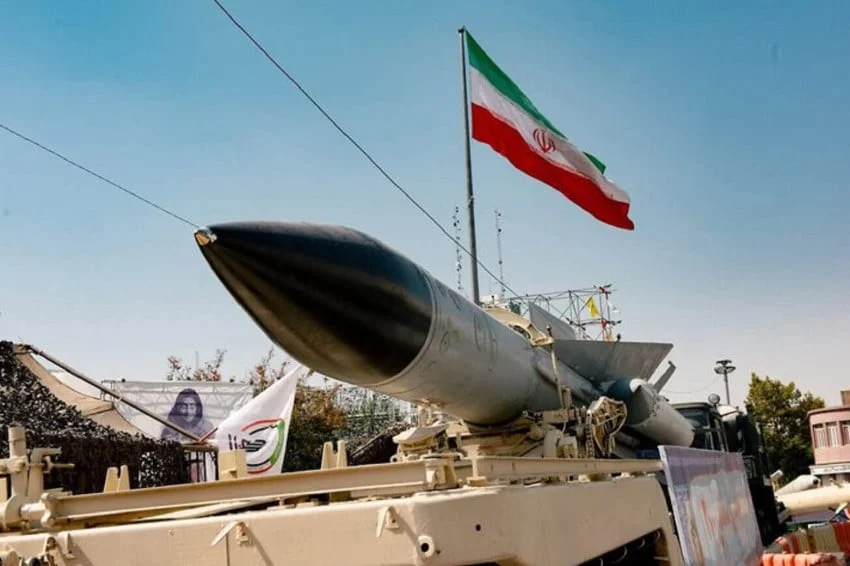
The official remarks underscore a significant narrative shift within the Iranian military establishment. Rather than viewing nearly 47 years of international sanctions as an insurmountable obstacle, Tehran now frames this prolonged period of economic and technological restriction as the primary catalyst for total self-reliance. By transforming external pressures into an internal driver for innovation, Iran’s defense sector has successfully transitioned from a heavy reliance on foreign military imports to establishing a robust, indigenous manufacturing base capable of producing advanced aerospace platforms, missile systems, and cutting-edge military hardware at scale.
Historical Background and the Evolution of International Sanctions
The origins of the multifaceted sanctions regime against Iran trace back to the aftermath of the 1979 Islamic Revolution, which fundamentally altered the geopolitical landscape of the Middle East and severed longstanding diplomatic and military ties between Tehran and Western nations, most notably the United States. In the early decades following the revolution, particularly during the grueling eight-year Iran-Iraq War from 1980 to 1988, Iran faced severe international restrictions on acquiring conventional weaponry, spare parts, and dual-use technologies.
As Tehran pursued its controversial nuclear enrichment program in the late 1990s and 2000s, the United Nations Security Council, alongside unilateral actions by the United States and the European Union, ratcheted up economic and military sanctions to unprecedented levels. These measures included comprehensive financial embargoes, asset freezes on key governmental and military entities, restrictions on the petrochemical and banking sectors, and strict bans on the transfer of arms and sensitive military technologies.
Historically, the stated objective of these sweeping international measures was to isolate the Iranian economy, halt its nuclear ambitions, and restrict its conventional military modernization. However, military analysts and defense historians note an unintended consequence: the strict arms embargoes forced Iran to adopt an asymmetric defense strategy coupled with a relentless push toward domestic research and development. This environment fostered the creation of the Supreme Leader’s doctrine of "Resistance Economy" and self-sufficiency, paving the way for the establishment of complex military-industrial complexes managed largely by the IRGC and the Ministry of Defense and Armed Logistics.
Chronology of Aerospace and Defense Milestones
To understand the current standing of Iran’s military capabilities, a chronological examination of its technological milestones reveals a steady trajectory from basic reverse engineering to sophisticated, indigenous system design.
- 1980s – The Post-Revolutionary Embargo Era: Deprived of foreign maintenance and spare parts for its pre-revolutionary Western-supplied military hardware (such as F-14 Tomcats and US-made surface-to-air missile systems), Iran establishes local maintenance hubs and reverse-engineering workshops, laying the groundwork for domestic military manufacturing.
- 1990s – Initiation of Ballistic Missile Programs: With technical assistance and technology transfers from various international partners, Iran successfully tests its first medium-range ballistic missile variants, establishing the foundation for its modern missile deterrence strategy.
- 2000s – Breakthrough in Indigenous Production: Tehran inaugurates major industrial plants dedicated to producing domestic armor, naval speedboats, and short-range rockets. The defense ministry initiates the mass production of the Shahab missile series.
- 2009 – Entry into the Space Club: Iran successfully launches its first domestically built satellite, Omid, using the Safir carrier rocket, proving its capability to master multi-stage rocket propulsion and entering the elite group of space-faring nations.
- 2015 – The JCPOA and Temporary Relief: Iran signs the Joint Comprehensive Plan of Action (JCPOA) with world powers, securing temporary sanctions relief. However, the subsequent US withdrawal from the accord in 2018 leads to a reimposition of even harsher "maximum pressure" economic sanctions.
- 2020s – Advanced Asymmetric and Drone Warfare: Despite persistent economic constraints, Iran unveils sophisticated loitering munitions, high-altitude long-endurance (HALE) unmanned aerial vehicles (UAVs), and hypersonic missile technology, asserting qualitative parity in specific asymmetric domains.
Strategic Capabilities and Domestic Technological Growth
During the Teheran briefing, General Mohebbi specifically highlighted the advancements made within the aerospace sector as the cornerstone of Iran’s modern defense posture. The country’s aerospace capabilities no longer rely on sporadic smuggling or clandestine foreign acquisitions; instead, they are sustained by a network of domestic universities, research institutes, and state-backed defense contractors.
Key areas of domestic capability include the mass production of precision-guided munitions, sophisticated air defense networks designed to counter stealth aircraft and electronic warfare, and an extensive inventory of unmanned aerial vehicles. These indigenous systems have been rigorously tested not only in domestic military exercises but also through operational deployments in regional conflicts, providing Iranian engineers with valuable telemetry and performance data to refine future iterations.
Furthermore, military strategists in Tehran point to naval developments as a vital component of their deterrent strategy. Previous statements from IRGC advisors have frequently highlighted strategic pushbacks in the Persian Gulf and the Strait of Hormuz, asserting that technological evolution in fast-attack craft and coastal defense missile batteries has successfully created a secure defensive perimeter, forcing opposing naval forces to maintain a greater operational distance.
Official Responses and Geopolitical Implications
The assertive declarations made by the IRGC spokesperson did not occur in a vacuum; they serve as a direct response to ongoing geopolitical tensions involving the United States, its regional allies, and persistent Western efforts to curb Iran’s military and nuclear influence. By publicly minimizing the long-term efficacy of international sanctions, Tehran seeks to project an image of impregnability to both domestic audiences and international adversaries.
International reactions to Iran’s defense claims vary. Western defense analysts and intelligence agencies acknowledge that decades of isolation have indeed forced Iran to develop a remarkably resilient and surprisingly sophisticated domestic arms industry, particularly in the fields of ballistic missiles and drone technology. However, foreign experts often temper these assessments by noting that despite impressive achievements in asymmetric warfare, Iran still faces critical technological gaps in modern blue-water navy construction, fifth-generation stealth fighter manufacturing, and advanced avionics—sectors where Western and allied Asian military powers maintain a distinct structural advantage.
The broader geopolitical implications of Iran’s sustained military development are profound. As Tehran continues to deepen its strategic partnerships with other sanctioned nations—exchanging defense technology, raw materials, and diplomatic support—the traditional Western monopoly on defense technology transfer is increasingly challenged. For regional stability, the reality of a self-sufficient Iranian military-industrial complex means that conventional deterrence dynamics in the Middle East have permanently shifted, requiring a recalibration of diplomatic and security strategies by global powers seeking to manage regional conflicts and security architecture in the years ahead.