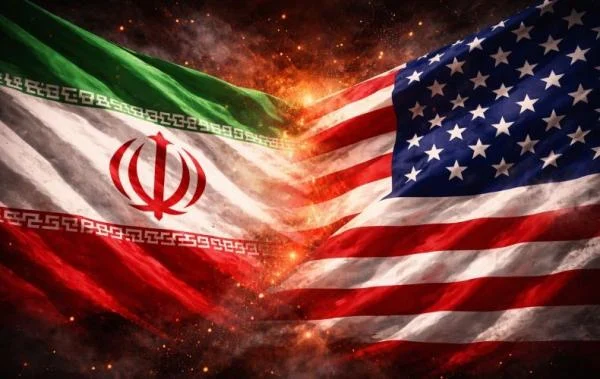
The United States government has officially launched a high-stakes intelligence-gathering initiative, offering a bounty of up to 20 million dollars for actionable information regarding Iran’s nuclear program. Through the Department of State’s Rewards for Justice program, Washington is soliciting details on the specific facilities, technological infrastructure, and the key personnel involved in the clandestine scientific institutions driving Tehran’s nuclear ambitions. This move represents one of the most aggressive financial enticements in modern diplomatic history, aimed at dismantling what the US and its allies perceive as a significant threat to global non-proliferation efforts.
The initiative, managed by the United States Central Command (CENTCOM), serves as a direct effort to fill critical intelligence gaps. Beyond the monetary compensation, the US has signaled a willingness to facilitate the relocation of informants, providing a pathway for those within the Iranian scientific or security apparatus who might seek to defect in exchange for safety and financial security.
Historical Context and the Evolution of Rewards for Justice
The Rewards for Justice (RFJ) program, established in 1984 under the 1984 Act to Combat International Terrorism, has long been a pillar of American foreign policy. Historically, the program has been utilized to disrupt terrorist financing, locate high-value targets, and protect US national interests by incentivizing individuals to provide information that leads to the prevention of attacks or the capture of perpetrators.
However, the expansion of the program’s scope to specifically target Iran’s nuclear scientific community marks a tactical shift. In previous years, the program focused heavily on individuals affiliated with organizations like Al-Qaeda or ISIS. By pivoting toward the Iranian nuclear program, the State Department is signaling that it considers the advancement of Tehran’s atomic capabilities to be a matter of national security equal in urgency to the fight against global terrorism.
The Breakdown of Intelligence Requirements
According to the official communication from the State Department, the intelligence sought is highly granular. Washington is specifically looking for:
- Facility Mapping: Identification of undisclosed or underground sites used for uranium enrichment and research.
- Technological Infrastructure: Information regarding the procurement of dual-use components, specialized materials, and high-performance centrifuges.
- Personnel Identification: Intelligence on the scientists, engineers, and administrative managers overseeing the program.
- Knowledge Continuity: Insights into how Iran manages its domestic expertise and supply chains to bypass international sanctions.
The US government’s urgency is underscored by a statement regarding the International Atomic Energy Agency (IAEA). The State Department noted that Iran’s ongoing lack of transparency has led to a dangerous "loss of continuity of knowledge" for the IAEA. This refers to the agency’s inability to maintain a verifiable timeline and inventory of Iran’s nuclear material, particularly regarding the production and storage of components like advanced centrifuges that are essential for uranium enrichment.
Chronology of Escalating Tensions
The announcement arrives during a period of heightened geopolitical friction between Washington and Tehran. To understand the significance of this 20-million-dollar bounty, one must look at the recent timeline of the nuclear standoff:
- 2015: The Joint Comprehensive Plan of Action (JCPOA) is signed, imposing strict limits on Iran’s nuclear program in exchange for sanctions relief.
- 2018: The United States unilaterally withdraws from the JCPOA under the Trump administration, initiating a policy of "maximum pressure."
- 2019–2021: Iran begins a series of steps to scale back its compliance with the agreement, increasing enrichment levels and limiting IAEA inspections.
- 2023–2024: Reports emerge of increased clandestine activities, with Western intelligence agencies expressing concern over Iran’s proximity to "breakout" capacity—the time required to produce enough fissile material for a nuclear device.
- Late 2026: Political shifts in the United States, coupled with the announcement of the $20 million reward, indicate a renewed focus on covert disruption as a primary method of containment.
The IAEA and the Challenge of Verification
The International Atomic Energy Agency (IAEA) has struggled to maintain its mandate in Iran for years. The "continuity of knowledge" mentioned by the State Department is not merely bureaucratic language; it is a technical reality. If IAEA cameras are disabled or if access to centrifuge workshops is denied, the agency loses the ability to reconstruct the history of nuclear activities at those sites.
Without this data, the global community is left to rely on external intelligence—hence the necessity of the current rewards program. The financial incentive is designed to penetrate the internal walls of the Atomic Energy Organization of Iran (AEOI), where traditional diplomatic channels have failed to provide the necessary transparency required under the Treaty on the Non-Proliferation of Nuclear Weapons (NPT).

Implications for Regional Stability
The implications of this program are multifaceted. From a strategic perspective, the offer of 20 million dollars and relocation creates a psychological environment of distrust within Iranian institutions. If the Iranian government suspects that its own scientists are being targeted by foreign intelligence, it may respond with increased internal surveillance, internal purges, or stricter movement controls on its technical experts.
Furthermore, this program complicates the diplomatic landscape. Iran has consistently maintained that its nuclear program is exclusively for peaceful, civilian energy purposes. Tehran is expected to categorize the US initiative as an act of "economic warfare" and a violation of its sovereignty. Such rhetoric is common in the cycle of escalating rhetoric, yet the specific focus on "personnel" suggests that the US is moving away from purely economic sanctions toward a more targeted, human-intelligence-focused strategy.
Broader Impact on International Non-Proliferation
The use of bounties to gather nuclear intelligence raises questions about the future of international diplomacy. Critics of such programs argue that they can lead to the "politicization" of scientific data, potentially endangering researchers who are engaged in legitimate civilian energy programs. However, proponents argue that in the absence of full IAEA cooperation, the United States is obligated to use every tool at its disposal to ensure that nuclear proliferation does not threaten the regional order of the Middle East.
The 20-million-dollar figure is significant, though not unprecedented in the context of high-stakes national security rewards. It positions the intelligence on Iran’s nuclear program as being of equal value to the capture of high-ranking leaders of designated foreign terrorist organizations. By setting such a high price, the US is attempting to create a "price point" that outweighs the risks of betrayal for any individual considering such an act.
Looking Ahead
As the international community monitors the situation, the success of this program will be measured not by public announcements, but by the quiet acquisition of intelligence that might lead to further inspections, sanctions, or the disruption of supply chains. The US government has signaled that its patience with the status quo is at an end, and that the financial and logistical resources of the Department of State are now fully committed to uncovering the remaining secrets of Iran’s nuclear infrastructure.

The coming months will likely see an increase in reports regarding the security of Iranian research facilities. For the Iranian government, the challenge will be to maintain the integrity of its nuclear program while facing a coordinated, well-funded effort from the West to pierce its operational security. For the international community, this development is a stark reminder that the nuclear question remains the most volatile element in the relationship between Washington and Tehran, with no clear path to a diplomatic resolution in the immediate future.
The reward program is now officially active. Whether it serves as a catalyst for a significant intelligence breakthrough or as a point of further contention remains to be seen. What is clear, however, is that the United States has once again adjusted its strategy to prioritize the gathering of "ground truth" through direct, albeit controversial, engagement with those who hold the keys to the Iranian nuclear dossier.