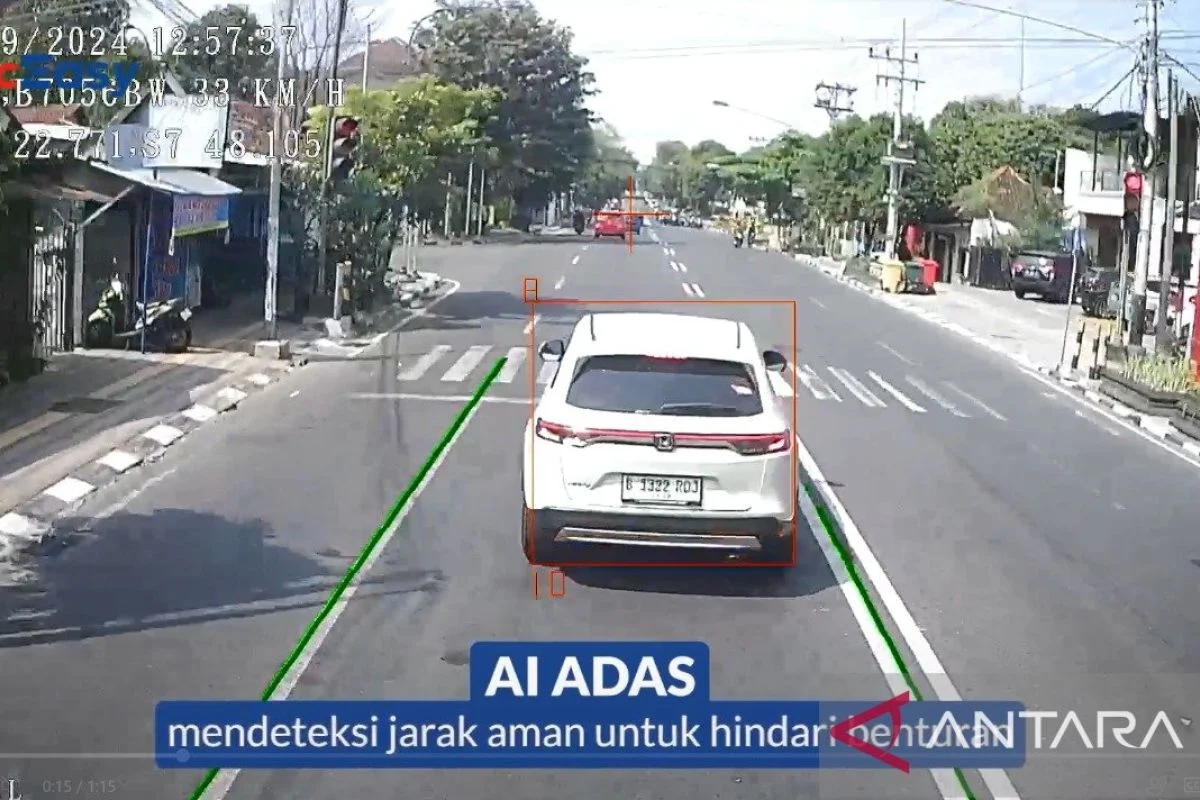
The modern automotive landscape has undergone a profound transformation, shifting its primary value proposition from raw mechanical performance, fuel efficiency, and interior luxury to active safety and intelligent integration. Today, consumers stepping onto a dealership floor are no longer merely greeted by plush leather upholstery, spacious cabins, or sprawling infotainment touchscreens. Instead, they are introduced to a sophisticated suite of electronic guardians known as Advanced Driver Assistance Systems (ADAS). Once reserved exclusively for high-end luxury flagships, ADAS technologies—ranging from automatic emergency braking and lane-keeping assist to blind-spot monitoring and adaptive cruise control—have rapidly democratized, becoming standard or widely available features in mainstream vehicles globally.
This sweeping integration of driver-assistance technology is not happening in a vacuum. It is deeply synchronized with evolving global vehicle safety standards, shifting regulatory benchmarks, and an intensifying technological arms race among international automakers. As regulatory bodies and safety rating organizations continuously raise the bar for crash prevention, the automotive industry finds itself at a crucial intersection where software is just as vital as steel.
The Regulatory Shift: Euro NCAP and the 2026 Protocol Redefinition
A primary catalyst for the widespread adoption and continuous refinement of ADAS features is the rigorous evolution of safety testing protocols worldwide. A landmark development in this trajectory is the implementation of updated testing frameworks by the European New Car Assessment Programme (Euro NCAP). Entering fully into effect for the 2026 testing cycles, Euro NCAP has significantly recalibrated its methodology to place unprecedented emphasis on active safety systems and a vehicle’s proactive ability to mitigate or entirely prevent accidents before they occur.
Historically, crash-test organizations focused heavily on passive safety measures—evaluating how effectively a vehicle’s crumple zones, chassis rigidity, and airbag deployment networks could protect occupants after an impact had already been initiated. While structural integrity remains a fundamental pillar of automotive design, the 2026 protocols expand the evaluative scope drastically. Modern testing scenarios now rigorously assess how seamlessly a vehicle’s sensors, cameras, and radars interact with autonomous emergency braking and lane-support systems in complex, real-world environments. These tests simulate intricate urban dynamics, including high-risk interactions with vulnerable road users such as pedestrians, cyclists, and motorcyclists.
By tying high safety ratings directly to the performance of active collision avoidance technologies, organizations like Euro NCAP have effectively compelled automotive manufacturers to accelerate their research, development, and deployment of sophisticated ADAS architectures. Consequently, achieving a coveted five-star safety rating is no longer attainable through passive protection alone; it requires state-of-the-art predictive intelligence.
Demystifying ADAS: How Intelligent Co-Pilots Operate
To understand the rapid proliferation of these technologies, one must examine the foundational mechanics of ADAS. At its core, Advanced Driver Assistance Systems encompass a collection of electronic technologies engineered to assist the human driver throughout the driving lifecycle. Utilizing a sophisticated network of environmental sensors—including high-resolution optical cameras, millimeter-wave radars, and increasingly, LiDAR (Light Detection and Ranging) systems—the vehicle continuously scans and interprets its immediate surroundings.
This hardware is paired with advanced computing units that process real-time environmental data to identify potential hazards, roadway markings, traffic signs, and nearby obstacles. When the system detects an anomaly or an escalating risk—such as a sudden deceleration of traffic ahead or an unintentional drift out of a designated lane—it responds in one of two ways: by issuing immediate audio-visual warnings to alert the driver, or by executing active physical interventions, such as applying brake pressure or making minor steering adjustments.
Among the most prevalent ADAS features integrated into contemporary passenger vehicles are:
- Forward Collision Warning (FCW): Monitors the distance and closing speed relative to the vehicle or object ahead, alerting the driver when a potential front-end collision is imminent.
- Automatic Emergency Braking (AEB): Engages the braking system independently if the driver fails to react adequately to an imminent collision warning.
- Lane Keeping Assist (LKA) and Lane Centering: Utilizes cameras to track lane markings and applies corrective steering torque to prevent unintended lane departures.
- Adaptive Cruise Control (ACC): Automatically adjusts the vehicle’s cruising speed to maintain a safe, pre-set following distance from the vehicle directly ahead.
- Blind Spot Monitoring (BSM) and Blind Spot Intervention: Detects vehicles occupying adjacent lanes in hard-to-see areas and issues warnings or counter-steers to prevent unsafe lane changes.
Despite these advanced capabilities, regulatory bodies such as the United States National Highway Traffic Safety Administration (NHTSA) consistently issue strong reminders that ADAS does not equate to autonomous driving. According to standard definitions established by automotive engineers and safety regulators, current consumer-grade systems fall under Level 1 or Level 2 automation. At Level 1, the vehicle may independently control either steering or acceleration/braking under specific conditions, while the human driver oversees the rest. At Level 2, the vehicle can simultaneously handle both steering and acceleration/braking, but the human driver remains legally and practically responsible for continuous supervision of the driving environment, keeping hands on the wheel, and maintaining readiness to take over manual control at a moment’s notice.
The Five Core Drivers Behind the ADAS Surge
The massive integration of driver-assistance technology across global automotive markets is propelled by several distinct operational, safety, and commercial factors.
First, the primary objective remains the dramatic mitigation of traffic accidents and human error. Human distraction, fatigue, and delayed reaction times account for the vast majority of vehicular collisions worldwide. Features like Automatic Emergency Braking serve as an unflagging electronic safety net, reacting within milliseconds to sudden traffic stops or unexpected pedestrian crossings. While these systems do not eradicate human error, they provide a vital secondary layer of protection designed to absorb the catastrophic consequences of delayed human reactions.
Second, modern lifestyle and commuting demands have heightened the need for ergonomic driving aids, particularly during long-distance travel. Extended hours behind the wheel inevitably lead to cognitive fatigue and diminished alertness. Technologies such as Adaptive Cruise Control and Lane Centering significantly reduce the physical and mental workload placed on drivers during monotonous highway commutes. By managing speed fluctuations and maintaining lane discipline, these systems help preserve driver stamina, though vigilant supervision remains mandatory.
Third, ADAS directly addresses inherent physical design limitations, most notably the perennial problem of vehicular blind spots. Modern vehicle architectures often feature thick structural pillars (A, B, and C pillars) and high beltlines to improve crash structural integrity, which inadvertently compromise outward visibility. Blind Spot Warning and Intervention technologies act as electronic extensions of the driver’s peripheral vision, tracking adjacent traffic and providing crucial alerts during high-density highway maneuvers where lane changes carry heightened risks.
Fourth, the democratization of sensor technology has transformed the supply chain economics of automotive manufacturing. High-definition cameras, compact radar modules, and sophisticated electronic control units have become significantly more cost-effective to produce and integrate. This technological maturation allows manufacturers to scale advanced safety features down from luxury vehicles to entry-level compact cars without pricing them out of the consumer market.
Finally, the competitive pressures of the global automotive marketplace have elevated safety features into a primary battleground for consumer preference and brand prestige. Modern car buyers weigh active safety ratings just as heavily as fuel economy, powertrain performance, and aesthetic design.
A Global Market in Motion: The Competitive Landscape and Recent Milestones
The competitive implications of this technological shift are vividly demonstrated by global market trends and recent safety evaluations. The race to dominate active safety innovation is no longer localized to traditional automotive powerhouses in Europe, Japan, and North America; emerging global players, particularly from China, have made staggering strides in deploying sophisticated ADAS architectures into mass-market vehicles.
Illustrating this rapid global evolution, Euro NCAP released a landmark series of crash and safety test results under its stringent 2026 protocols. Among the vehicles evaluated were several new models from Chinese manufacturers, notably the AION UT, the Geely E2, and the Leapmotor B05. Defying outdated industry skepticism, all three models secured the maximum five-star safety rating. This milestone underscores a broader industry reality: advanced active safety features and robust ADAS integration are rapidly becoming ubiquitous baseline expectations across global manufacturing lines, transcending traditional brand tiers and geographic origins.
Furthermore, major multinational automakers are continuously publishing empirical data and safety claims regarding their proprietary safety suites. For instance, global electric vehicle and tech giant BYD recently reported that the widespread integration of its proprietary driving assistance and active safety systems has measurably suppressed the incidence rates of severe highway accidents among its expanding global user base. Similar findings from independent research institutions and governmental transport ministries—including recent statements from transportation authorities emphasizing that integrated technology directly correlates with enhanced road safety—reinforce the industry-wide consensus that proactive safety systems save lives.
Industry Implications and the Future of Mobility
As the automotive industry looks toward the horizon, the proliferation of ADAS serves as a critical stepping stone toward future mobility paradigms, including fully autonomous transport. However, the immediate implications of this technological wave center on education, infrastructure, and human-machine interaction.
One of the most pressing challenges facing regulators, dealerships, and manufacturers is managing consumer expectations. Misleading marketing terminology—such as loosely throwing around terms like "autopilot" or "self-driving"—has historically contributed to driver overreliance, complacency, and catastrophic misuse of Level 2 systems. Bridging the gap between technological capability and consumer comprehension requires rigorous public education campaigns. Drivers must thoroughly understand the operational boundaries of their vehicles, recognizing that sensors can be obstructed by severe weather, degraded road markings, heavy rain, snow, or blinding direct sunlight.
Moreover, government bodies and transportation ministries worldwide are increasingly focusing on the synergy between vehicular technology and roadway infrastructure. For ADAS sensors to operate at peak efficiency, road markings must be clearly painted, signage standardized, and digital mapping updated. Public sector investments in smart infrastructure will dictate how effectively semi-autonomous vehicle technologies can perform in diverse geographical environments.
In conclusion, Advanced Driver Assistance Systems represent a profound evolution in how society approaches vehicular transportation. By blending high-resolution sensor arrays, sophisticated artificial intelligence algorithms, and rigorous global safety standards, the automotive sector is systematically redefining the baseline of vehicle safety. Yet, despite the remarkable computational power housed within modern dashboards, the ultimate responsibility for safe navigation remains firmly with the human operator. As the industry advances through 2026 and beyond, ADAS must be viewed not as a mechanical replacement for human awareness, but as an indispensable co-pilot designed to guard against the unpredictable variables of the open road.