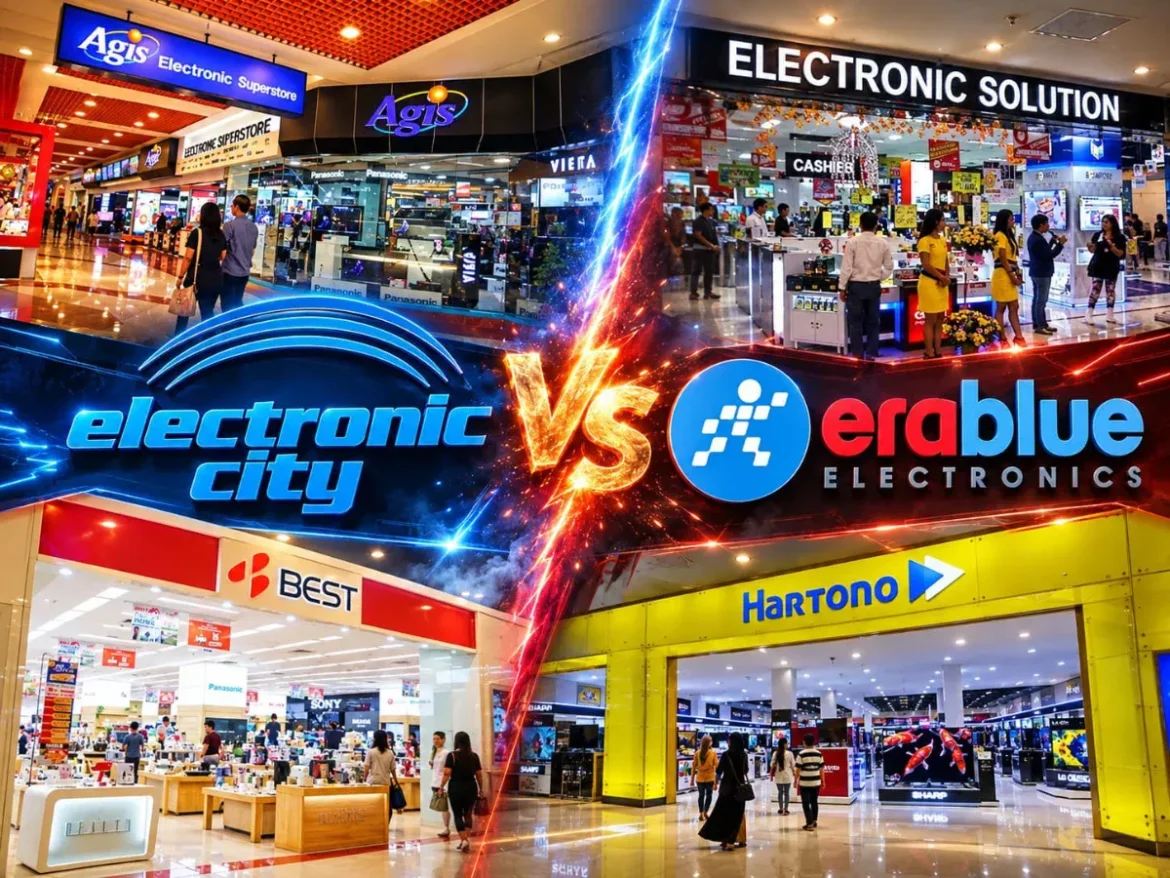
The Indonesian electronics retail sector is undergoing a profound transformation as the market dynamics shift from long-standing legacy players to agile, technology-driven competitors. For a quarter of a century, Electronic City (EC) stood as the undisputed beacon of modern retail, setting the standard for how Indonesians purchase household appliances and consumer electronics. However, as of mid-2026, the retail landscape has reached a pivotal inflection point. With the rapid expansion of Erablue—a joint venture between Erajaya Digital and Vietnam’s The Gioi Di Dong—the title of Indonesia’s largest electronics retailer has officially changed hands, signaling a new era of aggressive, customer-centric competition.
A Legacy of Modern Retail: The Electronic City Era
Founded 25 years ago, Electronic City redefined the consumer experience in Indonesia. By moving away from the traditional, fragmented electronics markets, EC introduced the concept of a modern, standalone, and climate-controlled retail environment. Its flagship store in the Sudirman Central Business District (SCBD) in Jakarta remains a landmark, symbolizing the company’s early dominance and its strategic focus on high-traffic, premium locations.
Throughout the early 2000s, EC successfully scaled its operations. Following the success of its Jakarta footprint, the company expanded into regional hubs, opening stores in Denpasar, Bali, in 2004, and Medan, North Sumatra, in 2007. By August 2026, the company operated a network of 62 stores, with its latest addition opening in Bandung’s Kiara Artha Park. For decades, EC’s business model—characterized by fixed pricing, a wide selection of branded goods, and formal warranty support—offered a level of reliability that traditional retailers could not match.
The Rise and Fall of Retail Titans
The history of modern electronics retail in Indonesia is marked by intense periods of consolidation and competition. In the late 1990s, Agis Superstore pioneered the segment, holding the market leader position until the early 2000s. The subsequent period saw a "triangular" rivalry between Agis, Electronic City, and the arrival of international giants like Electronic Solution (ES) and Best Denki (BD).
The market became a battlefield for expansion. Electronic Solution, backed by Singaporean capital, adopted an aggressive growth strategy, aiming to saturate not just provincial capitals but also secondary cities. This prompted a reactive expansion phase from Electronic City. However, the high operational costs associated with rapid physical expansion proved to be a double-edged sword.
By 2016, the competitive landscape suffered a major disruption when PT TT International Indonesia, the parent company of Electronic Solution, was declared bankrupt. This marked the beginning of a broader trend: the vulnerability of legacy retail models in an increasingly digital and cost-sensitive economy. The exit of Best Denki followed a similar trajectory. Despite its prestige as a high-end Japanese retailer, the impact of the 2020 COVID-19 pandemic and the subsequent shift in consumer behavior toward e-commerce crippled the brand’s brick-and-mortar reliance. Following the closure of its final remaining outlets, PT Best Denki Indonesia was declared bankrupt in November 2022.
Market Projections and the Emergence of Erablue
The demise of legacy players did not signal a contraction of the market; rather, it opened the door for a more efficient, technology-integrated retail model. According to data from Statista, the Indonesian consumer electronics market is projected to witness significant growth between 2023 and 2028. Total market revenue is expected to climb at a compound annual growth rate (CAGR) of 11.82%, with the total market value reaching an estimated $23.66 billion by 2028.
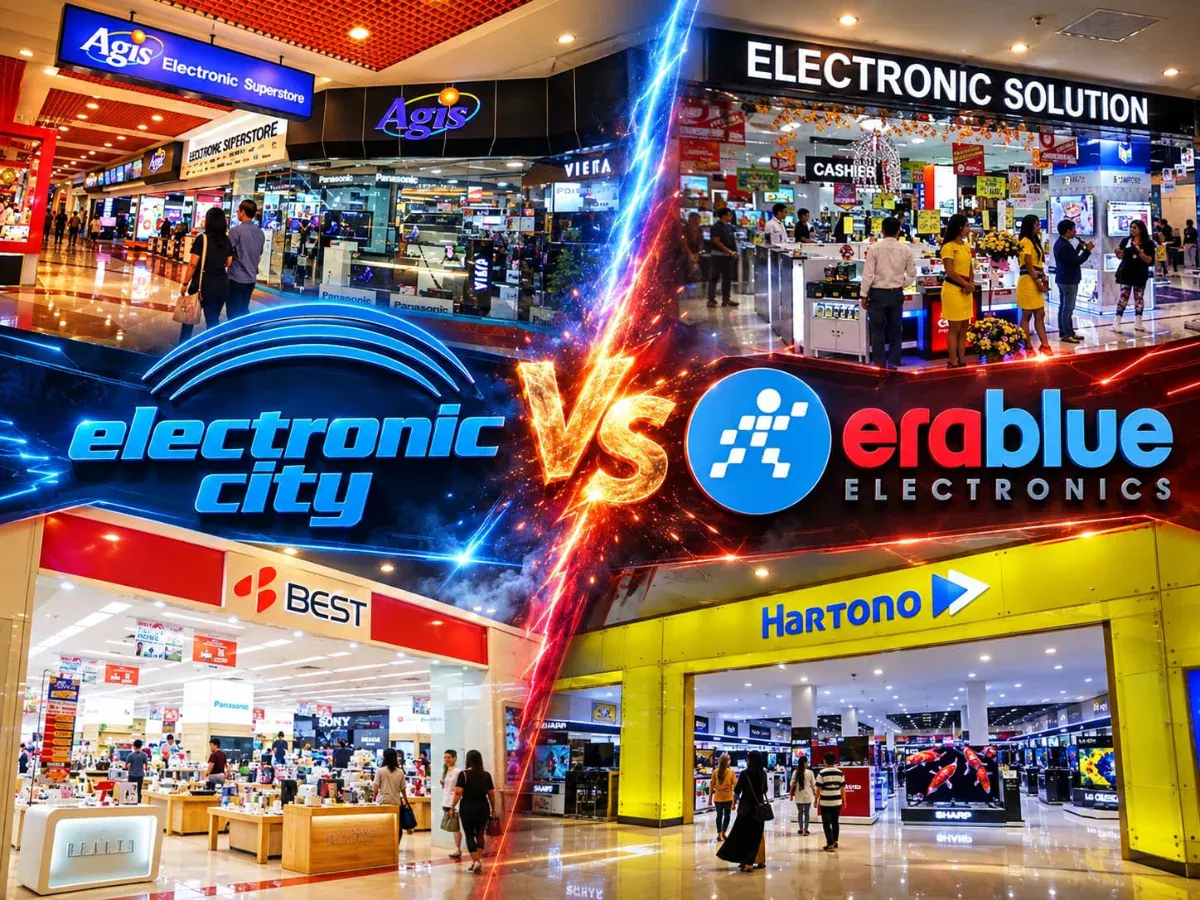
It is within this high-growth environment that Erablue has demonstrated unprecedented momentum. Emerging from a strategic partnership between Erajaya Digital—Indonesia’s premier mobile device retailer—and The Gioi Di Dong, Vietnam’s leading retail chain, Erablue has utilized a "customer-centric" model that blends physical retail with digital synchronization.
While Electronic City spent 25 years reaching 62 stores, Erablue achieved the milestone of 300 stores in less than four years. The opening of its 300th outlet in Cempaka Putih, Jakarta, in late August 2026, underscored a deliberate strategy of penetrating Tier 2 and Tier 3 cities, where competition from traditional players is minimal and the demand for formal, guaranteed electronic goods is surging.
Strategic Advantages: Why the Model Works
The rapid ascent of Erablue can be attributed to several operational innovations that have recalibrated consumer expectations:
- Supply Chain and Warranty Integration: Erablue has streamlined the relationship between the retailer and the brand principals. By offering 15-day one-to-one product replacements for small appliances and ensuring rapid repair turnarounds, they have mitigated the primary pain point of modern electronics shopping: post-purchase anxiety.
- Logistics and Value-Added Services: The introduction of free same-day delivery and professional installation services has set a new industry benchmark. In an era where convenience is paramount, this integration serves as a significant differentiator against both e-commerce platforms (which often lack installation support) and legacy retailers.
- Omnichannel Synergy: Unlike traditional retailers that viewed digital presence as an afterthought, Erablue’s operations are natively synced with its digital platform. This provides customers with real-time price transparency and accurate inventory tracking, bridging the gap between online research and offline purchase.
- Visual Merchandising Standards: Leveraging the Erajaya Group’s expertise in mobile retail, Erablue stores maintain a high standard of visual merchandising, ensuring that the shopping experience remains consistent across all 300 locations, whether in a major metropolis or a developing municipality.
Implications for the Future of Retail
The shift in market leadership from Electronic City to Erablue is not merely a change in rankings; it is a reflection of the evolution of the Indonesian consumer. Today’s shopper prioritizes a seamless experience that combines the tactile benefits of a physical store with the efficiency of digital commerce.
For the incumbents, the challenge is clear: survival now depends on agility. While Electronic City retains a strong brand equity and a loyal customer base, the sheer scale and rapid deployment capabilities of Erablue suggest that the "era of the giant" is being replaced by the "era of the network."
Industry analysts observe that the success of Erablue validates the "Vietnam-Indonesia" retail model, which prioritizes the high-frequency, neighborhood-based retail format over the massive, standalone mall-based stores that characterized the late 2000s. As Erablue continues to target deeper penetration in West and Central Java, the competition is expected to intensify further.
In conclusion, the Indonesian electronics retail market is currently experiencing its most dynamic period in decades. While the giants of the past provided the foundation for modern retail, the new leaders are building upon that structure with a faster, more digital, and more service-oriented approach. As the market approaches a $23 billion valuation by 2028, the competition between established entities and new, aggressive market leaders will likely define the consumer electronics experience for the next generation of Indonesian households.