Queen Máxima of the Netherlands has successfully completed a four-day working visit to Indonesia, spanning from November 24 to 27, 2025, in her specialized capacity as the United Nations Secretary-General’s Special Advocate (UNSGSA) for Financial Health. This high-profile mission underscored the evolving landscape of global finance, moving beyond the traditional metrics of "financial inclusion"—the mere access to bank accounts—toward the more holistic and impactful concept of "financial health." Throughout her stay, the Special Advocate engaged with a diverse cross-section of Indonesian society, ranging from high-level government officials and international financial institutions to grassroots entrepreneurs and low-income homeowners. Her visit served to highlight Indonesia’s significant strides in digital finance while identifying remaining gaps in financial resilience and literacy that are crucial for the nation’s long-term economic stability.
The Evolution of a Global Mandate: From Inclusion to Health
Queen Máxima’s 2025 visit marks her fifth professional journey to the Indonesian archipelago. Her previous visits in 2012, 2016, and 2018 were primarily focused on the United Nations’ "Financial Inclusion" agenda, which sought to ensure that every individual has access to affordable and sustainable financial products. Since her appointment as the UNSGSA in 2009, the global conversation has shifted. While Indonesia has seen a dramatic increase in the percentage of the population with access to formal financial services—rising from under 20% a decade ago to over 85% in recent years—the focus has now turned to how these tools are used to improve lives.
Financial health, as advocated by Queen Máxima, is defined by four key pillars: the ability of an individual to manage daily expenses, the resilience to withstand financial shocks (such as illness or job loss), the capacity to meet long-term goals, and the confidence to navigate the financial system. Her visit to Indonesia was designed to assess how the country’s digital transformation is supporting these pillars, particularly for vulnerable groups such as women, smallholder farmers, and micro-entrepreneurs.
Chronology of the Visit: A Deep Dive into Grassroots Finance
The Special Advocate’s itinerary was strategically designed to witness the intersection of traditional industries and modern financial technology. Her journey began on Tuesday, November 25, in Central Java, a province that serves as a microcosm of Indonesia’s industrial and artisanal economy.
In Sragen Regency, Queen Máxima visited a large-scale garment factory to observe how wage digitization is transforming the lives of thousands of workers, the majority of whom are women. By moving from cash payments to direct deposits, these workers gain immediate entry into the formal financial system, allowing for safer savings and easier access to credit. Following this, she traveled to the historic Kampung Batik Laweyan in Solo. Here, she engaged with batik artisans to discuss the challenges of maintaining a traditional craft in a digital economy. The discussions centered on how digital payment systems like QRIS (Quick Response Code Indonesian Standard) have streamlined their business operations and provided a "digital footprint" that makes them more attractive to lenders.
The first day concluded at the Pura Mangkunegaran in Solo, where Queen Máxima joined a session organized by Women’s World Banking. This engagement was particularly significant as it brought together students, young entrepreneurs, and financial tech innovators. The Queen listened to testimonies regarding the "gender gap" in finance, where women often face higher hurdles in securing business loans despite having higher repayment rates. The dialogue emphasized that financial health for women is a prerequisite for broader community development.
Wednesday, November 26: Infrastructure, Innovation, and Green Finance
On her second full day, the Special Advocate returned to Jakarta and its surrounding industrial hubs to focus on the institutional and structural side of financial health. The morning began with a high-level roundtable at the UN office in Jakarta, where she met with representatives from various development organizations to coordinate international support for Indonesia’s financial literacy programs.
A pivotal meeting followed with the International Finance Corporation (IFC), a member of the World Bank Group. The discussions focused on the development of innovative lending products that prioritize economic growth alongside personal financial stability. The Queen emphasized that the private sector must move beyond "predatory" lending practices toward products that encourage sustainable debt management.
One of the most innovative highlights of the visit occurred in the afternoon at the Gran Harmoni Cibitung housing complex in Bekasi Regency, West Java. This project provides low-emission, subsidized housing for low-to-middle-income families. Queen Máxima witnessed a unique collaboration between the state-owned bank BTN (Bank Tabungan Negara) and local environmental initiatives. In a program dubbed "Trash-for-Mortgage," residents are encouraged to collect and sort waste, which is then converted into monetary value to help pay off their monthly mortgage installments.
This initiative was praised by the Queen as a "double-win" for financial health and environmental sustainability. By visiting the home of a first-time buyer and observing the signing of new mortgage deeds, she highlighted how creative financial products can make homeownership—a cornerstone of long-term financial health—attainable for those who were previously excluded from the credit market. The day ended with a corporate engagement at Deloitte Indonesia, where she urged employers to take a proactive role in the financial wellness of their staff, arguing that a financially secure workforce is more productive and stable.
Thursday, November 27: Strategic Dialogue with the Indonesian Government
The final day of the mission was dedicated to policy and high-level diplomacy. Queen Máxima participated in a financial literacy forum alongside Indonesia’s top economic regulators: the Financial Services Authority (OJK), Bank Indonesia (BI), and the Ministry of Finance. These institutions are the architects of Indonesia’s National Strategy for Financial Inclusion (SNKI).
Data presented during these sessions indicated that while "access" is high, "literacy" still lags behind. According to recent surveys by the OJK, the financial literacy index in Indonesia sits at approximately 50%, meaning many citizens have bank accounts but do not fully understand the risks of digital loans or the benefits of insurance. Queen Máxima advocated for the integration of financial education into the national school curriculum and the expansion of digital literacy programs for the elderly and rural populations.
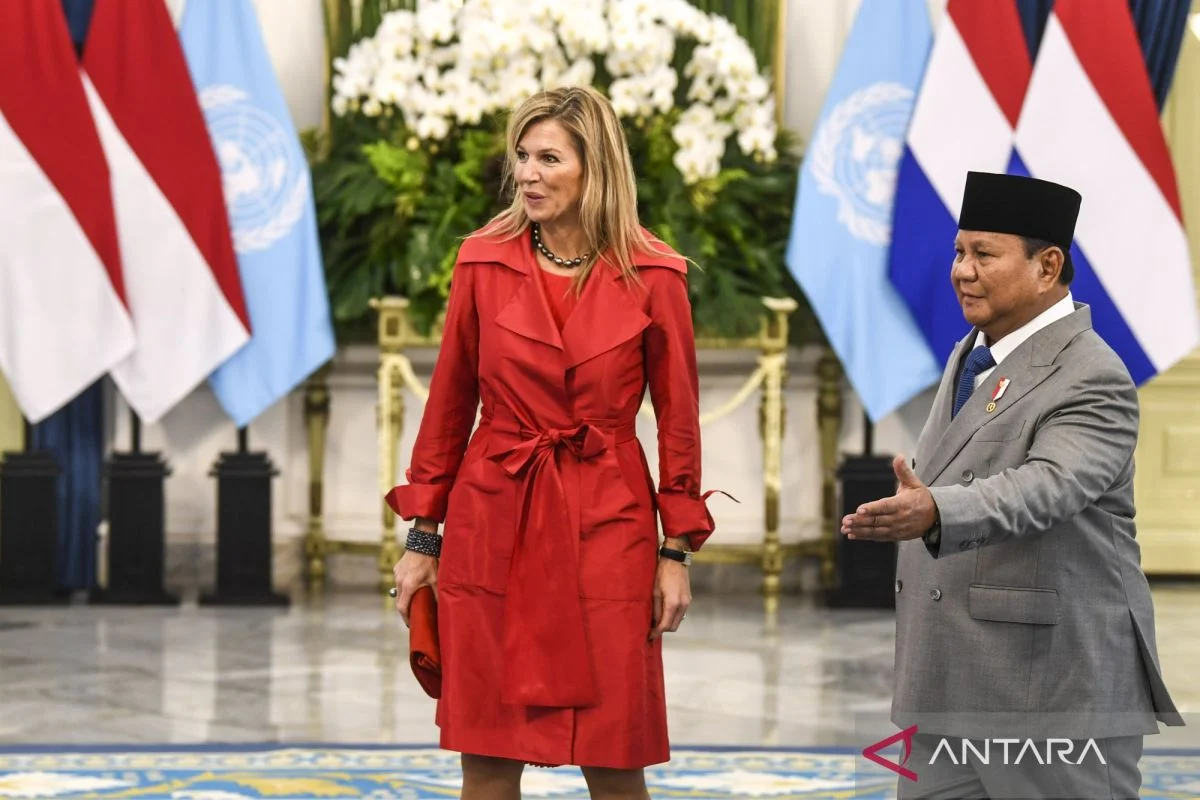
The visit culminated in a formal meeting at the Istana Merdeka in Jakarta, where Queen Máxima was received by President Prabowo Subianto. During a private meeting followed by a state luncheon, the Queen shared her findings from the field. She commended the President on Indonesia’s leadership in digital public infrastructure, particularly the success of the G20 Global Partnership for Financial Inclusion, which Indonesia chaired in 2022.
President Prabowo expressed his administration’s commitment to the "Asta Cita" (Eight Aspirations) vision, which includes the strengthening of the digital economy and the empowerment of the "wong cilik" (common people). The President and the Special Advocate agreed that for Indonesia to reach its "Golden Indonesia 2045" goal of becoming a top-five global economy, the financial resilience of its citizens must be a national priority.
Analysis: The Broader Implications of the Visit
Queen Máxima’s visit comes at a critical juncture for Indonesia. As the country navigates the post-pandemic recovery and a shifting global economic order, the "health" of its domestic economy depends heavily on the financial stability of its 278 million citizens.
Several key implications emerge from this mission:
- The Rise of Green Finance: The "Trash-for-Mortgage" model in Bekasi suggests that Indonesia is becoming a testing ground for "Green Financial Inclusion." By linking environmental behavior to financial rewards, the government can address two crises—waste management and housing shortages—simultaneously.
- Digital Safety Nets: The Queen’s focus on the "resilience" pillar of financial health highlights the need for better insurance products. Currently, insurance penetration in Indonesia remains low. The UNSGSA’s advocacy is likely to spur regulators to simplify micro-insurance products for health and agriculture.
- MSME Empowerment: By visiting Sragen and Solo, the Queen reinforced the idea that Micro, Small, and Medium Enterprises (MSMEs) are the backbone of the Indonesian economy. Financial health for these entities means more than just loans; it means access to digital accounting tools and global markets.
- Regulatory Harmonization: The joint session with OJK, BI, and the Ministry of Finance signals a push for a more unified regulatory framework to protect consumers from the risks of "FinTech" and illegal online lending, which have plagued the country in recent years.
Conclusion: A Lasting Partnership
As Queen Máxima departed from Jakarta, the resonance of her visit was clear. She did not come as a ceremonial monarch, but as a technical expert and a global advocate. Her ability to bridge the gap between the boardrooms of international banks and the living rooms of subsidized housing residents remains her greatest asset in the role of UNSGSA.
For Indonesia, the visit serves as both a validation of its progress and a roadmap for its future. The transition from ensuring people have a place to save their money to ensuring that their money actually works to improve their quality of life is the next great frontier for the nation. Through the continued partnership with the United Nations and the insights provided by Queen Máxima, Indonesia is well-positioned to turn the concept of financial health into a tangible reality for all its citizens.