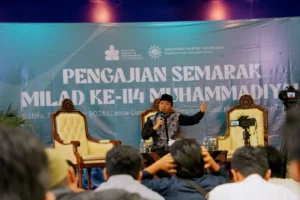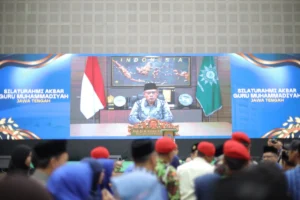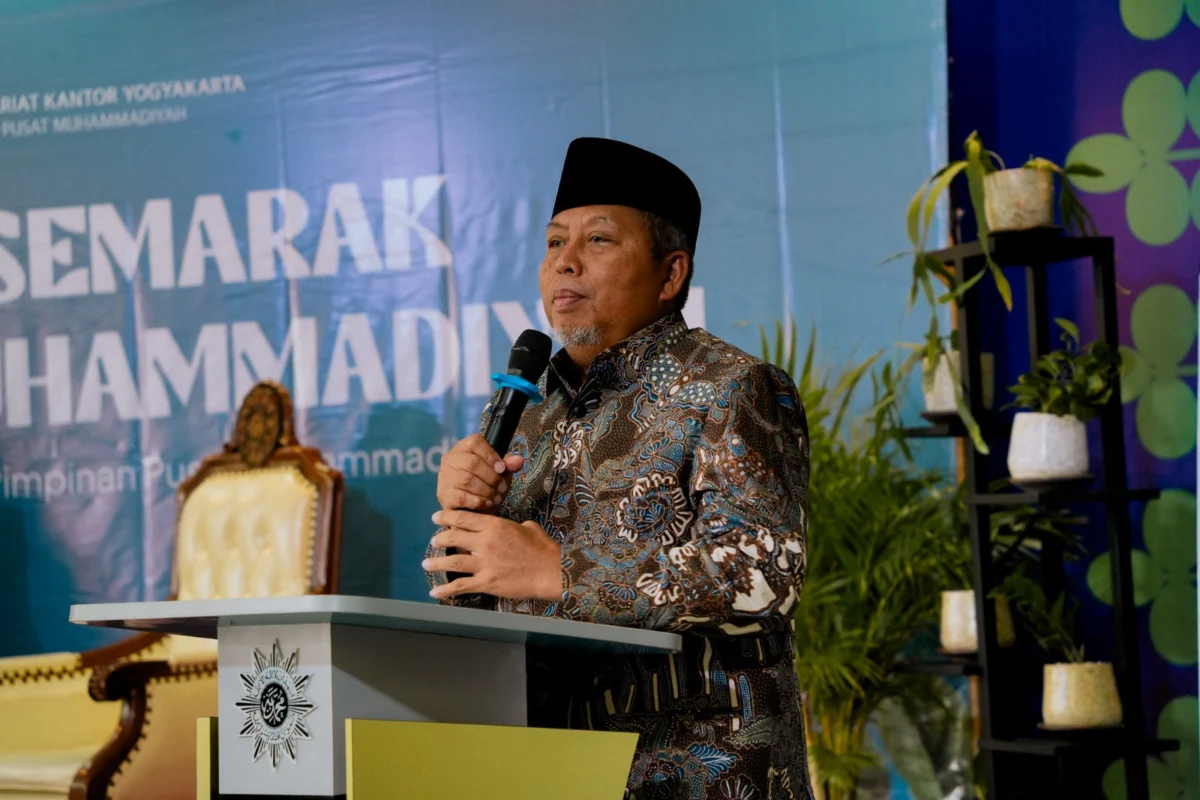
The Central Executive Board (Pimpinan Pusat or PP) Office of Muhammadiyah in Yogyakarta recently hosted a momentous spiritual gathering as part of the broader celebrations for the organization’s 114th anniversary, known locally as Milad. Held on Saturday, November 6, the event brought together administrative staff, office personnel, and key organizational leaders to foster workplace harmony and reaffirm the movement’s long-standing commitment to societal advancement and national progress. The special gathering featured a keynote address by prominent digital preacher Ustaz Irfan Rizki Haas, drawing attention to the evolving methods of Islamic outreach in the contemporary era.
The celebration underscored a central theme articulated by PP Muhammadiyah Chairman Agus Taufiqurrohman: the necessity of unity of heart and a joyful approach to professional duties to attain divine pleasure. Alongside Agus Taufiqurrohman, the event was graced by the presence of PP Muhammadiyah Secretary Muhammad Sayuti, reflecting the institutional importance placed on employee morale and organizational cohesion at the grassroots and administrative levels.
Comprehensive Festivities and Community Building
The spiritual pengajian (religious lecture) was just one component of a vibrant and multifaceted itinerary organized by the Yogyakarta headquarters to mark the 114th Milad. In the weeks leading up to the main event, the PP Muhammadiyah office transformed into a hub of camaraderie through a series of internal competitions and recreational activities designed to break the monotony of daily bureaucratic routines and strengthen interpersonal bonds among staff members.
The festivities included a diverse array of sports and cultural events, ranging from competitive badminton, table tennis, volleyball, and mini soccer to more lighthearted group activities such as communal cooking competitions, karaoke sessions, and an adventurous rafting excursion. According to organizational leadership, these initiatives are strategic interventions aimed at building teamwork. By participating in collaborative events like cooking contests, employees reinforce the social fabric of the institution, ensuring that every individual feels like an indispensable component of the administrative machinery that supports Muhammadiyah’s vast national network.
During his address, Agus Taufiqurrohman emphasized the functional value of these recreational programs. He reiterated that maintaining high morale and mutual trust among colleagues directly translates to greater efficiency and dedication in executing the heavy administrative and social responsibilities shouldered by the PP office. “The advice is always to be united in heart and to work with joy to attain the pleasure of Allah,” Agus stated, encapsulating the institutional ethos of the day.
The Philosophical Imperative: Islam That Illuminates
Moving beyond internal office dynamics, the chairman’s address expanded into broader theological and sociological reflections on the state of the ummah (Muslim community) and the national identity. Agus called upon the audience to continuously voice and embody the core organizational slogan: “Islam mencerahkan, Muhammadiyah memajukan, Indonesia jaya” (Enlightening Islam, Progressive Muhammadiyah, Prosperous Indonesia).
In his critical analysis, Agus noted a recurring paradox within contemporary Muslim societies: while the teachings of Islam are inherently luminous, progressive, and liberating, the actual behavior and social output of its adherents often create a dim impression. He argued that human shortcomings, cultural stagnation, and a departure from foundational Islamic values frequently overshadow the inherent brilliance of the faith.
Therefore, Muhammadiyah perceives its historical mandate as an ongoing corrective mission—reminding Muslims to embrace an enlightened, forward-looking, and dynamic interpretation of Islam that actively contributes to modern civilization. By fostering intellectual rigor, educational excellence, and social welfare, the organization aims to ensure that Islamic values serve as a constructive catalyst for national development rather than an insular identity marker. “The teachings are noble, but the behavior of Muslims often covers up the brilliance of Islam,” Agus explained to the attentive audience, urging a cultural renaissance from within the community.
Embracing Digital Da’wah and Youth Engagement
A notable highlight of the anniversary gathering was the explicit recognition of modern communication strategies, specifically the utilization of social media for Islamic propagation, or da’wah. Agus Taufiqurrohman took the opportunity to praise Ustaz Irfan Rizki Haas, recognizing him as a vanguard within the Muhammadiyah family who has successfully leveraged digital platforms to disseminate Islamic teachings to younger, tech-savvy demographics.
In an era defined by information saturation and shifting media consumption habits, traditional pulpit-based da’wah faces new challenges. Muhammadiyah has increasingly recognized that engaging the digital generation requires innovative approaches that combine religious substance with engaging presentation styles. Referencing the insights of the late prominent Islamic scholar Yunahar Ilyas, Agus emphasized that modern mubaligh (preachers) operating in the digital sphere must develop unique content formats that seamlessly integrate elements of wholesome entertainment without compromising theological integrity.
Ustaz Irfan’s presence at the Milad celebration symbolized the organization’s institutional openness to digital adaptation. By validating social media da’wah, PP Muhammadiyah signals a strategic shift toward meeting contemporary audiences where they spend a significant portion of their time: online. This approach not only broadens the reach of Muhammadiyah’s moderate and progressive discourse but also counters extremist or superficial interpretations of Islam that often proliferate unchecked in digital spaces.
Preparation for the National Tanwir and Milad Summit
As the gathering drew to a close, the focus shifted toward logistical and spiritual preparations for the upcoming national events. Agus Taufiqurrohman used the platform to rally support and invoke prayers for the success of the upcoming Tanwir (National Consultation) and the national commemoration of Muhammadiyah’s 114th Milad, scheduled to take place in Palu, Central Sulawesi, from November 13 to 15.
The Tanwir meeting represents one of the highest decision-making forums within the Muhammadiyah organizational structure outside of the official Muktamar (Congress). It brings together regional and central leaders to deliberate on pressing national issues, organizational consolidation, and strategic policy directions. Given the geographic scale and logistical complexity of hosting such a high-profile national convention in Central Sulawesi, a significant number of administrative personnel from the Yogyakarta headquarters are deployed as working committees.
Addressing these prospective committee members, Agus issued a call for professionalism, dedication, and exemplary conduct. He stressed that every staff member involved in organizing the Palu summit carries the institutional reputation of the Persyarikatan (Muhammadiyah organization) on their shoulders.
“May we become an inseparable part of bringing a good name to the ummah, bringing a good name to the Muhammadiyah Persyarikatan, and certainly bringing progress to the beloved Indonesian nation,” Agus concluded, setting an inspiring tone for the days leading up to the national convention.
Broader Implications and Institutional Legacy
Founded in 1912 by K.H. Ahmad Dahlan in Yogyakarta, Muhammadiyah has grown into one of the largest Islamic reformist organizations in the world, operating thousands of educational institutions, hospitals, and social welfare agencies across the Indonesian archipelago. The organization’s enduring resilience is frequently attributed to its dual focus on institutional modernization and grassroots spiritual grounding.
The 114th Milad celebrations at the Yogyakarta headquarters reflect this institutional DNA. By blending recreational team-building with profound theological introspection and forward-looking digital strategies, PP Muhammadiyah demonstrates how legacy organizations can maintain operational relevance in the 21st century. The emphasis on joyful labor, administrative synergy, and technological adaptation serves as a blueprint for non-governmental and religious organizations seeking to navigate the complexities of modern governance while staying true to their foundational mission of societal enlightenment and national empowerment.