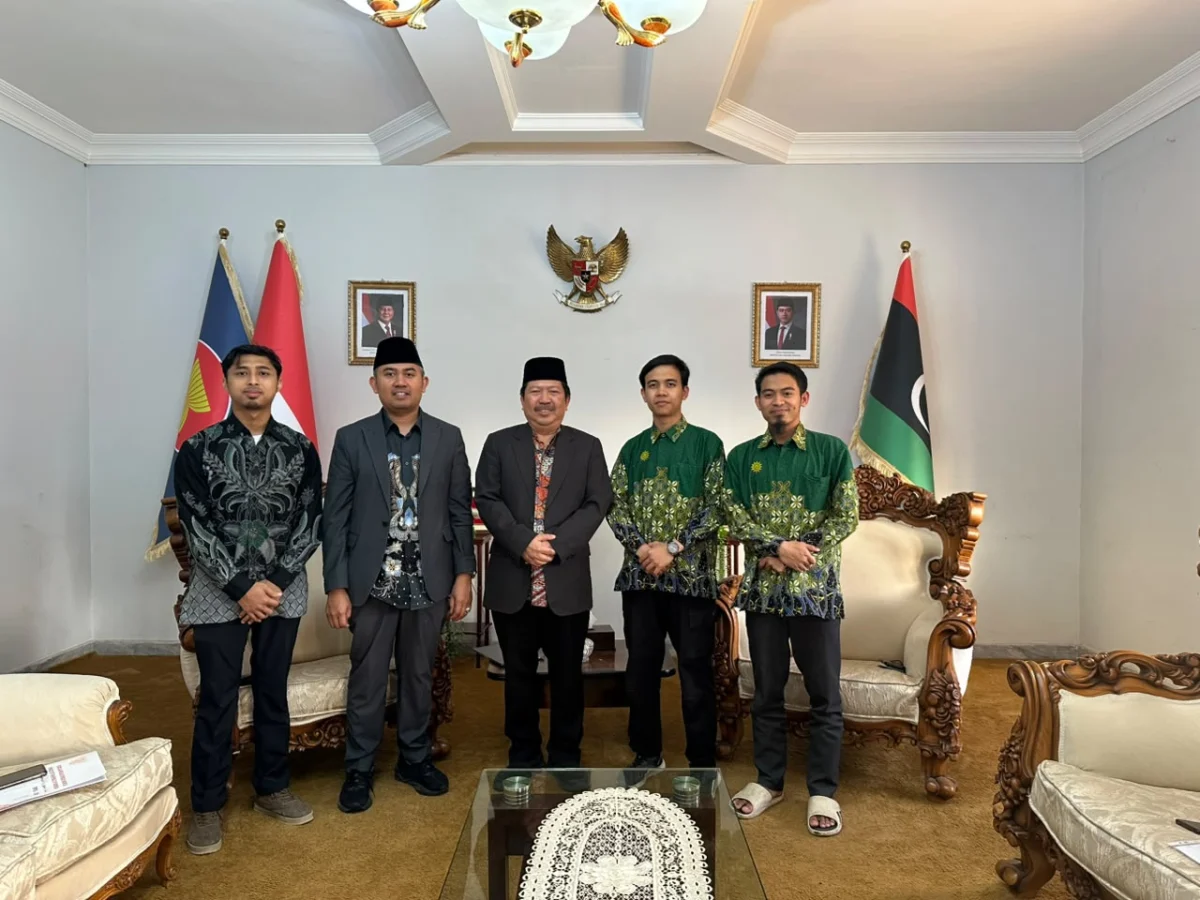
The Pimpinan Ranting Istimewa Muhammadiyah (PRIM) in Zliten, Libya, recently took a decisive step toward cementing its organizational footprint in North Africa by conducting a high-level diplomatic and institutional audience with the Embassy of
the Republic of Indonesia (KBRI) in Tripoli. Held on Thursday, November 5, the strategic meeting served as a multifaceted platform for the diaspora-based Islamic organization to synchronize its vision with state representatives, report on its latest structural milestones, and outline an ambitious roadmap for international outreach.
The delegation from PRIM Zliten was received directly by the Chargé d’Affaires ad Interim (KUAI) of the Indonesian Embassy in Libya, Dede Achmad Rifa’i, at the diplomatic mission’s headquarters. The encounter underscores the vital nexus between Indonesian state diplomacy and civil society organizations (CSOs) operating abroad, highlighting how cultural, educational, and religious diplomacy can mutually reinforce the nation’s interests on the global stage. As Muhammadiyah continues to expand its internationalization agenda—a strategic policy adopted during its previous Muktamar to project its values of enlightened moderation beyond national borders—branches in the Middle East and North Africa (MENA) region are increasingly positioning themselves as cultural and intellectual ambassadors.
Strategic Outcomes of the Second Musyawarah Ranting Istimewa
At the heart of the discussions between PRIM Zliten and the Indonesian Embassy was a comprehensive briefing on the outcomes of the organization’s Second Musyawarah Ranting Istimewa (Musyranis II). Convened previously on Thursday, September 24, this supreme decision-making forum for the Zliten branch brought together members of the Indonesian student and professional diaspora to evaluate past performances, elect new leadership, and chart the course for the upcoming organizational period.
Iflah Anugerah Ramadhan, who was elected as the new Chairman of PRIM Zliten during the September assembly, presented the core architectural framework of the branch’s new operational phase. According to Ramadhan, the deliberations yielded a definitive leadership lineup alongside three foundational pillars designed to steer organizational development and community service over the coming years.
The first pillar centers on the internationalization and rigorous cadre-building (kaderisasi) of Muhammadiyah within Zliten and the broader Libyan academic landscape. Given that a significant portion of the Indonesian diaspora in Libya comprises students enrolled in local Islamic and secular universities, institutionalizing structured recruitment, ideological mentoring, and leadership training is seen as paramount to ensuring institutional continuity.
The second pillar focuses on administrative modernization and organizational governance. By upgrading internal record-keeping, financial transparency, and communication channels, PRIM Zliten aims to align its operations with the modern governance standards expected of a globally minded civil society institution.
The third and final pillar involves the strengthening and expansion of Amal Usaha Muhammadiyah (AUM)—the diverse network of charitable, educational, and socio-economic enterprises that form the backbone of the organization’s public service delivery. While operating in a foreign jurisdiction presents distinct regulatory and logistical challenges, the branch is actively exploring models to localize AUM initiatives, ranging from community welfare programs to intellectual and publishing hubs.
Branch leadership confirmed that these strategic resolutions are currently being codified into an official tanfidz document. This binding legal and administrative decree will serve as the master roadmap and operational compass for all future programs, ensuring accountability and measurable progress across all departmental lines.
Forging Economic, Educational, and Institutional Partnerships
Beyond internal governance, the diplomatic engagement in Tripoli functioned as a crucial exploratory session for forging strategic partnerships between Libyan institutions and Muhammadiyah’s extensive network in Indonesia. Both parties recognized the untapped potential for cross-border collaboration spanning several critical sectors, including higher education, vocational training, trade, and commercial enterprise development for Indonesian and Libyan entrepreneurs affiliated with the movement.
The educational sector remains a primary focal point for diaspora engagement in Libya. With numerous Indonesian scholars pursuing advanced degrees at esteemed Libyan seats of learning—such as the Al-Asmarya Islamic University located in Zliten—academic exchanges, joint research initiatives, and intellectual dialogues offer fertile ground for bilateral cooperation. Furthermore, economic and business development discussions highlighted the potential to leverage commercial networks within Muhammadiyah’s expansive domestic business ecosystem to foster micro, small, and medium enterprise (MSME) ties between the two nations.
In this collaborative matrix, the Indonesian Embassy in Tripoli is envisioned to act as a vital diplomatic conduit and institutional bridge. By facilitating official introductions, regulatory guidance, and inter-agency dialogue, the embassy can help mitigate the bureaucratic hurdles often encountered by foreign non-governmental entities operating in North Africa.
The response from the diplomatic mission was markedly receptive. Officials from KBRI Libya expressed profound appreciation for the dedication, resilience, and steady organizational progress demonstrated by PRIM Zliten. The embassy leadership offered strong moral encouragement and logistical backing, emphasizing that the constructive activities of diaspora groups not only enrich the expatriate community but also project a positive, progressive image of Indonesia as a beacon of moderate, modern Islamic thought.
Upcoming Commemorations: Semarak Tanwir and the 114th Milad of Muhammadiyah
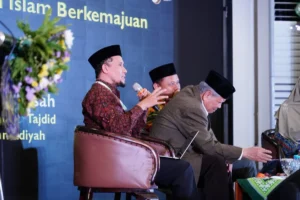
Capitalizing on its renewed momentum, PRIM Zliten has unveiled an extensive calendar of public outreach and commemorative events slated for November 2026. Designed under the overarching banner of "Semarak Tanwir and the 114th Milad of Muhammadiyah," the month-long festival aims to showcase the tenets of "Islam Berkemajuan" (Progressive Islam) to the local Libyan populace and the international academic community.
The scheduled timeline of events reflects a balanced mix of community service, intellectual discourse, and cultural engagement:
- Environmental and Social Welfare Actions: Throughout the month of November, members of PRIM Zliten will spearhead community clean-up drives, humanitarian outreach, and environmental rejuvenation projects in and around Zliten, reinforcing the Islamic mandate of stewardship over the earth (khalifah fil ardh).
- Documentary Screenings: Public viewings of historical and biographical documentary films highlighting the life, thought, and national contributions of prominent Muhammadiyah figures will be organized for students and local residents, fostering cross-cultural understanding.
- Joint Milad Reception: On Friday, November 20, a formal anniversary reception celebrating the 114th founding anniversary of Muhammadiyah will be co-hosted alongside the Pimpinan Cabang Istimewa Muhammadiyah (PCIM) Libya. The high-profile event is scheduled to take place on the grounds of the Indonesian Embassy in Tripoli, bringing together diplomats, community leaders, and diaspora members.
- Academic Seminar at Al-Asmarya Islamic University: As the intellectual centerpiece of the anniversary celebrations, PRIM Zliten will convene a major seminar focusing on the introduction of Muhammadiyah’s core philosophies at Al-Asmarya Islamic University in Zliten.
The academic seminar is strategically designed to engage local professors, researchers, theologians, and university students. By presenting Muhammadiyah’s century-long synthesis of religious orthodoxy, rational inquiry, modern education, and social emancipation, the organizers hope to foster deeper theological and sociological dialogues between Indonesian and North African scholars.
Contextual Background and Broader Geopolitical Implications
The active presence of Muhammadiyah branches across the Middle East, Europe, Asia, and the Americas represents a profound evolution in modern Indonesian Islamic diplomacy. Historically rooted in the socio-religious reform movements initiated by K.H. Ahmad Dahlan in Yogyakarta in 1912, Muhammadiyah has transitioned from a domestic educational and welfare provider into a prominent global advocate for civilizational dialogue, humanitarian relief, and educational modernization.
Operating in North Africa, particularly in a transitional nation like Libya, presents a unique set of operating conditions. Despite the socio-political complexities and institutional rebuilding processes characterizing post-conflict Libya, cities like Zliten—renowned for their historical and Islamic scholarly traditions—offer a hospitable environment for intellectual exchange. By embedding themselves within local academic frameworks and maintaining transparent, cooperative relations with official state representatives such as the KBRI, diaspora organizations like PRIM Zliten demonstrate how soft-power diplomacy can be effectively operationalized at the grassroots level.
Analysts observing the intersection of Indonesian religious NGOs and foreign policy note that such initiatives yield dual benefits. Domestically, they provide invaluable global exposure and leadership training for younger generations of Indonesian intellectuals studying abroad. Globally, they project a nuanced narrative of Indonesian Islam—one that champions institutional organization, gender-inclusive education, social welfare, and interfaith harmony without falling prey to radical ideologies.
As PRIM Zliten prepares to execute its rigorous slate of November 2026 events, the synergy between its newly minted administrative roadmap, the active backing of the Indonesian Embassy, and its robust community outreach underscores a maturing diaspora. Through sustained dialogue, educational engagement, and unwavering commitment to its core civilizational mission, Muhammadiyah continues to write a compelling chapter of international religious and cultural engagement from the shores of North Africa.