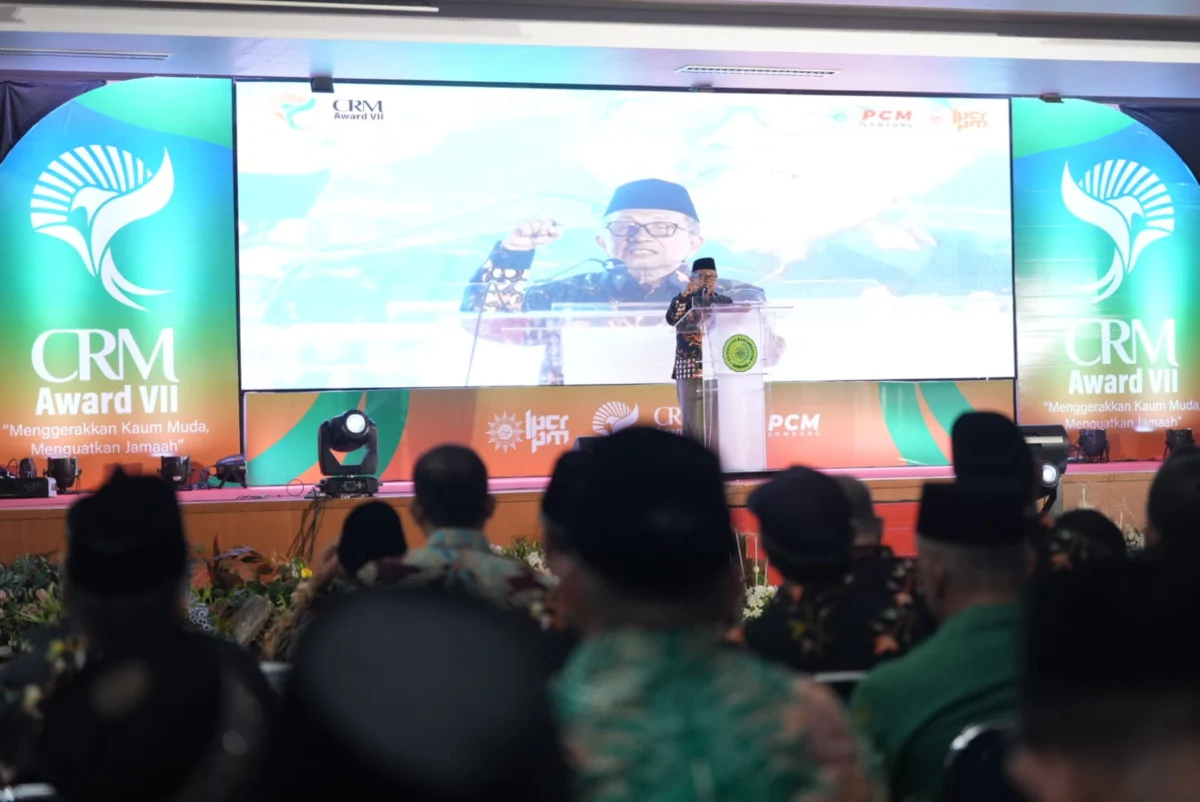
KEBUMEN, Central Java – Muhammadiyah, one of Indonesia’s largest and most influential Islamic socio-religious organizations, has made a significant stride in its enduring commitment to national education and community development by establishing the Universitas Muhammadiyah Teluk Bintuni (UNIMUTU) in Teluk Bintuni Regency, West Papua Province. This landmark initiative positions Muhammadiyah as the sole social organization (ormas) to operate a university in the sprawling Teluk Bintuni region, underscoring its unique dedication to fostering intellectual growth and human capital development in one of Indonesia’s most remote and diverse areas. The announcement, made by Ahmad Dahlan Rais, Chairman of the Central Leadership (PP) of Muhammadiyah, on July 19, highlights the organization’s strategic expansion of its educational footprint in Eastern Indonesia, driven by a profound interpretation of Islamic principles emphasizing universal compassion and non-discrimination.
Muhammadiyah’s venture into Teluk Bintuni is not an isolated effort but rather a pivotal component of its broader educational strategy across the Tanah Papua region. According to Dahlan Rais, Muhammadiyah now operates four universities throughout the broader Papua region, including Universitas Muhammadiyah Papua in Jayapura, Universitas Pendidikan Muhammadiyah Sorong (UNIMUDA Sorong), and the recently inaugurated UNIMUTU. This extensive network of higher education institutions reflects Muhammadiyah’s long-standing tradition of contributing to the nation’s educational landscape, a legacy that dates back to its founding in 1912. For over a century, Muhammadiyah has been at the forefront of establishing schools, hospitals, and social welfare programs, serving communities across the archipelago without regard to religious affiliation, a testament to its foundational ethos.
The Vision of Rahmatan Lil Alamin: Education for All
The establishment of UNIMUTU, particularly in a region with a significant non-Muslim majority, encapsulates Muhammadiyah’s practical implementation of Islam Rahmatan Lil Alamin – Islam as a mercy to all creation. Dahlan Rais explicitly articulated this guiding principle, stating, "Why does Muhammadiyah educate, making others smart? Even if they are not Muslims. I believe this serves as a mission of Rahmatan Lil Alamin." This philosophy transcends mere religious instruction, extending to the provision of high-quality, inclusive education accessible to all segments of society. The organization’s educational institutions are designed to be socially inclusive, welcoming students from diverse religious, ethnic, and socio-economic backgrounds, thereby fostering an environment of mutual respect and intellectual exchange.
Muhammadiyah’s commitment to non-discriminatory education is deeply rooted in its theological understanding. Dahlan Rais elaborated on this, referencing Surat An Nisa, verse 1, which speaks of humanity originating from a single source, subsequently diversifying into various forms, skin colors, hair textures, and other distinctions. "Remembering this, in essence, humans are all the same, originating from one. There is a message of equality there, but also a strong message of justice. Therefore, there should be no discrimination," he emphasized. This scriptural reasoning forms the bedrock of Muhammadiyah’s approach, justifying its extensive network of educational and healthcare facilities in regions where Muslims may be a minority, such as Papua, or in any other part of the world where such services are needed. The Qur’an, for Muhammadiyah, is not merely a text for spiritual guidance but a powerful mandate for social action, justice, and human development.
Contextualizing Muhammadiyah’s Presence in Papua
Papua, often referred to as Bumi Cenderawasih (The Land of the Birds of Paradise), represents a region of immense natural beauty, cultural diversity, and significant developmental challenges. Historically, educational access and infrastructure in Papua have lagged behind other parts of Indonesia. This disparity has led to lower human development indices and limited opportunities for its indigenous populations. Recognizing these gaps, Muhammadiyah has strategically focused its efforts on extending its reach to Eastern Indonesia, particularly Papua, where the need for quality education and healthcare is most pronounced.
Muhammadiyah’s engagement with Papua dates back decades, evolving from smaller educational initiatives and community outreach programs to the establishment of comprehensive higher education institutions. The organization’s strategy involves building local capacity, empowering communities, and contributing to the national agenda of accelerating development in Papua, which has been a priority for successive Indonesian governments. By establishing universities like UNIMUTU, Muhammadiyah aims not only to provide academic degrees but also to cultivate critical thinking, leadership skills, and a sense of civic responsibility among Papuan youth, preparing them to be agents of positive change in their own communities.
Teluk Bintuni Regency itself is a vast and geographically challenging area, characterized by dense forests, extensive coastlines, and a population dispersed across remote villages. As one of the largest regencies in West Papua, its strategic importance is underscored by its rich natural resources, including significant oil and gas reserves. Despite this potential, local communities often face hurdles in accessing basic services, including higher education. The presence of UNIMUTU therefore serves as a beacon of hope, offering local residents, particularly those who might otherwise be unable to travel to larger cities for tertiary education, an opportunity to pursue academic aspirations closer to home. This local accessibility can significantly boost enrollment rates and reduce brain drain from the region.
Chronology and Strategic Expansion
While the precise establishment dates of all four Muhammadiyah universities in Papua are varied, their collective presence signifies a sustained and accelerating commitment. Muhammadiyah’s initial educational forays into Papua likely began in the mid-to-late 20th century, with the establishment of primary and secondary schools. The transition to higher education came later, often in response to growing local demand and the organization’s expanding capacity. Universitas Muhammadiyah Papua (UMP) in Jayapura, for instance, has been operational for some time, serving as a regional hub for higher learning. Universitas Pendidikan Muhammadiyah Sorong (UNIMUDA Sorong) also plays a crucial role in educator training and community service in the western part of Papua.
The recent establishment of UNIMUTU in Teluk Bintuni, announced on July 19, marks a new chapter in this expansion. This strategic move aligns with a broader national trend of decentralizing educational opportunities and bringing them closer to underserved populations. The decision to place a university in Teluk Bintuni was likely the culmination of years of needs assessment, community engagement, and logistical planning, reflecting Muhammadiyah’s meticulous approach to institutional development. It is part of a deliberate phased strategy to ensure comprehensive coverage and impact across the Papuan provinces.
Supporting Data and Broader Impact
Statistics consistently reveal a significant gap in educational attainment between Papua and the national average. For instance, according to data from the Central Statistics Agency (BPS), literacy rates and average years of schooling in Papua and West Papua provinces often fall below the national figures. The number of universities per capita is also considerably lower compared to Java or Sumatra. In this context, each new higher education institution, especially one backed by a reputable organization like Muhammadiyah, represents a vital contribution to closing these gaps.
Muhammadiyah, with its vast national network comprising hundreds of universities, thousands of schools, and numerous hospitals and clinics, brings unparalleled experience and resources to its Papuan ventures. This extensive infrastructure and expertise ensure that UNIMUTU will benefit from established academic standards, faculty development programs, and administrative best practices. The curricula offered at UNIMUTU are expected to be tailored to the specific needs and potential of the Teluk Bintuni region, likely including programs in fields such as agriculture, fisheries, resource management, education, and public health, all crucial for sustainable local development.
The broader implications of Muhammadiyah’s inclusive educational model in Papua are multifaceted:
- Enhanced Educational Access and Equity: UNIMUTU directly addresses the scarcity of higher education options in a vast and remote regency, promoting educational equity for Papuan youth.
- Human Capital Development: By providing quality tertiary education, the university will contribute significantly to the development of skilled professionals, innovators, and leaders within Papua, reducing reliance on external expertise.
- Community Empowerment and Economic Growth: Universities often act as catalysts for local economic growth through job creation, local procurement, and fostering entrepreneurial activities. Research conducted at UNIMUTU could also address local challenges in areas like sustainable resource management or public health.
- Promotion of Interfaith Harmony and Social Cohesion: By actively serving all communities regardless of faith, Muhammadiyah’s institutions embody practical pluralism. This approach can foster understanding, reduce prejudices, and strengthen social cohesion in a region known for its rich ethnic and religious diversity. It stands as a powerful example of how different faith-based organizations can contribute positively to national unity.
- Reinforcing National Development Goals: Muhammadiyah’s efforts align with the Indonesian government’s long-term vision for accelerating development in Papua, especially in human resources and infrastructure. Such private initiatives complement government programs and contribute significantly to achieving national development targets.
Statements and Reactions
While specific reactions to the UNIMUTU announcement were not detailed in the original report, it is highly probable that the initiative has been met with widespread positive reception. Local community leaders in Teluk Bintuni would likely express gratitude for the increased educational opportunities for their youth, recognizing the potential for socio-economic upliftment. Provincial government officials in West Papua would also likely welcome Muhammadiyah’s investment, viewing it as a crucial partnership in addressing regional development disparities. Academics and educational experts across Indonesia would commend Muhammadiyah for its unwavering commitment to inclusive education, particularly its courage to establish institutions in challenging and underserved areas. This model of faith-based organizations driving secular education for universal benefit is often cited as a progressive and effective approach to national development.
Challenges and Opportunities
Establishing and sustaining a university in a remote region like Teluk Bintuni presents its own set of challenges. These include attracting and retaining qualified faculty, ensuring adequate infrastructure and technological connectivity, securing sustainable funding, and managing logistical complexities. However, these challenges also present unique opportunities. UNIMUTU could become a center for specialized research relevant to the Papuan context, such as tropical biodiversity, indigenous knowledge systems, or sustainable resource management. It also offers an unparalleled opportunity for community engagement, allowing students and faculty to directly address local needs and contribute to grassroots development initiatives. The university can serve as a hub for cultural preservation and inter-cultural dialogue, celebrating Papua’s rich heritage while embracing modern educational advancements.
In conclusion, Muhammadiyah’s establishment of Universitas Muhammadiyah Teluk Bintuni (UNIMUTU) is a profound testament to its enduring mission of Islam Rahmatan Lil Alamin and its unwavering commitment to inclusive education and national development. By extending its educational reach to one of Indonesia’s most remote regions, Muhammadiyah is not only providing vital access to higher learning but also actively fostering human capital, promoting interfaith harmony, and contributing significantly to the social and economic upliftment of Papua. This initiative stands as a powerful model of how a faith-based organization can serve as a catalyst for progressive social change, demonstrating that genuine service transcends boundaries of faith and ethnicity, ultimately striving for the betterment of all humanity.