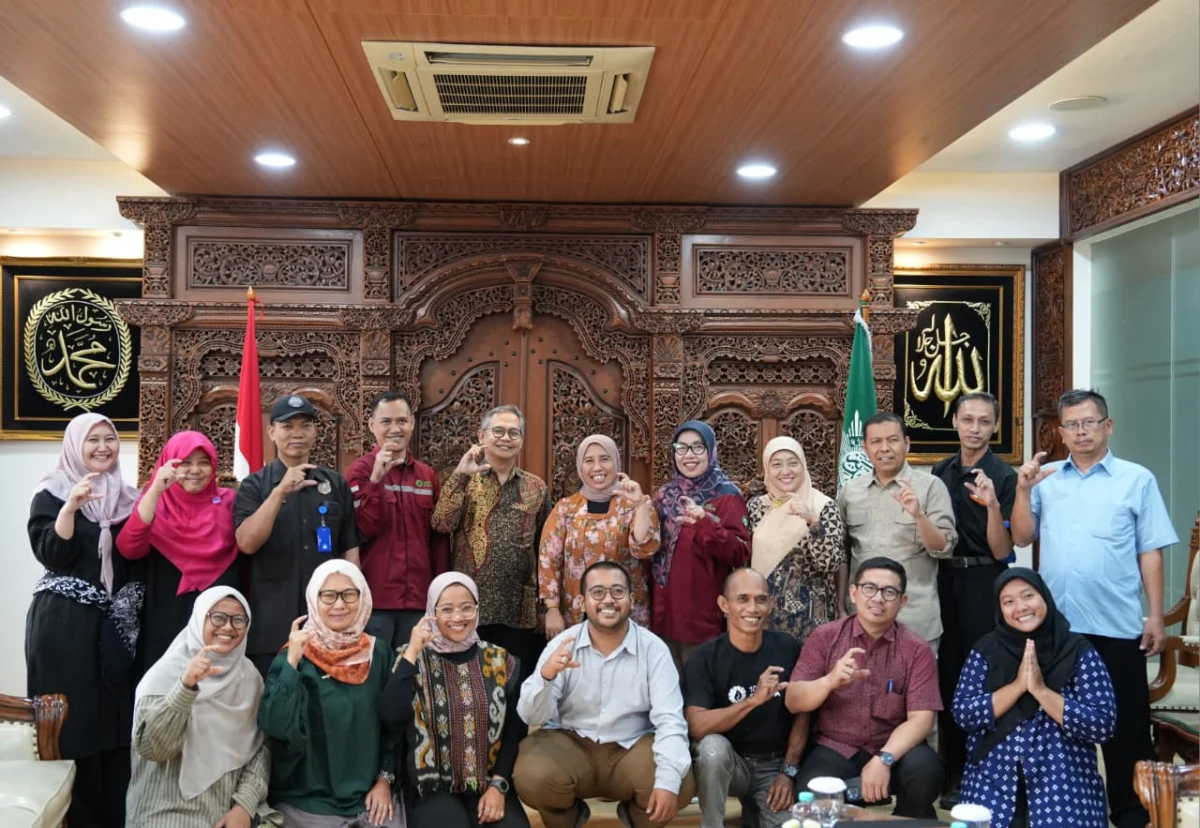
JAKARTA — The Central Leadership (Pimpinan Pusat/PP) of Muhammadiyah has officially concluded a rigorous and comprehensive energy audit of its primary administrative headquarters in Jakarta. The audit, which commenced in early September 2026, marks a significant milestone in the organization’s broader institutional commitment to environmental stewardship, operational efficiency, and sustainable governance. The formal conclusion of this technical evaluation was announced during a dedicated closing meeting held on Tuesday, September 22, 2026, at the Jakarta office, bringing together key organizational leaders, environmental experts, and facilities management personnel.
The findings and subsequent recommendations derived from this month-long assessment are designed to serve as an actionable blueprint for optimizing power consumption, reducing operational expenditures, and embedding a permanent culture of conservation and resource mindfulness across all administrative and religious facilities managed by the prominent Islamic organization.
Chronology and Scope of the Comprehensive Energy Assessment
Initiated at the onset of September 2026, the energy audit was structured as a methodical and exhaustive evaluation of the entire PP Muhammadiyah Jakarta compound. This sprawling institutional complex encompasses multi-story administrative offices, meeting spaces, and the prominent At-Tanwir Mosque, a central hub for community gatherings and religious observances.
The evaluation team deployed a multidisciplinary approach, scrutinizing every facet of energy consumption within the complex. Key areas of inspection included baseline electricity usage, the operational efficiency and load distribution of central and split air conditioning (AC) units, lighting infrastructure, the integration and performance of existing solar photovoltaic panels, and overall facility-wide energy management practices.
Engineering and environmental specialists conducted on-site testing, reviewed historical utility bills, and mapped energy flow patterns to identify systemic inefficiencies and potential areas for conservation. The systematic review culminated in the September 22 closing meeting, where auditors presented their comprehensive data-driven findings to organizational leadership, laying the groundwork for immediate policy implementation and behavioral transformation among building occupants.
Baseline Findings: General Efficiency Coupled with Clear Optimization Potential
According to the preliminary reports presented during the closing meeting, the energy performance of the PP Muhammadiyah Jakarta complex demonstrates a baseline level of operational efficiency. The facility is not operating under excessive or unregulated power drains; however, the data revealed substantial opportunities for targeted optimization.
The audit identified that while structural energy systems are generally well-maintained, significant energy leakage occurs due to facility maintenance gaps, suboptimal equipment settings, and human behavioral habits regarding daily power usage. Specifically, cooling systems—which typically account for the highest percentage of commercial energy consumption in tropical urban centers like Jakarta—were found to operate under conditions that could be significantly fine-tuned. Furthermore, lighting systems and auxiliary electronic devices frequently remained active during non-peak hours or in unoccupied rooms, highlighting a critical gap between institutional sustainability goals and everyday operational practices.
Strategic Recommendations and Technical Action Plan
To capitalize on the insights generated by the audit, the assessment team formulated a series of practical, high-impact technical recommendations aimed at immediate and long-term energy reduction. These guidelines combine infrastructural adjustments with operational protocols designed for building facility managers and everyday staff alike.
First, the audit strongly advises the implementation of a rigorous, recurring schedule for air conditioning maintenance. Regular cleaning of filters, coils, and ventilation ducts can drastically improve thermodynamic efficiency and reduce compressor strain. Additionally, the operational protocol for climate control has been standardized; building occupants and facility managers are instructed to maintain AC thermostat settings within the optimal health and efficiency range of 23 to 26 degrees Celsius, moving away from excessively low temperature settings that drive up power demand.
Second, the complex’s existing solar panel infrastructure is slated for optimization. Auditors recommended a thorough technical check of the photovoltaic arrays to ensure maximum energy capture and seamless integration with the building’s primary electrical grid, thereby increasing the facility’s reliance on renewable energy sources.
Third, financial and operational monitoring procedures are set to be overhauled. The facility management team will institute a strict monthly utility bill verification protocol. This routine tracking mechanism will allow administrators to immediately detect anomalies, evaluate the direct financial impacts of implemented conservation measures, and gauge month-over-month energy fluctuations with precision.
Religious Imperative and Economic Rationales: Leadership Perspectives
Speaking at the closing meeting, M. Izzul Muslimin, Secretary of PP Muhammadiyah, underscored that the drive for energy efficiency transcends mere administrative cost-cutting or modern environmentalism. He framed the initiative as a profound religious and moral obligation rooted in Islamic teachings.
"Conservation and frugality yield tangible benefits in both this world and the hereafter," Izzul stated during his address. "In this world, operational expenditures are kept under control, ensuring that communal resources are utilized responsibly. In the hereafter, God willing, it carries divine reward, as moderation and the avoidance of waste are explicitly enjoined by the Holy Quran."
Izzul’s remarks align with Muhammadiyah’s historical ethos of progressive Islamic ethics, which views science, technology, and ecological preservation as integral components of faith-based social responsibility. By framing energy conservation as a spiritual duty, the organization seeks to motivate its personnel through intrinsic values rather than solely relying on top-down administrative mandates.
Institutional Policy and the Broader Environmental Mandate
The completion of the energy audit does not stand as an isolated administrative exercise; rather, it represents a pivotal implementation phase of official organizational policy. Specifically, the initiative directly operationalizes Surat Edaran PP Muhammadiyah Nomor 5/EDR/I.0/B/2026, an official circular concerning the promotion of energy efficiency and a culture of frugality across all institutional tiers.
Hening Parlan, Director of Eco Bhinneka—a prominent environmental advocacy and conservation initiative under the Muhammadiyah umbrella—provided a forceful critique of conventional bureaucratic report-writing, emphasizing the imperative of immediate follow-through.
"An energy audit must not be allowed to terminate merely as a static report filed away in a cabinet," Hening asserted. "The findings must serve as the foundational catalyst for substantive policy changes and concrete, measurable actions. Only then can we genuinely observe what has changed, what resource waste has been successfully eliminated, and demonstrate our unwavering institutional consistency in fostering genuinely eco-friendly buildings."
Hening further emphasized that structural and technical upgrades must be mirrored by profound behavioral shifts among all personnel utilizing the facilities. Simple, everyday habits—such as consciously powering down air conditioning units, extinguishing overhead lighting, and completely shutting off auxiliary electronic equipment when spaces are unoccupied—form the bedrock of a sustainable institutional culture.
Broader Implications and Future Trajectory for Muhammadiyah Facilities
The successful conclusion of the audit at the Jakarta headquarters establishes a vital operational precedent for the broader Muhammadiyah network. As one of Indonesia’s largest and most influential socio-religious organizations, Muhammadiyah oversees thousands of educational institutions, healthcare facilities, mosques, and administrative offices nationwide.
Analysts note that scaling the methodologies applied during the Jakarta audit to regional offices, universities, and hospitals could yield macro-level reductions in carbon emissions and energy expenditures nationwide. By institutionalizing energy audits, Muhammadiyah positions itself as a religious and civic leader in Indonesia’s ongoing transition toward sustainable national development and climate resilience.
Ultimately, the findings from the PP Muhammadiyah Jakarta headquarters provide a replicable framework that marries theological principles of environmental stewardship with rigorous empirical data analysis, offering a compelling model for sustainable institutional management across the region.