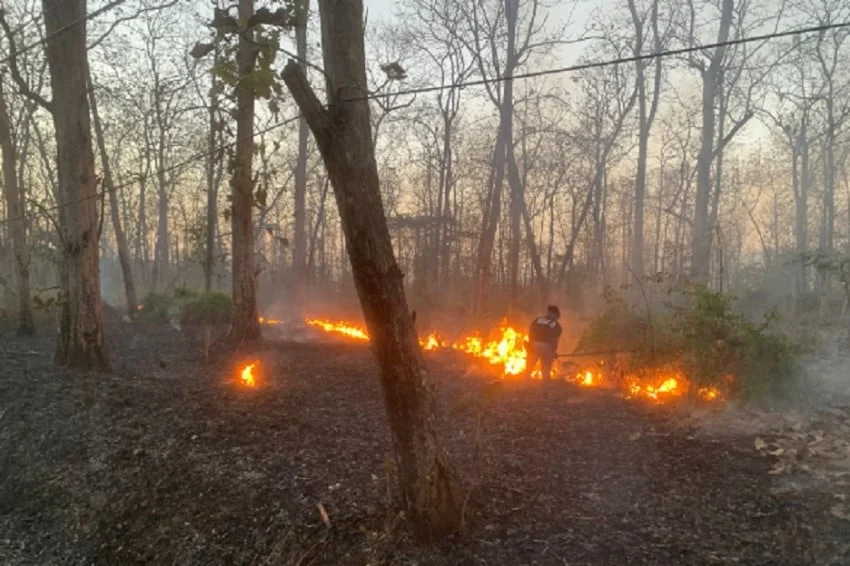
The Ministry of Forestry has launched a comprehensive scientific investigation to evaluate the ecological and environmental impacts of recent forest and land fires, locally known as Karhutla, within the Baluran National Park located in Situbondo Regency, East Java. The preliminary findings from this rigorous academic assessment indicate that an estimated IDR 5.52 billion will be required to successfully rehabilitate the damaged ecosystem, which spans an affected area of approximately 3,141 hectares.
The evaluation was spearheaded by prominent forestry and environmental experts from IPB University, namely Prof. Bambang Hero Saharjo and Prof. Basuki Wasis. Their specialized assessment methodology calculated both the direct environmental degradation and the specific financial resources needed to restore the biodiversity, flora, and fauna of the conservation zone back to its pre-fire baseline. This calculated figure strictly represents the overall environmental loss and restoration requirement for the evaluated zone and functions independently from any liability attributed to individual suspects, such as an individual identified in legal proceedings as MF.
As climate change accelerates and dry seasons become increasingly severe across the Indonesian archipelago, forest fires in protected conservation zones have emerged as a critical threat to national ecological security. The incident at Baluran National Park underscores the mounting pressure on environmental authorities to balance stringent law enforcement with proactive ecological restoration strategies.
Methodological Breakdown and Environmental Impact Assessment
To arrive at the IDR 5.52 billion valuation, the research team from IPB University deployed advanced environmental accounting and forensic ecology techniques. These methods measure soil degradation, the loss of endemic vegetation, the disruption of local hydrological cycles, and the immediate displacement of wildlife populations residing within the 3,141-hectare perimeter.
Furthermore, the scientific inquiry extended into atmospheric impacts through a specialized emissions analysis conducted by Prof. Bambang Hero Saharjo. The analytical models revealed that the massive blaze released approximately 7.63 tons of carbon dioxide directly into the atmosphere, significantly contributing to regional greenhouse gas concentrations. In addition to carbon emissions, the study estimated that the fires discharged 0.38 tons of hazardous particulate matter. These fine particles pose severe public health risks to surrounding human settlements and reduce regional air quality, highlighting the multi-layered repercussions of forest and land fires beyond mere timber loss.
Experts emphasize that calculating these damages goes beyond surface-layer charring. The true economic cost of an environmental disaster in a national park encompasses the long-term loss of ecosystem services, including carbon sequestration capacity, watershed protection, and the preservation of genetic diversity native to the East Java dry deciduous forest ecosystem.
Chronology of the Baluran National Park Wildfires
The disaster at Baluran National Park unfolded against a backdrop of extreme seasonal dryness that heightened vulnerability across the region’s savannahs and teak forests. While specific daily logs vary depending on active suppression phases, the crisis reached a critical juncture prompting the subsequent scientific and legal interventions.
Initial detection systems and localized patrols within the park identified thermal anomalies and smoke plumes signaling the onset of the blazes. Field rangers and emergency response units attached to the Balai Taman Nasional (TN) Baluran immediately mobilized to establish firebreaks, deploy portable suppression equipment, and coordinate with regional disaster management agencies.
Despite rapid containment efforts, the sheer scale of the terrain, combined with high-velocity winds and dense dry undergrowth, allowed the fire to sweep across thousands of hectares before being fully extinguished. Following the complete suppression of the flames and the cooling of the affected sectors, the Ministry of Forestry initiated a formal investigative framework. This led to the deployment of the IPB University expert team to survey the burn scars, collect soil and ash samples, and compute the precise acreage affected. The release of these findings marks a transitional phase from immediate emergency response to long-term ecological rehabilitation and judicial accountability.
Law Enforcement and Institutional Responses
The Ministry of Forestry, through the Directorate General of Law Enforcement (Gakkum), has maintained a strict stance on unauthorized burning within protected areas. Aswin Bangun, Head of the Forestry Law Enforcement Center for the Java, Bali, and Nusa Tenggara Region, addressed the gravity of the situation, emphasizing that safeguarding national conservation areas remains a top governmental priority.
"The vulnerability of forest fires in Java demands more intensive regional supervision," Aswin stated, acknowledging the complexities of protecting fragmented and densely populated landscapes. "We deeply appreciate the preparedness of the officers at Balai TN Baluran. Their readiness serves as a crucial example of the importance of vigilance and rapid response to potential threats to the security of the area."
Aswin’s remarks highlight a broader strategic shift within Indonesian environmental governance. Authorities are increasingly focusing not only on penalizing individual perpetrators—such as the aforementioned suspect MF—but also on establishing verifiable, science-based calculations of ecological damage that can be presented in courts of law to secure punitive environmental restitution fines.
Broader Implications for Indonesian Conservation Policy
The Baluran National Park incident reflects systemic challenges facing Indonesia’s vast network of national parks and nature reserves. Often dubbed "Africa Van Java" due to its sweeping savannahs, rich wildlife populations including the endangered banteng (Javan ox), and unique transitional vegetation, Baluran represents an irreplaceable biological asset. When fires ravage such zones, the damage extends far beyond the immediate loss of trees; it threatens the survival of rare fauna and opens fragile soils to severe erosion during subsequent rainy seasons.
The integration of academic expertise into administrative and legal procedures—demonstrated by the collaboration with IPB University professors—signals a maturing policy framework. By standardizing how environmental damage and carbon emissions are quantified, the Indonesian government strengthens its legal standing in environmental lawsuits. This scientific rigor makes it increasingly difficult for negligent parties or intentional actors to evade the full financial costs of ecological restoration.
Furthermore, this event occurs within a wider regulatory crackdown on entities linked to environmental degradation. Recent government actions, such as the revocation of Business Hak Guna Usaha (HGU) permits from corporations implicated in regional fires, demonstrate a coordinated policy alignment across ministries to clamp down on unlawful land-clearing practices.
Looking Ahead: The Road to Ecological Recovery
Securing the IDR 5.52 billion required for the ecological recovery of Baluran National Park will necessitate a multi-faceted funding and implementation strategy. Rehabilitation efforts typically involve assisted natural regeneration, replanting endemic flora species tailored to the dry climate of East Java, restoring damaged water sources, and reconstructing wildlife corridors to encourage the return of displaced fauna.
In addition to physical restoration, park management agencies are expected to ramp up preventive measures. These include upgrading early-warning detection technology, expanding community-based fire-prevention programs in buffer villages, and increasing the frequency of joint patrols during peak dry seasons.
As climate patterns grow more unpredictable, the lessons learned from the Baluran National Park fires will likely inform national guidelines for fire management in conservation zones across the country. The transition toward data-driven damage assessment and stringent legal enforcement marks a vital step in ensuring that Indonesia’s protected natural heritage survives the compounding pressures of climate change and human activity.