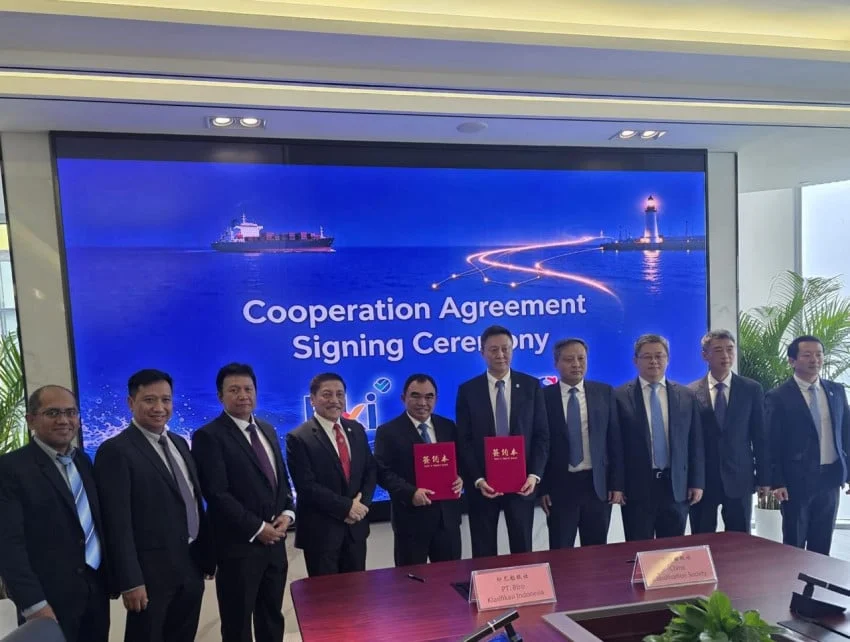
PT Biro Klasifikasi Indonesia (Persero), operating as BKI, has officially entered into a strategic Memorandum of Understanding (MoU) with the China Classification Society (CCS) during a high-level diplomatic and corporate meeting held in Shanghai, People’s Republic of China. This landmark partnership is designed to overhaul and elevate bilateral cooperation across critical pillars of the maritime industry, specifically focusing on advanced inspection services, rigorous technical certification, and sophisticated risk management frameworks. By aligning their institutional strengths, both classification societies aim to address the complex modern challenges facing international shipping, setting a new benchmark for operational safety and environmental sustainability across regional and global trade routes.
The formal agreement comes at a pivotal juncture for maritime commerce in Southeast Asia and East Asia, where trade volumes between Indonesia and China continue to scale unprecedented heights. The collaborative framework underscores a shared commitment to mitigating marine environmental degradation while simultaneously fostering innovation in vessel engineering and green propulsion technologies. As regulatory bodies worldwide tighten emission caps and enforce stricter environmental baselines, the alliance between BKI and CCS provides a vital technical bridge to help shipowners navigate regulatory transitions smoothly.
Expanding Technical Capacities for Enhanced Marine Safety
At its core, the newly minted partnership addresses the paramount need for stringent technical oversight in an era defined by rapid technological shifts within the global maritime sector. Under the terms of the MoU, BKI and CCS will pool their extensive engineering expertise to enhance technical capabilities, facilitate high-level knowledge exchanges, and pioneer technological innovations tailored to modern maritime demands.
The cooperation specifically targets
the improvement of marine safety protocols, which have faced heightened scrutiny following various regional maritime incidents requiring intensive technical assessments and proactive risk mitigation. By integrating advanced inspection methodologies and digital certification processes, both societies aim to minimize operational hazards at sea. This involves joint research initiatives into structural integrity, machinery reliability, and the systemic auditing of vessel safety management systems. Furthermore, the partnership will foster specialized training programs for marine surveyors and engineers, ensuring that personnel from both organizations remain at the cutting edge of international maritime regulations set by the International Maritime Organization (IMO).
Driving the Decarbonization Agenda in Global Shipping
Beyond traditional safety measures, the BKI and CCS collaboration places a heavy emphasis on environmental stewardship and maritime decarbonization. The maritime industry is currently undergoing one of the most significant structural transformations in its history, driven by global mandates to achieve net-zero greenhouse gas emissions.
Through this agreement, BKI and CCS will collaborate on establishing robust frameworks for the certification and risk evaluation of alternative marine fuels, such as liquefied natural gas (LNG), methanol, ammonia, and hydrogen fuel cells. Additionally, the partnership will explore energy-efficiency technologies, including wind-assisted propulsion systems, hull optimization designs, and carbon capture and storage (CCS) applications tailored for commercial vessels.
This environmental focus aligns closely with Indonesia’s national climate commitments and China’s strategic push toward green logistics corridors. By establishing unified technical standards for green shipping, BKI and CCS can assist regional shipyards and vessel operators in retrofitting existing fleets and constructing next-generation eco-friendly ships without compromising structural safety or economic viability.
Strategic Background and Bilateral Trade Context
The strengthening of ties between BKI and CCS is deeply rooted in the broader geopolitical and economic partnership between Indonesia and China. Over the past decade, bilateral trade has experienced exponential growth, anchored by major infrastructure projects, supply chain integrations, and the continuous expansion of maritime logistics routes under frameworks like the Belt and Road Initiative and Indonesia’s Global Maritime Fulcrum vision.

As the volume of cargo vessels, bulk carriers, and container ships transiting between Indonesian ports and Chinese industrial hubs increases, the demand for harmonized classification standards becomes critical. Classification societies play an indispensable role in international shipping by establishing and maintaining technical standards for the design, construction, and survey of marine vessels and offshore structures. By bridging BKI’s deep understanding of Indonesian maritime operational environments with CCS’s vast global technological footprint and research infrastructure, the partnership creates a powerful synergy capable of influencing wider regional maritime policies.
Leadership Insights and Official Perspectives
Commenting on the strategic significance of the agreement, the President Director of PT Biro Klasifikasi Indonesia (Persero), R. Benny Susanto, emphasized the transformative potential of the alliance during the official signing ceremony in Shanghai.
"Through this cooperation, we hope to strengthen our technical capabilities, expand knowledge exchange, and drive innovation within the maritime sector," stated Benny Susanto in an official corporate release. "These efforts are fundamental to supporting navigation safety, preserving the marine environment, and accelerating the adoption of sustainable technologies across our industry."
Industry analysts note that leadership endorsement from BKI signals Indonesia’s proactive stance in international maritime diplomacy. Rather than remaining passive recipients of global regulatory mandates, Indonesian maritime institutions are actively forging strategic alliances with major global classification societies to ensure domestic maritime interests are adequately represented and safeguarded on the international stage.
Implications for the Regional and Global Maritime Industry
The operational implications of the BKI-CCS partnership extend far beyond bilateral relations, offering several notable impacts on the broader maritime landscape:
- Standardization of Compliance: Shipowners operating vessels between Indonesia, China, and the wider Asia-Pacific region will benefit from smoother survey processes and mutually recognized technical certifications, reducing administrative bottlenecks and compliance costs.
- Acceleration of Green Tech Adoption: Joint research and standardized risk assessments for alternative fuels will provide the regulatory certainty that maritime investors need to finance green fleet modernization projects.
- Elevated Safety Standards: Enhanced technical data-sharing regarding structural failures, machinery incidents, and material science will enable both classification societies to update their rulebooks proactively, preventing future marine casualties.
- Human Capital Development: Collaborative training initiatives will elevate the technical competence of regional marine engineers and surveyors, bridging the skills gap associated with complex new propulsion systems.
Chronology of Key Developments Leading to the Partnership
The consolidation of the BKI and CCS alliance is the culmination of years of progressive engagement between the two organizations:
- Initial Engagement: Periodic technical dialogues and bilateral meetings aimed at sharing best practices in statutory ship surveys and classification rules.
- Expansion of Trade Routes: The escalation of bilateral trade volumes between Indonesia and China necessitated closer coordination on port state control, vessel safety, and environmental compliance.
- Strategic Negotiations: High-level executive discussions held earlier in the year established the foundational pillars of the current MoU, prioritizing decarbonization, digital transformation, and technical harmonization.
- Formalization in Shanghai: The official signing ceremony took place in Shanghai, marking the transition from informal cooperation to a structured, institutionalized strategic partnership.
Looking Ahead: The Future of Class Societies in a Sustainable Era
As the global maritime industry hurtles toward ambitious climate targets set for 2030 and 2050, the role of classification societies is undergoing a profound evolution. Traditional responsibilities focused strictly on structural hull integrity and machinery safety are rapidly expanding to encompass holistic lifecycle assessments, greenhouse gas accounting, cybersecurity on vessels, and the integration of autonomous shipping technologies.
The partnership between BKI and CCS positions both institutions at the vanguard of this modern transformation. By combining resources, sharing cutting-edge research data, and harmonizing technical rules, BKI and CCS are not only securing their own competitive standing in the global classification market but are also providing an indispensable service to the global maritime community. As these joint initiatives begin to materialize in upcoming joint audits, pilot projects for alternative fuel vessels, and shared safety frameworks, the maritime sector in Southeast Asia and East Asia will be better equipped to sail toward a safer, cleaner, and more technologically resilient future.