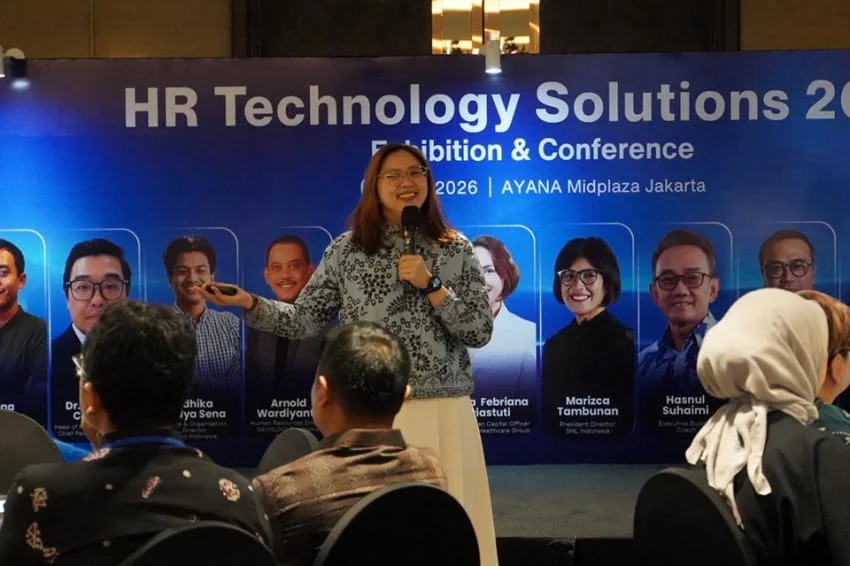
The rapid evolution of modern enterprises has placed human resources at the absolute center of corporate strategy, forcing leadership teams to reevaluate how individual capabilities align with overarching business objectives. In an era defined by technological disruption, shifting workforce demographics, and the decentralized nature of modern employment, organizations frequently struggle to bridge the gap between employee output and systemic organizational readiness. This critical challenge took center stage at the prestigious HR Tech Solutions Indonesia event, where industry leaders converged to discuss the future of workforce management, talent retention, and organizational architecture in an increasingly complex corporate landscape.
At the heart of these discussions was a compelling presentation delivered by Sheeren Yolanda, Innovation and Talent Science Director at KTM Solutions. Addressing a diverse audience of human resources professionals, corporate executives, and technology innovators, Yolanda presented a stark reality of contemporary workplace dynamics: individual competence, while undeniably vital, represents only half of the professional equation. Without a corresponding evolution in the supporting organizational ecosystem, even the most talented employees risk becoming disengaged, underutilized, or entirely disconnected from the long-term vision of the enterprise.
The Corporate Paradox: High Contribution Versus Low Commitment
To understand the urgency behind KTM Solutions’ advocacy for systemic organizational alignment, one must examine the empirical data driving modern workforce analytics. During her keynote session titled "The Missing Half of Talent Success: Why Talent Growth Needs System Growth," Yolanda referenced alarming insights derived from comprehensive Employee Engagement Surveys (EES) conducted across multiple organizations.
The data revealed a complex and counterintuitive corporate paradox. Specifically, employees reported an average increase in their self-reported contributions of 12.45 points. On the surface, this metric appears overwhelmingly positive, suggesting that workers are producing more, working harder, and delivering tangible outputs. However, the exact same surveys exposed a dramatic 19.72-point decline in organizational commitment among those very same employees.
This statistical divergence illustrates a critical vulnerability in traditional human resources management. When companies invest exclusively in individual skills training, performance bonuses, and productivity tools without simultaneously upgrading their internal management systems, communication frameworks, and cultural structures, they inadvertently create an environment of transactional labor. Employees may deliver tasks and hit quarterly targets out of professional obligation, but their emotional and psychological investment in the company erodes significantly. Consequently, organizations face high turnover rates, hidden burnout, and a workforce that is physically present yet emotionally detached from corporate goals.
The Success Profiling Approach: Bridging the Gap
Recognizing this systemic disconnect, KTM Solutions has championed the "Success Profiling" methodology as a comprehensive antidote to modern workforce fragmentation. This strategic framework shifts the HR paradigm away from isolated hiring metrics and disjointed training modules, encouraging organizations instead to decode the exact behavioral characteristics, cognitive traits, and environmental support factors required to achieve optimal performance within specific roles.
Speaking in Jakarta, Yolanda emphasized that cultivating employee skills in a vacuum yields diminishing returns. "Developing individual competencies alone is not enough," Yolanda stated. "Organizations also need to build systems that allow talent to optimize their potential and contribute to business performance."
The Success Profiling approach operates on the premise that talent does not exist in a vacuum; it is heavily influenced by the organizational soil in which it is planted. By mapping out comprehensive profiles that account for both individual competencies and organizational enablers—such as cross-functional collaboration channels, psychological safety, transparent leadership, and agile workflow design—companies can ensure that their human capital investments translate directly into sustainable competitive advantages. At the HR Tech Solutions Indonesia exhibition, KTM Solutions showcased how their integrated assessment tools and cutting-edge HR technologies operationalize this philosophy, giving business leaders the diagnostic clarity needed to restructure their internal systems effectively.
The Evolving Landscape of HR Tech Solutions Indonesia
The discussions led by KTM Solutions occurred against the broader backdrop of HR Tech Solutions Indonesia, an annual convergence of HR practitioners, technology vendors, and organizational psychologists dedicated to solving contemporary workforce complexities. Over the past decade, the Indonesian business ecosystem has undergone a profound digital transformation. Driven by rapid urbanization, the rise of the digital economy, and ambitious national infrastructure projects—such as the development of the country’s new capital region—organizations are under immense pressure to scale their operations efficiently while maintaining high standards of talent management.
The event served as an interactive laboratory for modern workplace solutions. Booths featured advanced artificial intelligence-driven recruitment platforms, predictive analytics software for employee retention, and immersive assessment centers designed to measure emotional intelligence and adaptability. Yet, amidst the dazzling array of technological innovations, the overarching consensus among keynote speakers was that technology alone cannot fix a broken organizational culture.
Experts at the conference noted that the integration of HR technology must be preceded by a thorough cultural and structural audit. Tools that automate performance tracking or streamline payroll are invaluable, but if the underlying management philosophy remains rigid or unsupportive, these technologies merely accelerate existing systemic dysfunctions. This realization reinforces Yolanda’s thesis: system growth must parallel talent growth for an enterprise to thrive.
Macroeconomic Implications and the Future of Work
The broader implications of aligning talent potential with business needs extend far beyond individual corporate balance sheets; they directly influence national economic productivity and labor market resilience. As Indonesia positions itself as a dominant economic force in Southeast Asia, the quality of its human capital will determine its ability to attract foreign direct investment, foster domestic innovation, and successfully transition toward a knowledge-based economy.
When organizations fail to align their internal systems with employee growth, the macro-level consequences manifest as structural underemployment, widespread job dissatisfaction, and a stagnation of national productivity levels. Conversely, enterprises that successfully adopt holistic frameworks like Success Profiling create resilient, adaptive workforces capable of navigating market volatility. These organizations foster environments where innovation flourishes because employees feel structurally supported rather than merely monitored.
Furthermore, as remote and hybrid work models become permanent fixtures of the global economy, the necessity for robust organizational systems becomes even more acute. Traditional methods of proximity-based management are no longer viable. Leaders must rely on well-designed digital ecosystems, clear behavioral expectations, and empathetic communication structures to maintain alignment between distributed talent and core business objectives.
Strategic Recommendations for Organizational Leaders
In light of the insights presented at HR Tech Solutions Indonesia, corporate leaders, human resources directors, and business strategists must adopt a multifaceted approach to talent management. Moving forward, organizations seeking sustainable growth should consider the following strategic imperatives:
- Holistic System Audits: Companies must regularly evaluate their internal operational structures, management styles, and communication channels to identify systemic bottlenecks that hinder employee engagement and long-term commitment.
- Integration of Success Profiling: HR departments should transition away from generic job descriptions and embrace data-driven Success Profiling to understand both the individual competencies and environmental enablers required for specific roles.
- Balancing Productivity with Well-being: Leadership teams must recognize that rising output metrics do not equate to high morale. Efforts must be made to measure and cultivate genuine organizational commitment through psychological safety and recognition programs.
- Purposeful Technology Adoption: When implementing HR technologies, organizations should prioritize tools that enhance employee experience, facilitate collaborative feedback loops, and support professional development rather than merely serving as surveillance or administrative mechanisms.
Conclusion
The insights shared by Sheeren Yolanda at HR Tech Solutions Indonesia serve as a timely reminder that the future of work requires a delicate, intentional equilibrium between individual capability and organizational readiness. As businesses continue to navigate an unpredictable economic landscape, the organizations that succeed will not necessarily be those with the largest budgets or the most advanced software, but rather those that recognize talent success as a shared responsibility between the employee and the system. By fostering environments where individual potential is met with robust organizational support, companies can bridge the commitment gap, drive sustainable business performance, and build resilient workforces prepared for the challenges of tomorrow.