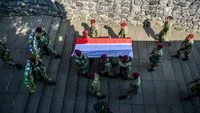
The five surviving crew members of the Indonesian Army Aviation (Penerbad) Mi-17V5 helicopter, which suffered a severe crash while battling severe forest and land fires (karhutla) in Central Kalimantan, are scheduled for medical evacuation to advanced referral hospitals in Jakarta and Semarang. This decision aims to provide comprehensive medical follow-up and specialized rehabilitation as the personnel recover from the traumatic incident that claimed the lives of three of their comrades.
Minister of Forestry Raja Juli Antoni confirmed the impending evacuation plan during a direct hospital visit to check on the injured soldiers at the Indonesian Army Hospital (RS TNI AD) Level III Dr. R. Soeharsono in Banjarmasin, South Kalimantan. The announcement highlights the government’s commitment to ensuring that frontline personnel receive top-tier medical care following hazardous disaster mitigation missions.
Current Medical Status and Treatment Progression
The five surviving crew members currently undergoing treatment have been identified as Captain of the Aviation Corps Febri, Captain of the Aviation Corps Sugand, Second Lieutenant of the Aviation Corps Fercis, First Private Gilang, and Chief Sergeant Kadiya.
According to Lieutenant Colonel Ckm (K) Dr. Leidina Rachmadian, the Head of RS Tk. III Dr. R. Soeharsono in Banjarmasin, the condition of all five crew members has shown steady improvement after two days of intensive medical observation and intervention. When the patients were first admitted to the medical facility following the extraction from the crash site, they presented with severe physical fatigue, weakness, and signs of shock, necessitating immediate stabilization.
Medical teams immediately performed a series of rigorous diagnostic procedures, including comprehensive blood panels and radiological examinations such as X-rays, to detect any internal injuries or skeletal trauma. Fortunately, the medical findings brought encouraging news. Dr. Leidina confirmed that despite the severe impact of the helicopter crash, diagnostic results showed no evidence of bone fractures among the survivors.
By the second day of hospitalization, the clinical indicators demonstrated positive progression. While the patients remain under strict medical supervision and require further clinical management before full discharge, their stable trajectory has paved the way for the planned transfer to specialized medical facilities in Java. The relocation to Jakarta and Semarang will allow the soldiers to access advanced medical equipment, specialized orthopedic or trauma follow-ups, and psychological support to deal with post-incident trauma.
Chronology of the Tragedy in Central Kalimantan
The harrowing incident unfolded during a high-stakes aerial firefighting operation conducted by the Indonesian Army Aviation unit. The Mi-17V5 helicopter was actively deployed to suppress stubborn forest and land fires that have routinely plagued parts of Kalimantan, threatening local ecosystems, public health, and national air quality.
On Wednesday, November 4, while executing water-bombing and reconnaissance missions over targeted hotspots in Central Kalimantan, the aircraft encountered catastrophic difficulties, resulting in a sudden crash landing. The remote and rugged terrain of the operational zone added immense complexity to the search, rescue, and evacuation operations managed by joint military, disaster mitigation, and local emergency response teams.
While the five aforementioned crew members miraculously survived the impact and were subsequently rescued and transported to Banjarmasin for urgent medical care, the accident exacted a heavy toll on the military unit. Three other brave soldiers onboard lost their lives in the line of duty.
The Indonesian military officially identified the fallen heroes as Lieutenant Colonel CPN (Posthumously) Dudi Firmansyah, Captain CPN (Posthumously) Nurhafiz Akbar, and Sergeant First Class (Posthumously) Heri Prasetyo. Their supreme sacrifice underscored the immense dangers faced by military pilots and aviation crews deployed to combat large-scale environmental disasters across the archipelago.
Official Responses and Expressions of Gratitude
During his visit to the military hospital in Banjarmasin, Minister of Forestry Raja Juli Antoni personally walked through the recovery wards to meet each of the surviving crew members. Interacting directly with Captain Febri, Captain Sugand, Lieutenant Fercis, Private Gilang, and Sergeant Kadiya, the minister conveyed deep appreciation on behalf of the government and the Indonesian public.
Raja Juli lauded the unwavering dedication, courage, and selflessness demonstrated by the aircrews who put their lives on the line daily to mitigate the devastating impacts of forest and land fires. He emphasized that the state bears a fundamental responsibility to ensure that injured personnel receive optimal medical attention, rehabilitation, and administrative support following operational mishaps.
The Ministry of Forestry, working in tandem with the Indonesian National Armed Forces (TNI), the Ministry of Environment, and the National Disaster Management Agency (BNPB), relies heavily on aerial operations to tackle remote blazes that are inaccessible to ground firefighting units. The dedication of aviation personnel remains a critical pillar in Indonesia’s broader strategy to curb carbon emissions, protect biodiversity, and prevent regional haze crises.
Broader Context of Forest Fires and Operational Risks in Indonesia
Forest and land fires, locally abbreviated as karhutla, present a perennial challenge for Indonesia, particularly during prolonged dry seasons influenced by climate phenomena such as El Niño. These fires not only destroy vast tracts of carbon-rich peatlands and tropical forests but also generate thick transboundary haze that disrupts regional transportation, economic activity, and public health.
To combat these sprawling blazes, authorities frequently deploy heavy transport and utility helicopters, such as the Russian-built Mil Mi-17V5, which is widely utilized by the Indonesian military for transport, logistics, and water-bombing missions. However, operating heavy rotary-wing aircraft in dense smoke, unpredictable wind patterns, and over challenging jungle terrain inherently carries severe operational risks.
The recent crash in Central Kalimantan serves as a sobering reminder of the hazards endured by military and civilian aviation crews assigned to disaster mitigation duties. Beyond the immediate technical investigations to determine the exact root cause of the accident—which will likely be conducted by a joint board of inquiry from the Indonesian Air Force and Army Aviation—the incident reignites national discussions regarding equipment maintenance standards, flight safety protocols, and hazard pay for high-risk environmental missions.
As Indonesia continues to refine its national disaster response mechanisms and climate adaptation strategies, the welfare of injured personnel and the families of fallen service members remains a paramount concern. The upcoming transfer of the five survivors to Jakarta and Semarang marks a crucial step in their physical and psychological recovery, ensuring they receive the highest standard of care as they heal from the scars of a mission dedicated to protecting the nation’s natural heritage.