The Los Angeles Lakers are stepping into the 2026/2027 NBA regular season facing the most profound transitional period in nearly a decade. For the first time since the 2018/2019 campaign, the historic franchise will take to the hardwood without LeBron James, who officially concluded his illustrious eight-year tenure in purple and gold to begin a new chapter with the Philadelphia 76ers. The departure of the four-time NBA champion leaves an immense vacuum in leadership, locker room presence, and statistical production. Yet, rather than plunging into a rebuilding phase, the organization has pivoted quickly, structuring a dynamic, younger roster designed around the prime years of Slovenian maestro Luka Doncic. As the NBA world prepares for tip-off, the central storyline in Southern California is whether this newly shaped roster can maintain championship contention in a relentlessly competitive Western Conference.
The 2026/2027 NBA regular season officially commences on Tuesday, October 20, 2026, U.S. time, translating to Wednesday, October 21, in Indonesia. The Lakers will make their highly anticipated debut a day later, hosting the Golden State Warriors at the Crypto.com Arena in Los Angeles. Scheduled for Wednesday, October 21, at 7:00 PM Pacific Daylight Time (PDT)—or Thursday, October 22, at 9:00 AM Western Indonesia Time (WIB)—this marquee matchup serves as the ultimate litmus test for a franchise seeking to establish a fresh identity. Beyond the opening night drama, another date is already circled on every basketball fan’s calendar: December 25, 2026. On Christmas Day, the Lakers will welcome the Philadelphia 76ers to Los Angeles, setting the stage for LeBron James’s emotional return to the arena he called home for eight seasons, a fixture that promises immense sentimental and competitive value.
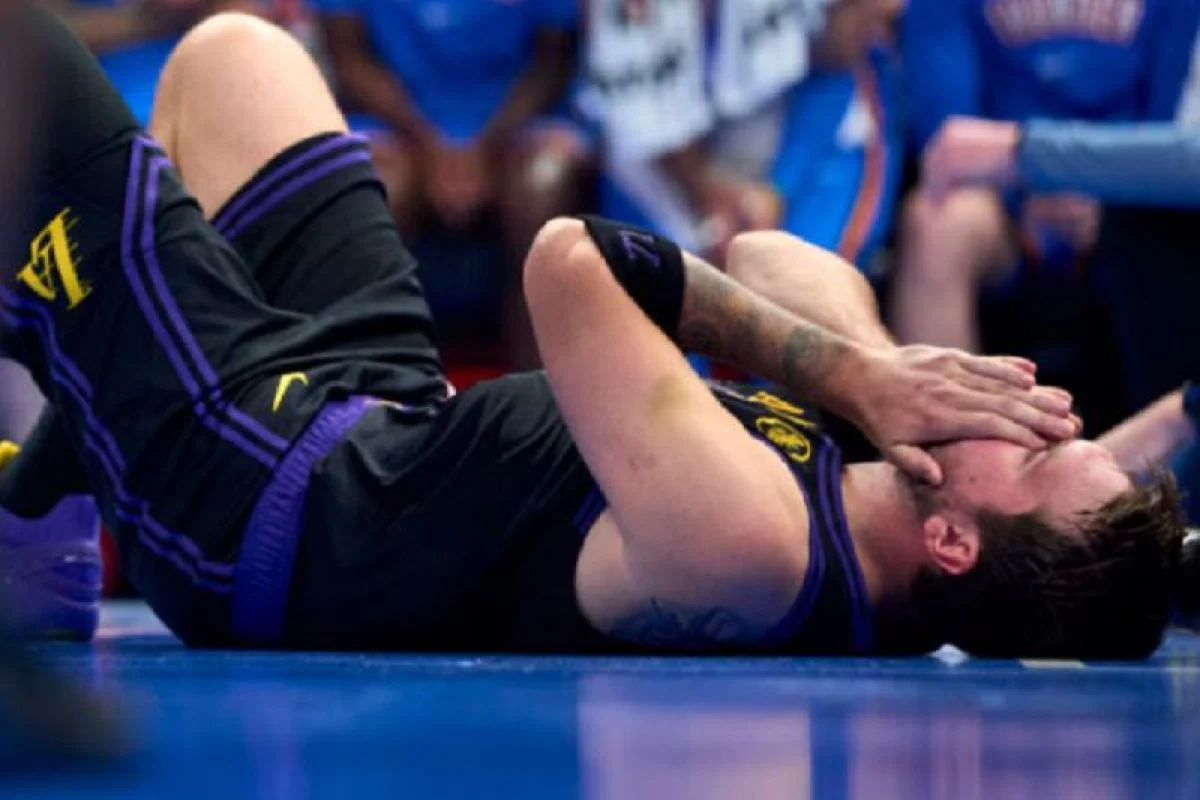
Reflecting on the preceding 2025/2026 campaign, the Lakers finished the regular season with a respectable 53-29 record, securing the fourth seed in a brutal Western Conference. Their postseason journey began with a hard-fought 4-2 series victory over the Houston Rockets in the opening round, demonstrating that the squad remained a formidable force in the upper echelon of the league. However, their momentum ground to a sudden halt in the conference semifinals, where they suffered a sobering 4-0 sweep at the hands of the Oklahoma City Thunder. That playoff exit exposed underlying structural vulnerabilities: a lack of defensive consistency, depth issues during high-intensity series, and an over-reliance on primary creators when defenses clamped down. Furthermore, an untimely injury to Luka Doncic during that series stripped the Lakers of their primary offensive engine, highlighting the fragility of their depth. Statistically, the Lakers averaged 116.3 points per game offensively while surrendering 114.6 points defensively, underlining the glaring need to tighten their perimeter and interior containment heading into the new season.
At the epicenter of the post-LeBron era is Luka Doncic, who has unequivocally established himself as the new face of the franchise. During the 2025/2026 season, Doncic engineered the Lakers’ 53-win campaign while capturing his second career scoring title and earning a coveted spot on the All-NBA First Team. His elite court vision, methodical tempo control, and unparalleled shot-creation abilities make him the ideal centerpiece for head coach JJ Redick’s offensive schemes. However, stepping fully into the undisputed alpha role amplifies the defensive attention opponents will direct toward him. Without James drawing away double-teams, Doncic must navigate heavier defensive loads while maintaining his conditioning and health across an 82-game schedule. The front office’s commitment to his skillset dictates that the entire offensive ecosystem will flow through his reads, making his availability and playmaking efficiency the absolute baseline for the team’s success.
Complementing Doncic in the backcourt is Austin Reaves, who enters the 2026/2027 season poised for another exponential leap in his development. Reaves enjoyed a breakout 2025/2026 campaign, posting a career-high 23.3 points per contest and proving that he can shoulder significant offensive responsibilities. When sharing the floor with Doncic, the duo previously yielded a stellar 30-11 record while combining for an average of 56.8 points per game. With James out of the rotation, Reaves is expected to absorb a much larger share of ball-handling duties, secondary playmaking, and clutch-time decision-making. His ability to punish defenses that over-help on Doncic through aggressive drives and consistent perimeter shooting will define the ceiling of the Lakers’ backcourt. Ensuring that Reaves can sustain this high level of productivity when tasked with primary defensive scouting attention remains one of the season’s primary internal storylines.
To bridge the roster gaps created by both departures and strategic restructuring, the Lakers executed several vital acquisitions during the offseason. The most notable addition is frontcourt anchor Walker Kessler, whose arrival is specifically tailored to address the team’s defensive shortcomings. Kessler is expected to protect the rim, deter drives, and anchor the rebounding glass—areas where the Lakers frequently struggled last year. In addition to Kessler, the front office bolstered their depth by bringing in Sandro Mamukelashvili for frontcourt versatility, alongside perimeter threats Collin Sexton, Quentin Grimes, and Jaden Hardy to inject dynamic scoring into both the starting lineup and the second unit. Defensively, the addition of Matisse Thybulle provides a high-level perimeter stopper capable of disrupting opposing guards, partially offsetting the energy lost from previous departures. These moves reflect a deliberate shift toward a younger, more athletic roster under the tactical direction of head coach JJ Redick.
However, integrating a largely revamped roster comes with inherent risks, primarily the challenge of building chemistry and mastering a complex system within a tight timeline. The Lakers parted ways with several notable contributors, including Deandre Ayton, Rui Hachimura, and Jaxson Hayes, altering the physical makeup of their frontcourt rotation. Defensive structure remains an urgent priority for Redick’s coaching staff; the team ranked 19th in defensive rating during the previous season, giving up too many easy opportunities per 100 possessions. While Kessler and Thybulle provide immediate defensive upgrades, defensive success requires collective discipline, seamless communication, and active rotations from elite perimeter players like Doncic and Reaves. Balancing an explosive offensive playbook with a suffocating defensive identity will determine whether the Lakers can transition from a standard playoff contender into a legitimate championship threat.
The landscape of the Western Conference further complicates the Lakers’ path forward, as elite competition lurks at every turn. The Oklahoma City Thunder remain the gold standard after notching 64 victories last season, anchored by MVP candidate Shai Gilgeous-Alexander and an extraordinarily deep roster. Meanwhile, the San Antonio Spurs, fresh off an appearance in the 2026 NBA Finals, continue their terrifying upward trajectory spearheaded by the generational dominance of Victor Wembanyama. Traditional powerhouses like the Denver Nuggets, led by Nikola Jokic, and the Minnesota Timberwolves—bolstered by the addition of LaMelo Ball alongside Anthony Edwards—ensure that the margin for error in the West is razor-thin. Securing a top-six seed to avoid the unpredictable perils of the Play-In Tournament is an absolute necessity for the Lakers if they hope to manage player fatigue effectively.
Ultimately, the 2026/2027 NBA season marks the definitive dawn of a new era in Los Angeles. The departure of LeBron James closes a legendary chapter, but it simultaneously unlocks the potential for a modernized, Doncic-centric identity. Success for the Lakers will not be measured by replicating the exact formula of the past, but by cultivating a sustainable culture built on Doncic’s brilliance, Reaves’ continued ascension, Redick’s tactical acumen, and newfound defensive resolve. If the pieces fall into place, the changing of the guard in Hollywood will prove to be not a step backward, but the triumphant beginning of the next great chapter in Lakers basketball history.