
The Los Angeles Lakers are stepping into the 2026-2027 National Basketball Association (NBA) regular season confronting their most significant transitional phase in nearly a decade. For the first time since the 2018-2019 campaign, the franchise will take to the hardwood without LeBron James, the historic superstar whose arrival in Los Angeles fundamentally altered the trajectory of the storied organization and yielded a championship banner during his tenure. Following eight seasons in the purple and gold, James opted to embark on a new chapter with the Philadelphia 76ers, leaving a profound void in leadership, locker room gravity, and statistical production that cannot be easily replicated.
However, the modern iteration of the Lakers is no longer constructed as a single-dynasty entity entirely reliant on a 41-year-old icon. Instead, the front office has systematically engineered a roster optimized around the generational brilliance of Luka Doncic, who now stands unequivocally as the epicenter of the franchise’s championship ambitions. Flanked by an ascending Austin Reaves and an aggressively retooled supporting cast, the Lakers enter this campaign not as a fading dynasty desperately clinging to the past, but as a bold, reimagined contender tasked with forging a distinct identity in a merciless Western Conference.
The opening tip of the 2026-2027 regular season is scheduled for Tuesday, October 20, 2026, in the United States, corresponding to Wednesday, October 21, in Indonesian time zones. The Lakers will officially tip off their campaign a day later on Wednesday, October 21, welcoming the Golden State Warriors to the Crypto.com Arena in Los Angeles. The highly anticipated Pacific Division showdown is slated for 7:00 PM Pacific Daylight Time (PDT), translating to Thursday, October 22, at 9:00 AM Western Indonesian Time (WIB). This high-profile opening fixture will serve as the immediate litmus test for a restructured Lakers squad striving to prove its competitive viability on national television.
A Hard Look Back: The 2025-2026 Campaign and Playoff Heartbreak
To fully contextualize the immense pressure facing the Lakers entering the 2026-2027 season, one must examine the triumphs and structural vulnerabilities exposed during the previous campaign. The Lakers concluded the 2025-2026 regular season with a highly respectable 53-29 record, securing the fourth seed in a fiercely competitive Western Conference. Their 53-win output underscored the team’s capacity to grind through an 82-game schedule and remain anchored in the upper echelon of the league standings.
The postseason, however, provided a sobering reality check. In the opening round of the Western Conference playoffs, the Lakers navigated a physical six-game series against the Houston Rockets, prevailing 4-2 behind clutch execution and stellar offensive management from their backcourt. Yet, their momentum met an unyielding wall in the conference semifinals. The Oklahoma City Thunder completely dismantled the Lakers in a clinical 4-0 sweep, exposing glaring deficiencies in perimeter defense, roster depth, and resilience under defensive duress.
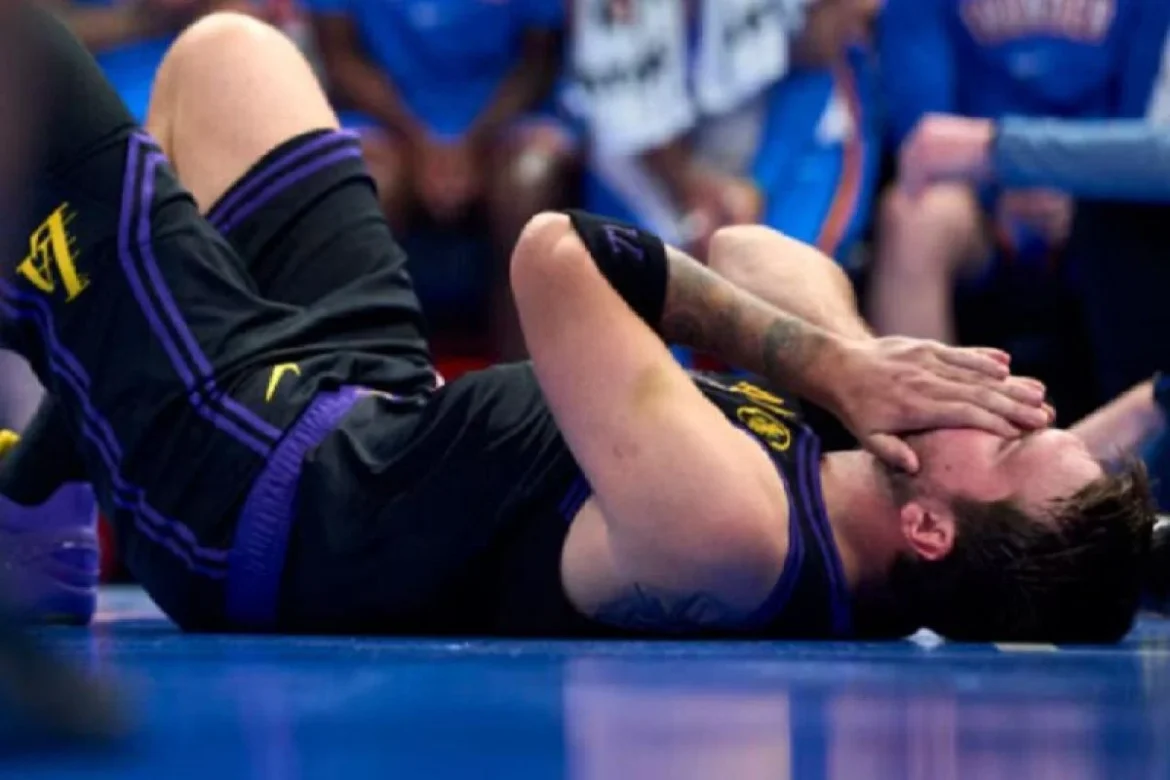
Compounding their postseason woes was the unfortunate absence of Luka Doncic, who missed crucial stretches of the series against the Thunder due to injury. Without their primary offensive orchestrator and floor general, the Lakers’ attack stalled against Oklahoma City’s elite, hyper-disciplined defensive schemes. Statistically, the Lakers maintained a potent offense during the 2025-2026 regular season, averaging 116.3 points per game. Nevertheless, their defensive rating remained a glaring concern; the team conceded an average of 114.6 points per contest, finishing 19th overall in defensive rating based on points allowed per 100 possessions. This defensive fragility underscored that Los Angeles’ primary offseason objective extended far beyond merely compensating for the offensive production lost by James’ departure.
Luka Doncic as the Undisputed Focal Point
With James wearing a 76ers uniform, the operational keys to the Lakers offense rest securely in the hands of Luka Doncic. The Slovenian maestro has already cemented his status as one of the premier offensive engines and playmakers in basketball history. During the 2025-2026 season, Doncic orchestrated the Lakers’ 53-win campaign while capturing his second career NBA scoring title and earning a coveted spot on the All-NBA First Team.
Doncic’s capacity to dictate the tempo of a game, read opposing coverages with surgical precision, and generate high-percentage looks via sophisticated pick-and-roll mechanics makes him the ideal centerpiece for head coach JJ Redick’s offensive system. Whether orchestrating in half-court sets or punishing defenses in transition before they can set their feet, Doncic offers a multi-layered offensive threat.
However, transitioning from a shared superstar ecosystem to carrying the sole mantle of franchise player introduces unprecedented burdens. Defenses will undoubtedly deploy hyper-aggressive, multi-layered coverages against Doncic, knowing they no longer need to allocate elite defensive resources to contain James on the weak side. Furthermore, preserving Doncic’s physical conditioning and durability across an 82-game marathon will dictate the ceiling of the Lakers’ championship aspirations. If Doncic encounters any physical setbacks similar to those that derailed their previous playoff run, the organization must possess viable alternate mechanisms to sustain its offensive output.
Austin Reaves Ascends to Secondary Star Status
As Doncic commands the primary defensive attention of opponents, Austin Reaves enters the 2026-2027 season uniquely positioned to take a massive developmental leap. Reaves enjoyed a breakout individual campaign in 2025-2026, establishing a career-high average of 23.3 points per contest while exhibiting a vastly expanded offensive repertoire.
Reaves’ utility extends well beyond spot-up shooting. His polished handle, craftiness in the pick-and-roll, and fearless drives into the paint make him an exceptional pressure-release valve when Doncic is trapped or heavily pressured. The empirical data supporting their partnership underscores immense promise: during the previous season, Doncic and Reaves averaged a combined 56.8 points per game, boasting an exceptional 30-11 record when sharing the floor together.
The departure of James creates a statistical vacuum that Reaves is primed to absorb. By commanding a higher usage rate and shouldering more playmaking responsibilities, Reaves has the opportunity to transform from an elite complementary piece into a bona fide All-Star caliber guard. Maintaining this heightened efficiency while absorbing the physical toll of elevated scouting reports will be the definitive test of Reaves’ trajectory.
Roster Overhaul: Strategy and Offseason Transactions
Recognizing the necessity to pivot toward a faster, more athletic, and structurally balanced roster tailored to Doncic’s strengths, the Lakers’ front office executed a sweeping series of roster alterations during the offseason. The departures of established veterans such as Deandre Ayton, Rui Hachimura, and Jaxson Hayes signaled a definitive cultural shift toward long-term flexibility and dynamism.
The crown jewel of their interior acquisitions is athletic big man Walker Kessler. Tasked with anchoring the paint, Kessler’s elite shot-blocking prowess and rebounding instincts are expected to alleviate the defensive pressure on the perimeter. His presence addresses the Lakers’ historical vulnerability against dominant interior scorers, providing a much-needed defensive safety net.
In the backcourt and wing positions, the Lakers injected youth and multi-faceted skill by acquiring Collin Sexton, Quentin Grimes, Jaden Hardy, and Matisse Thybulle.
- Quentin Grimes arrives as a quintessential 3-and-D wing capable of neutralizing elite perimeter scorers while spacing the floor.
- Collin Sexton provides explosive, downhill scoring punch off the bench, ensuring the second unit maintains offensive momentum.
- Jaden Hardy offers valuable secondary scoring capabilities and backcourt depth.
- Matisse Thybulle, renowned for his disruptive on-ball defense and exceptional deflection rates, steps in to partially mitigate the defensive energy lost following the departure of Marcus Smart.
This heavy influx of new personnel, however, introduces the perennial challenge of integration. With the team retaining only eight players from the previous year’s roster, head coach JJ Redick faces a compressed timeline to establish chemistry, install tactical packages, and optimize rotation patterns before the rigors of the regular season expose early miscommunications.
JJ Redick and the Tactical Dilemma
Head coach JJ Redick enters his pivotal tenure directing a transitional roster that requires a delicate tactical balancing act. Without the omnipresent gravity of LeBron James, Redick must refine an offensive ecosystem that maximizes Doncic’s mastery of the pick-and-roll while empowering Reaves and the newly acquired supporting cast to make decisive plays in space.
Managing player workloads will be another critical administrative hurdle. To navigate the demanding Western Conference without exhausting their primary creators, Redick must design a secondary unit capable of executing efficiently during Doncic and Reaves’ scheduled rest periods. Furthermore, translating the defensive acquisitions of Kessler and Thybulle into a cohesive, top-tier team defensive scheme remains the absolute prerequisite for championship contention. The Lakers cannot simply outscore opponents; they must establish baseline defensive discipline to survive tight fourth-quarter execute-or-die possessions against elite Western Conference powerhouses.
Navigating the Gauntlet of the Western Conference
The road ahead for the Lakers is fraught with formidable obstacles. The Western Conference remains an unforgiving theater of elite competition. The Oklahoma City Thunder, fresh off a dominant 64-win regular-season campaign anchored by MVP candidate Shai Gilgeous-Alexander, remain the gold standard of the conference. Meanwhile, the San Antonio Spurs, having reached the NBA Finals in 2026 behind the transcendent brilliance of Victor Wembanyama and a maturing supporting cast, pose a long-term territorial threat.
Traditional powerhouses such as the Denver Nuggets, led by the evergreen basketball IQ of Nikola Jokic, and the Minnesota Timberwolves—bolstered by the explosive backcourt pairing of Anthony Edwards and newly acquired playmaker LaMelo Ball—ensure there are no easy nights on the schedule. Securing a top-six seed to bypass the unpredictable volatility of the Western Conference play-in tournament is an immediate imperative for Los Angeles.
Among the 82 games on the calendar, one date has been circled by basketball fans worldwide: Christmas Day, December 25, 2026. On this holiday showcase, the Lakers will host the Philadelphia 76ers at Crypto.com Arena, marking the emotional return of LeBron James to Los Angeles for the first time since his departure. Beyond the dramatic narrative surrounding James’ homecoming, the matchup will provide a fascinating tactical barometer of how the new-look Lakers stack up against their former leader.
Conclusion: A New Dawn in Los Angeles
The departure of LeBron James undeniably closes a golden, championship-laden chapter in the history of the Los Angeles Lakers. Yet, historical precedent suggests that the franchise does not remain dormant for long. By pivoting decisively toward a dynamic future anchored by Luka Doncic, supported by the rising trajectory of Austin Reaves, and fortified by a youthful, defensively oriented supporting cast, the Lakers have positioned themselves for sustainable relevance.
The path forward is not without peril. Defensive consistency, the integration of numerous new faces, and the physical endurance of their primary stars will dictate whether the Lakers can transcend the label of a mere playoff hopeful and evolve into a legitimate championship threat. For Los Angeles, the post-LeBron era is not an obituary of their contending status, but rather a high-stakes, exhilarating evolution—a foundational test of whether modern basketball IQ, strategic front-office reconstruction, and generational youth can successfully author the next great chapter in purple and gold.
