Jaguar Land Rover (JLR), the iconic British luxury automotive manufacturer renowned for its prestigious Range Rover, Discovery, and Jaguar nameplates, has announced a sweeping corporate restructuring plan that will see the elimination of approximately 4,000 jobs over the next two years. The drastic measure is part of a broader, high-stakes initiative to aggressively trim operating costs, streamline management structures, and fortify the company’s competitive standing in an increasingly volatile and fiercely contested global automotive marketplace.
The announcement underscores the profound transformation currently sweeping through legacy automotive industries. As traditional internal combustion engine architectures rapidly give way to electric mobility, long-established European manufacturers are finding themselves under immense pressure from agile, highly subsidized, and technologically advanced competitors—most notably from the booming electric vehicle (EV) sector in China.
Scope of Workforce Reduction and Targeted Positions
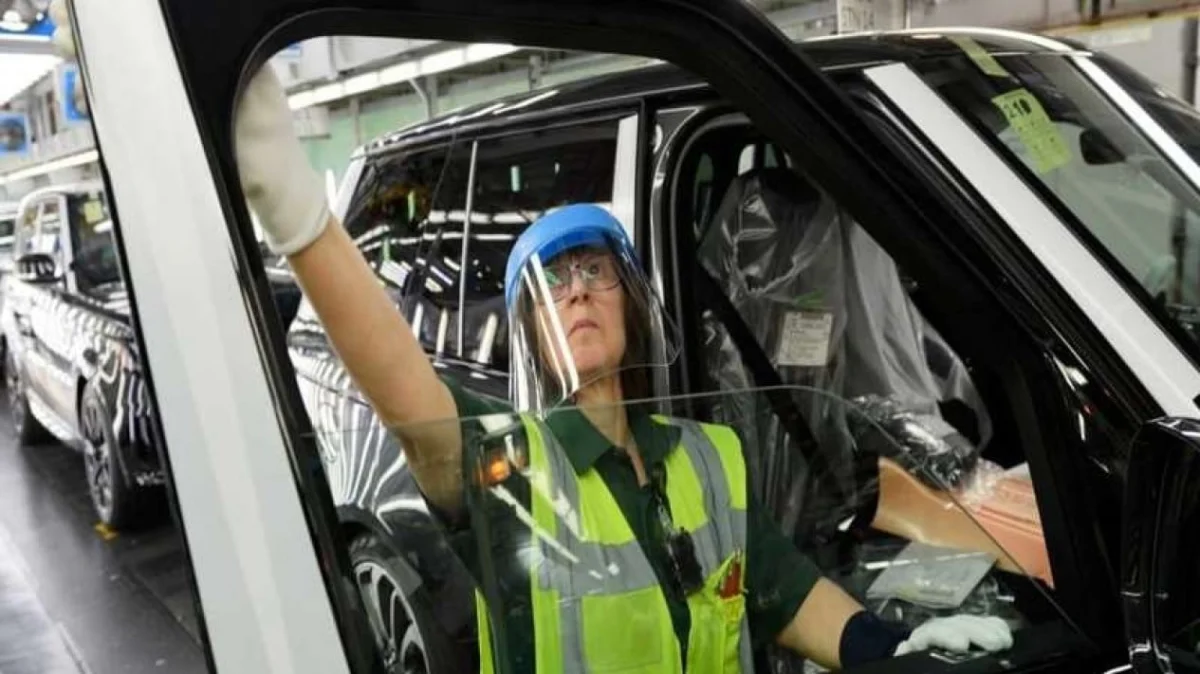
According to reports from automotive industry intelligence publications, the workforce reduction will primarily target salaried office roles, administrative positions, and upper-management tiers rather than direct assembly-line or manufacturing floor workers. JLR currently maintains a global workforce of approximately 43,000 employees, with the vast majority based in the United Kingdom across various engineering hubs, administrative headquarters, and production facilities such as Solihull, Halewood, and Gaydon.
By trimming structural headcount, JLR aims to significantly lower its corporate break-even threshold. Under the new restructuring projections, the company hopes to optimize operations to the point where it only requires the sale of approximately 300,000 vehicles annually to achieve financial equilibrium. This leaner operational model is vital for insulating the luxury carmaker against sudden market downturns, supply chain disruptions, and the massive capital expenditures required for modern vehicle development.
At the heart of this strategy is a massive cost-saving target of 1.7 billion pound sterling. Company executives believe that this capital retention is non-negotiable if JLR is to successfully pivot toward sustainable electrification without jeopardizing its long-term solvency or relying excessively on external debt financing.
The Chinese EV Surge and Global Market Pressures
The primary catalyst behind JLR’s aggressive cost-cutting measures is the relentless ascent of Chinese automotive manufacturers. Over the past several years, Chinese EV brands have revolutionized the global automotive landscape by introducing technologically sophisticated, feature-rich electric vehicles at highly competitive price points. This development has profoundly disrupted traditional pricing models in Western markets and severely squeezed legacy automakers in key growth regions.
For JLR, the pressure is acutely felt in the critical Chinese domestic market—traditionally one of the most lucrative territories for premium and ultra-luxury vehicle sales. As local Chinese consumers increasingly gravitate toward domestic smart EVs equipped with advanced infotainment and autonomous driving suites, traditional British luxury imports have faced persistent sales slowdowns.
To remain viable, JLR must simultaneously fund the expensive transition to zero-emission powertrains while watching its traditional revenue streams come under siege. The dual burden of maintaining legacy manufacturing operations while investing heavily in next-generation battery electric vehicle (BEV) architectures has stretched corporate balance sheets thin.
Geopolitical Headwinds, Tariffs, and Cyber Security Setbacks
Compounding these structural market challenges are complex geopolitical dynamics and regulatory hurdles. Prominent among them are the shifting tariff policies in the United States, another vital export market for JLR vehicles. British-built luxury SUVs exported to the U.S. have faced regulatory duties and tariff discussions, creating margin pressures despite bilateral trade accommodations that offer lower tariff rates for specific import quotas. These shifting trade policies complicate pricing strategies and erode profitability on transatlantic shipments.
Furthermore, JLR’s financial resilience has been severely tested by operational disruptions, most notably a crippling cyber-attack that targeted the company in 2025. The sophisticated security breach paralyzed manufacturing operations across several key UK facilities for multiple weeks, bringing assembly lines to a temporary halt and causing cascading supply chain delays. The incident resulted in significant direct financial losses and required substantial expenditures to upgrade and fortify enterprise-wide cybersecurity infrastructure, delaying ongoing product launches and eating into quarterly cash reserves.
Financial Reality Check: Slumping Revenues and Profit Margins
The cumulative weight of these headwinds is clearly reflected in JLR’s recent financial disclosures. For the fiscal quarter ending in June 2026, the company reported a concerning 9.6 percent year-over-year decline in total revenue, bringing quarterly figures down to approximately 6 billion pound sterling.
More alarmingly, profitability plummeted at an even steeper rate. JLR’s profit before tax and exceptional items crashed by nearly 69 percent compared to the same period in the previous year, settling at a modest 109 million pound sterling. These sobering figures illustrated an urgent necessity for structural reform, convincing executive leadership and major stakeholders that incremental adjustments would no longer suffice to protect the company’s financial health.
Unwavering Commitment to Future Technologies and Electrification
Despite the painful reality of eliminating thousands of jobs, JLR leadership has emphasized that the corporate downsizing is designed to safeguard—rather than sacrifice—the company’s technological future. Management has reaffirmed its commitment to a multi-billion-pound investment roadmap aimed at reshaping the brand for the electric era.
Over the next five years, JLR plans to inject between 15 billion and 18 billion pound sterling into comprehensive research and development initiatives. This substantial capital allocation will be directed toward accelerating the transition to electrification, advancing digital vehicle architecture, modernizing manufacturing plants with cutting-edge robotics, and elevating the digital customer ownership experience.
Flagship models across the Jaguar and Land Rover portfolios are slated for complete reinvention. Jaguar, in particular, is undergoing a radical repositioning as an all-electric ultra-luxury brand, a move that requires entirely new platform engineering and distinct retail positioning. Meanwhile, the Range Rover, Defender, and Discovery families are systematically receiving plug-in hybrid (PHEV) and pure battery-electric variants to meet tightening global carbon emissions regulations.
Broader Implications for the Automotive Sector
JLR’s strategic retrenchment serves as a bellwether for the wider European automotive industry. As regulatory deadlines for internal combustion engine phase-outs draw closer, legacy original equipment manufacturers (OEMs) are discovering that the transition requires painful internal adjustments. Balancing the heavy capital requirements of EV research with shrinking margins and aggressive low-cost competition from Asia has created a Darwinian environment across the sector.
Industry analysts note that while job cuts of this magnitude carry severe human and socio-economic costs—particularly for communities surrounding Britain’s industrial heartlands—they may become standard practice as heritage automakers fight to secure their place in the next century of mobility. The ultimate success of JLR’s turnaround will depend heavily on whether these aggressive cost-saving measures can successfully fund a competitive EV lineup capable of turning the tide against both domestic rivals and new-age global competitors.