The geopolitical landscape of the Middle East has once again spilled into the diplomatic corridors of the United Nations, as senior Iranian officials launched a scathing critique against the United Arab Emirates. Mohammad Baqer Qalibaf, the Speaker of the Iranian Parliament, publicly accused the UAE of advancing a diplomatic strategy that directly supports Israel’s expansionist goals. According to Tehran, the official bid by a prominent Emirati diplomat for the position of United Nations Secretary-General is designed to legitimize regional aggression and obscure the ongoing humanitarian catastrophe in the Gaza Strip.
The controversy erupted following the official announcement by Lana Nusseibeh, the UAE’s Minister of State and former longtime ambassador to the United Nations. Nusseibeh declared her candidacy to succeed current UN chief António Guterres, marking a historic moment as she seeks to become the first female Secretary-General in the eighty-year history of the global organization. While international observers initially focused on the gender milestone and Nusseibeh’s extensive diplomatic pedigree, the candidacy has immediately drawn sharp antagonism from regional powers critical of Abu Dhabi’s foreign policy trajectory, particularly its diplomatic normalization with Israel under the Abraham Accords.
The Diplomatic Salvo and the "Greater Israel" Allegation
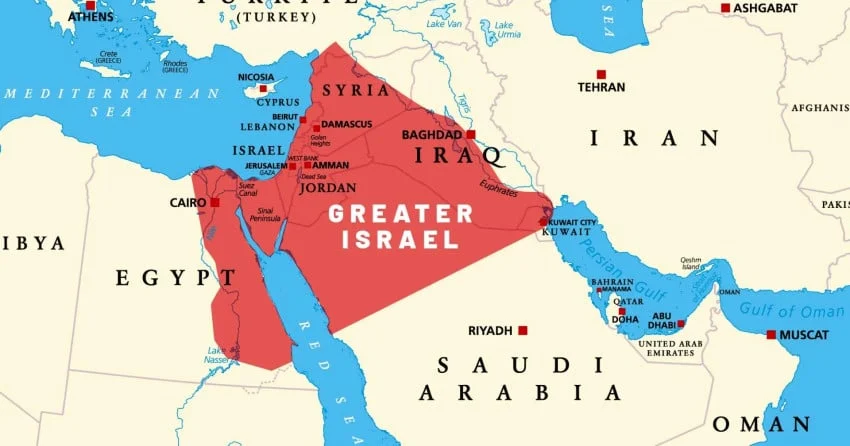
Taking to the social media platform X, formerly known as Twitter, Parliament Speaker Mohammad Baqer Qalibaf did not mince words regarding the Emirati diplomatic push. Qalibaf framed Nusseibeh’s candidacy not as a routine administrative transition within the international body, but as a calculated geopolitical maneuver. He asserted that the appointment of an Emirati national to the highest office of the United Nations would effectively establish a diplomatic umbrella for what he termed "Greater Israel"—an ultra-nationalist concept encompassing territorial expansions that threaten regional stability and sovereignty.
Furthermore, Qalibaf connected the UN leadership bid directly to the ongoing conflict in Gaza. He accused the UAE of attempting to whitewash what he described as systematic genocide perpetrated by Israeli military forces against the Palestinian population. In a sharp rhetorical flourish, the Iranian parliamentary leader utilized a vivid agrarian metaphor to criticize the candidacy, writing that defending the tragic events in Gaza formed the core background experience of the UAE’s diplomatic record. He likened the situation to a fox applying for the position of a henhouse guard, suggesting an inherent contradiction between Abu Dhabi’s stated diplomatic intentions and its actual regional alignment.
Background and Context of the UAE’s UN Candidacy
Lana Nusseibeh’s bid for the UN Secretary-General post represents a significant milestone in international diplomacy. Having served as the Permanent Representative of the United Arab Emirates to the United Nations from 2013 until her elevation to Minister of State, Nusseibeh is a seasoned multilateral negotiator. During her tenure in New York, she navigated complex geopolitical crises, championed gender equality, and played a central role in managing the UAE’s elected term on the UN Security Council for the 2022–2023 term.

However, her candidacy is inextricably linked to the broader transformation of UAE foreign policy over the past half-decade. In 2020, the UAE, alongside Bahrain, signed the United States-brokered Abraham Accords, normalizing diplomatic, economic, and security relations with Israel. While Abu Dhabi has consistently defended the normalization framework as a pragmatic tool to maintain leverage, foster regional integration, and occasionally advocate for Palestinian interests—such as halting contentious West Bank annexation plans—critics across the Middle East view the pact as a betrayal of the pan-Arab consensus and a tacit endorsement of Israeli policies.
The outbreak of the Israel-Hamas war in October 2023 severely tested the durability of the Abraham Accords. Despite mounting international condemnation of the civilian death toll and humanitarian crisis in Gaza, the UAE maintained its official diplomatic channels with Israel while simultaneously providing substantial humanitarian aid to Palestinian civilians, establishing field hospitals, and co-sponsoring various UN resolutions calling for ceasefires and humanitarian relief. Yet, for regional adversaries like Iran, the balancing act maintained by Abu Dhabi is viewed as fundamentally contradictory, paving the way for the allegations leveled by Qalibaf.
Chronology of the Developments
- September 2020: The United Arab Emirates and Israel sign the Abraham Accords in Washington, D.C., officially normalizing bilateral relations and initiating deep economic, technological, and security cooperation.
- December 2023 to 2024: Amid the escalating conflict in Gaza, the UAE utilizes its position in international forums to advocate for humanitarian access while maintaining its diplomatic ties with Israel, drawing mixed reactions from the broader Arab and Islamic world.
- Wednesday (Late October 2026): Lana Nusseibeh formally announces her candidacy for the position of United Nations Secretary-General, aiming to break the glass ceiling as the first female head of the global body.
- Sunday (Following Announcement): Iranian Parliament Speaker Mohammad Baqer Qalibaf publishes his critical statement on X, accusing the UAE of utilizing the UN candidacy to advance Israeli expansionist ambitions and deflect from the situation in Gaza.
Implications for the United Nations and Regional Diplomacy
The public friction between Tehran and Abu Dhabi over the UN leadership race underscores the deep, polarized divisions within the Middle East, which are increasingly projected onto multilateral institutions. The race for the UN Secretary-General position is traditionally subject to complex geopolitical bargaining, regional rotation rules, and the ultimate approval of the five permanent members of the UN Security Council (the United States, the United Kingdom, France, Russia, and China).
Any candidate seeking to secure the post must navigate a minefield of competing national interests. While Western nations may view a candidate from a progressive, economically vibrant Middle Eastern nation like the UAE as a modernizing force within the UN, opposing regional powers like Iran will likely mobilize diplomatic resistance to undermine such bids. Tehran’s framing of the candidacy around sensitive concepts like "Greater Israel" and the Gaza conflict is designed to rally anti-normalization sentiments across the Global South and the Arab street, potentially complicating Nusseibeh’s path to consensus.
Analysts note that as the selection process for the next UN chief unfolds, the debate highlights the increasing weaponization of international organizations for regional proxy narratives. The UAE has not yet issued a formal, detailed rebuttal to Qalibaf’s specific allegations regarding "Greater Israel," though Emirati officials have consistently maintained that their foreign policy is guided by principles of moderation, peace, stability, and the promotion of a two-state solution within a framework of constructive regional engagement.
As the international community digests the historical nature of Nusseibeh’s nomination alongside the fierce regional pushback from Tehran, the race for the United Nations’ top job promises to become a major focal point of diplomatic maneuvering in the months ahead. The ability of candidates from contested regions to build universal trust will be rigorously tested as member states weigh geopolitical alignments against the foundational principles of the United Nations Charter.