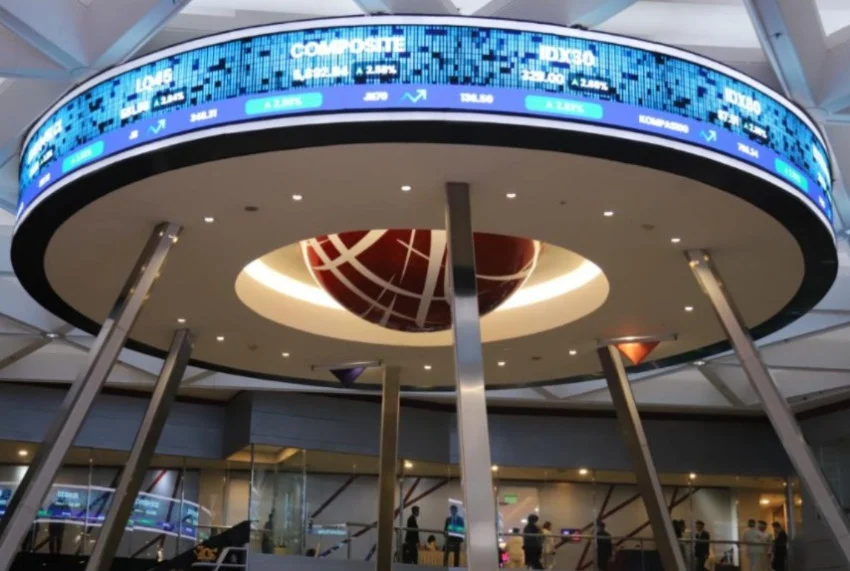
JAKARTA, Indonesia – The Indonesia Stock Exchange (IDX) Composite (IHSG) continued its robust upward trajectory on Monday, July 20, 2026, closing the trading session with a significant gain of 56.25 points, or 0.91%, to reach 6,231. This positive performance was underpinned by a broad-based rally, with the majority of listed stocks experiencing an advance and nearly all sectoral indices finishing in positive territory. The market’s strong showing signals growing investor confidence and a sustained appetite for Indonesian equities amidst evolving economic conditions.
The day’s trading saw a clear dominance of bullish sentiment. A total of 421 stocks closed higher, significantly outweighing the 220 stocks that declined. An additional 324 stocks remained unchanged, indicating a relatively stable underlying market with a clear directional bias towards appreciation. The total transaction value for the day reached an impressive Rp16 trillion (approximately USD 1.05 billion, assuming an exchange rate of Rp 15,200 per USD), with a substantial volume of 29.7 billion shares changing hands. This high turnover underscores the active participation of investors and the liquidity within the Indonesian stock market.
The broader market’s strength was further reflected in the performance of key sub-indices. The LQ45 Index, which comprises the 45 most liquid stocks on the IDX, recorded a gain of 0.94%, closing at 627. The Jakarta Islamic Index (JII), representing Sharia-compliant stocks, surged by a more substantial 1.96% to 374, indicating strong interest in ethically aligned investments. The IDX30 Index, a benchmark for the top 30 most liquid stocks, rose by 0.84% to 354, while the MNC36 Index, tracking a basket of stocks from various sectors with significant market capitalization, advanced by 0.71% to 274. The consistent positive performance across these diverse indices suggests that the market’s upward movement is not confined to a few specific sectors but is rather a widespread phenomenon.
Contextualizing the Upward Trend: A Broader Economic Narrative
The sustained strength of the IHSG in recent trading sessions, culminating in Monday’s notable advance, can be viewed within the broader context of Indonesia’s economic landscape. While specific catalysts for this particular day’s surge may vary, the underlying trend likely reflects a combination of factors. These include a more stable macroeconomic environment, ongoing government initiatives aimed at stimulating economic growth and investment, and potentially positive developments in corporate earnings or sector-specific outlooks.
In the preceding weeks, the IHSG had been trading with a degree of volatility, influenced by global economic uncertainties, commodity price fluctuations, and domestic policy announcements. However, the current upward momentum suggests that investors are increasingly focusing on the long-term growth prospects of the Indonesian economy and its listed companies. Analysts have pointed to several key drivers that have been supporting the market. These include a gradual but steady recovery in domestic consumption, increased foreign direct investment inflows, and a generally positive outlook for key export commodities.
Furthermore, the Indonesian government has been actively pursuing policies to enhance the investment climate. These include efforts to streamline regulations, improve infrastructure, and attract foreign capital. Such initiatives, when successfully implemented, tend to bolster investor confidence and contribute to a more favorable market environment. The recent performance of the IHSG can be interpreted as a tangible reflection of these ongoing efforts and their perceived impact on the Indonesian economy.
Chronology of Trading: A Day of Consistent Gains
While the provided information focuses on the closing figures, a typical trading day unfolds in distinct phases, each with its own dynamics.
- Opening Bell: The trading session on Monday, July 20, 2026, likely commenced with a cautious but optimistic tone. Following the previous day’s positive close, there would have been anticipation for further gains. Early trading often sets the direction for the day, and in this instance, the opening would have signaled the continuation of the bullish sentiment.
- Mid-Morning Rally: As trading progressed through the morning, the buying pressure would have intensified, leading to a steady ascent of the IHSG. This phase is often characterized by the accumulation of positions by institutional investors and fund managers who are responding to market signals and economic data. The broad-based nature of the gains suggests that across various sectors, investors were actively seeking opportunities.
- Afternoon Consolidation and Further Advance: In the afternoon, markets can sometimes experience a period of consolidation, where prices stabilize before potentially moving higher or lower. However, on this particular Monday, the upward momentum appears to have been sustained. Increased trading volumes in the afternoon could indicate a final push by buyers or the participation of retail investors entering the market.
- Closing Bell: The final minutes of trading are crucial for determining the day’s closing figures. The IHSG’s ability to maintain its gains and close at 6,231 signifies strong buying interest throughout the entire session, with no significant profit-taking pressure emerging to reverse the trend. The substantial number of advancing stocks further validates the strength of the rally.
Supporting Data and Market Dynamics
The underlying data from Monday’s trading provides further insight into the breadth and depth of the market’s strength. The sheer volume of advancing stocks (421) compared to declining ones (220) is a strong indicator of a healthy bull run. This disparity suggests that positive sentiment was widespread, impacting a significant portion of the market capitalization.
The transaction value of Rp16 trillion is a substantial figure, indicating significant capital flow into the stock market. High transaction values are often associated with increased investor confidence and a willingness to commit capital to equity investments. The volume of 29.7 billion shares traded further underscores the active nature of the market.
The performance of the sub-indices, such as the LQ45 and IDX30, which represent larger-cap, more liquid stocks, is particularly noteworthy. Their gains suggest that not only smaller, more speculative stocks are performing well, but also the blue-chip companies that are often considered bellwethers of the broader economy. The strong performance of the Jakarta Islamic Index also highlights a growing segment of investors seeking Sharia-compliant investment opportunities, which are increasingly being catered to by the IDX.
Potential Reactions and Analyst Perspectives
While direct quotes from market participants for this specific day’s closing are not available in the provided text, the market’s sustained upward movement would typically elicit positive commentary from financial analysts and market observers.
- Optimistic Outlook: Many analysts would likely interpret this trend as a sign of renewed investor confidence in the Indonesian economy. They might point to specific sectors that are performing particularly well, such as commodities, banking, or consumer goods, and attribute the broad-based gains to a general improvement in economic prospects.
- Focus on Fundamentals: Analysts would likely emphasize that the market’s strength is being driven by underlying economic fundamentals rather than speculative bubbles. They might highlight positive corporate earnings reports, improved economic growth forecasts, or favorable monetary policy stances as key drivers.
- Cautionary Notes (if applicable): While the immediate sentiment is positive, prudent analysts would also likely offer a balanced perspective. They might caution investors about potential headwinds, such as global economic uncertainties, inflation pressures, or geopolitical risks, that could influence future market movements. However, the current data suggests that these concerns are not significantly dampening investor enthusiasm.
Broader Impact and Implications
The continued strength of the IHSG has several significant implications for the Indonesian economy and its investors:
- Wealth Creation: A rising stock market contributes to wealth creation for individuals and institutions that hold equities. This can lead to increased consumer spending and investment, further stimulating economic activity.
- Corporate Funding: A strong stock market makes it easier and more attractive for companies to raise capital through initial public offerings (IPOs) or secondary offerings. This capital can then be used for expansion, research and development, or debt reduction, fostering long-term growth.
- Investor Confidence: Sustained positive market performance boosts overall investor confidence, encouraging both domestic and foreign investment in Indonesia. This can lead to greater capital inflows, which are crucial for economic development.
- Economic Indicator: The IHSG is often seen as a leading economic indicator. Its consistent upward trend can signal to policymakers, businesses, and consumers that the economy is on a solid footing and poised for further growth.
- Attractiveness for Foreign Investors: A robust and rising stock market makes Indonesia a more attractive destination for foreign portfolio investment. This can help to stabilize the currency, improve the country’s balance of payments, and provide access to global capital markets.
In conclusion, the Indonesian Stock Exchange’s sustained upward momentum on Monday, July 20, 2026, closing at 6,231, is a testament to the resilience and growing confidence in the Indonesian market. The broad-based nature of the gains, coupled with substantial trading volumes, suggests a healthy and robust market environment. As Indonesia continues to navigate the global economic landscape, the strength of its stock market will remain a crucial indicator of its economic health and a key driver of its future growth. The continued positive trend underscores the effectiveness of ongoing economic policies and the inherent attractiveness of Indonesian equities to a wide range of investors.