The practice of performing Tahiyatul Masjid—the two-rak’ah prayer offered as a greeting to a mosque—remains a subject of nuanced theological discussion, particularly when it coincides with the delivery of the Friday sermon (Khutbah). While the act is widely regarded as a sunnah mu’akkadah (strongly recommended) in standard circumstances, the intersection of this ritual with the obligation to listen to the Friday sermon has generated a long-standing discourse among Islamic jurists. Understanding the parameters of this practice requires an examination of the conflicting mandates: the command to honor the house of God and the obligation to maintain silence during the Imam’s address.
The Theological Significance of Tahiyatul Masjid
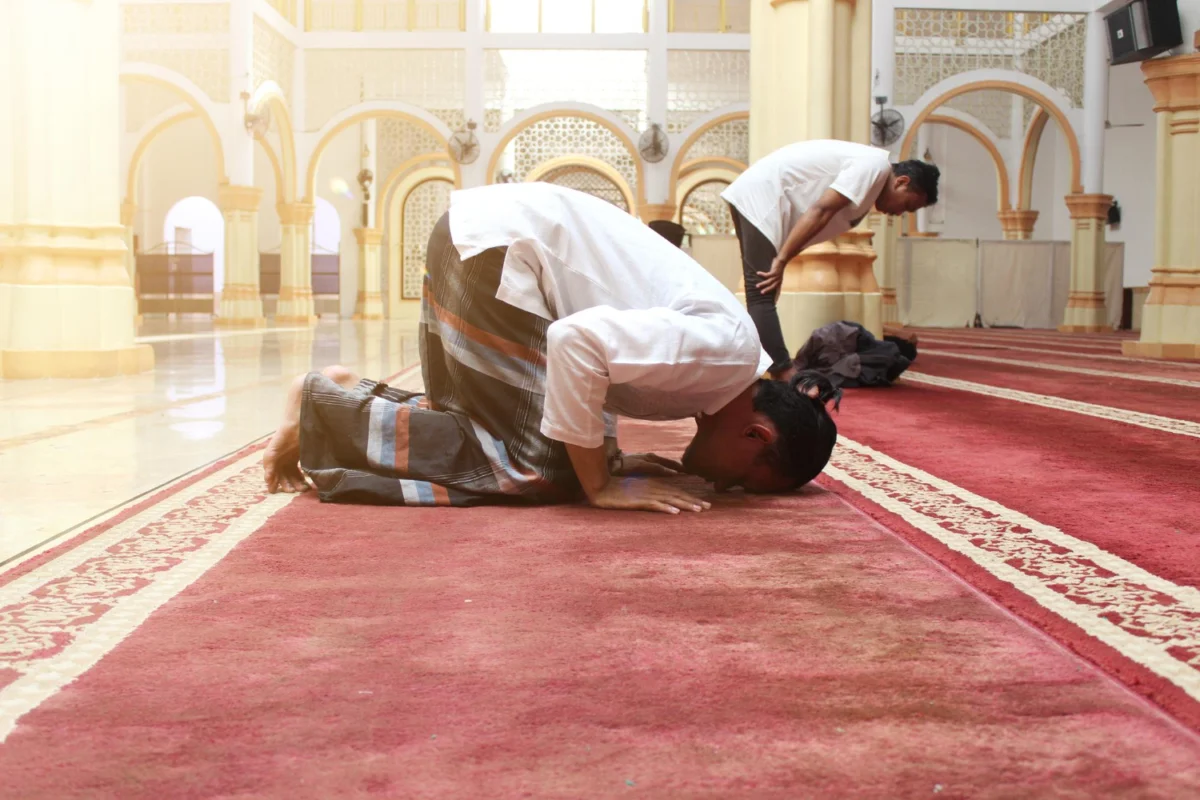
Tahiyatul Masjid, translated as "Greeting the Mosque," serves as a physical manifestation of respect for the sanctuary. The practice is rooted in the prophetic tradition, specifically the narration from Abu Qatadah, who reported that the Prophet Muhammad (peace be upon him) explicitly stated, "If any one of you enters the mosque, let him pray two rak’ahs before he sits down."
For the observant Muslim, this prayer is not merely an optional act of devotion but a codified etiquette for entering a sacred space. It serves as a spiritual transition, shifting the congregant’s focus from the mundane world to the sanctity of the prayer hall. The ritual implies an acknowledgement of the mosque’s status as the house of Allah, reinforcing the believer’s humility upon arrival.
Chronology of the Debate
The conflict arises when a latecomer enters the mosque while the khatib (the one delivering the sermon) is already on the minbar. The debate is not merely a modern dilemma; it has been a point of scholarly contention for over a millennium.

The primary source of the debate stems from a specific incident involving a man named Sulaik al-Ghathafani. Historical records indicate that Sulaik arrived during the Friday sermon and immediately sat down without offering the two-rak’ah prayer. The Prophet Muhammad (PBUH) interrupted his sermon to ask, "Have you prayed?" When Sulaik replied in the negative, the Prophet instructed him to stand and perform two light rak’ahs before sitting. This event serves as the primary pillar for scholars who argue that Tahiyatul Masjid takes precedence even during the sermon.
Divergent Scholarly Perspectives
The disagreement among the four major Sunni schools of jurisprudence—the Shafi’i, Maliki, Hanafi, and Hanbali—highlights the complexity of balancing two competing religious duties: the sanctity of the prayer and the necessity of listening to the sermon.
The Shafi’i and Hanbali Position
Imam Shafi’i, Imam Ahmad bin Hanbal, and the majority of hadith scholars maintain that the instruction to perform the prayer is categorical. They argue that the incident with Sulaik al-Ghathafani serves as an explicit command that overrides the general rule of silence during the sermon. According to this view, the prayer must be brief—focusing on the essentials—to ensure that the congregant can resume listening to the sermon as quickly as possible. Imam An-Nawawi, in his seminal work Al-Majmu’ Syarah al-Muhadzab, reinforces this, stating that it is makruh (disliked) for a latecomer to sit without offering the prayer, regardless of whether the Imam is speaking.
The Maliki and Hanafi Position
Conversely, the Maliki and Hanafi schools emphasize the absolute nature of the obligation to listen to the Khutbah. They draw on the hadith narrated by Abu Hurairah, in which the Prophet (PBUH) stated, "If you say to your companion on a Friday, ‘Listen,’ while the Imam is preaching, you have engaged in idle talk." The logic here is deductive: if speaking the word "listen" or "be quiet" to someone else is considered a distraction that invalidates the reward of the Friday prayer, then the act of standing up and performing a two-rak’ah prayer—which involves significantly more movement and time—is even more detrimental to the obligation of attentive listening. Consequently, these scholars view the performance of Tahiyatul Masjid during the sermon as an act that detracts from the congregant’s primary duty at that moment.
Supporting Data and Juridical Analysis
The tension between these two views is captured eloquently by the medieval scholar Ibnu Daqiq al-‘Id. In his commentary on Umdat al-Ahkam, he argues that the severity of the prohibition against speaking during the sermon suggests that any act that takes a person’s focus away from the khatib is inherently problematic.

However, proponents of the Shafi’i view argue that the prayer is a form of tahiyyah (greeting) to the mosque, and in the hierarchy of Islamic etiquette, greeting the house of Allah before engaging in other activities is paramount. The key differentiator is the requirement for brevity. Both sides acknowledge that if a prayer is to be performed, it must not be a long, drawn-out affair; it must be "light," intended solely to satisfy the requirement of greeting the space.
Implications for Modern Congregants
For the contemporary Muslim, this debate presents a practical challenge. Mosque management and local imams often face questions regarding the behavior of congregants who arrive late.
- Focus on Unity: While the academic debate remains valid, the primary objective for every attendee is to gain the maximum spiritual benefit from the Friday service. If a congregation follows a specific madhab (school of thought), it is generally advisable to follow the prevailing practice of that mosque to avoid unnecessary friction or confusion during the sermon.
- The "Lightness" Requirement: Even among those who advocate for the prayer, there is a universal consensus that it should not be lengthy. Reciting excessively long chapters of the Quran during this specific prayer is discouraged, as it disrupts the congregant’s ability to follow the khutbah.
- Respecting the Atmosphere: The fundamental goal is to maintain a state of focus. Whether one chooses to pray briefly or sit directly, the intent should remain centered on the sanctity of the Friday gathering.
Contextualizing the Friday Sermon
The Friday sermon is more than a mere speech; it is a critical component of the congregational prayer. It serves as an opportunity for community cohesion, moral instruction, and spiritual reflection. In the modern era, where distractions are abundant, the instruction to listen attentively to the Imam is more relevant than ever. The scholarly discourse on Tahiyatul Masjid is not intended to create division but to refine the conduct of the believer within the mosque.
Conclusion
The question of whether to perform Tahiyatul Masjid during the khutbah does not have a single, monolithic answer that satisfies every school of thought. It is a reflection of the depth of Islamic jurisprudence, which accounts for different priorities—the preservation of the prayer ritual versus the preservation of the sermon’s integrity.
For the follower of the Shafi’i school, the act is considered a recommended duty that should be performed swiftly. For those who follow the Maliki or Hanafi schools, the priority is to sit and listen immediately. Both sides seek to honor the Prophet’s teachings, and the diversity of these opinions serves as a reminder that within the framework of Islamic law, there exists a degree of flexibility designed to accommodate the spiritual needs of the community while upholding the sanctity of the Friday ritual. Ultimately, the congregant is encouraged to act with sincerity and to ensure that their arrival at the mosque is marked by an attitude of reverence, whether expressed through a quick prayer or through immediate, silent focus on the words of the khatib.