The search and rescue operation for the passengers and crew of KM Virgo Transport 8, which suffered a catastrophic maritime incident in the waters of Masalembo, Java Sea, entered a critical phase on Monday, September 14, 2026. As rescue teams battle volatile weather conditions to locate survivors, the provincial government of South Kalimantan (Kalsel) has issued a firm mandate to all regional medical facilities to prioritize life-saving interventions over administrative formalities for those brought to shore.
The incident involving KM Virgo Transport 8 has sent shockwaves through the maritime transport sector in Indonesia, raising urgent questions regarding safety protocols, vessel maintenance, and emergency response capabilities in one of the country’s most notoriously difficult maritime corridors.
Chronology of the Maritime Disaster
The vessel, identified as KM Virgo Transport 8, departed from the Tanjung Perak Port in Surabaya on Saturday, September 12, 2026, destined for Banjarmasin, South Kalimantan. According to the manifest data provided by the shipping authorities, the ship was carrying a total of 243 individuals, comprising both passengers and crew members.
The voyage proceeded as scheduled until early Sunday morning. At approximately 02:00 WITA (Central Indonesian Time) on September 13, 2026, the vessel lost all contact with ground control. Initial distress signals were reportedly faint, suggesting a rapid development of a critical situation that prevented the crew from relaying detailed information about the ship’s status.
Upon receipt of the emergency notification, the National Search and Rescue Agency (Basarnas) immediately activated a massive search and rescue (SAR) operation. The Masalembo area, situated in the central part of the Java Sea, is known for its unpredictable currents and frequent localized weather disturbances, which have historically presented challenges for maritime navigation.
The Scale of the SAR Operation
As of Monday morning, the rescue effort has mobilized an extensive array of resources to cover the vast search area. Basarnas has deployed a joint force consisting of 15 specialized units, including 11 naval vessels, one search-and-rescue helicopter, and three fixed-wing aircraft. The aerial units have been instrumental in scanning large swaths of the ocean surface, while the maritime units focus on recovery and debris identification.
Data provided by the authorities indicates that 113 individuals have been accounted for in the ongoing rescue efforts. Of these, 107 survivors have been successfully evacuated and are receiving varying levels of care, while six bodies have been recovered from the water. The fate of the remaining 130 passengers and crew members remains unknown, with rescue operations continuing around the clock despite the onset of challenging nighttime visibility and sea swells.
Government Directive: Putting Humanity Above Bureaucracy
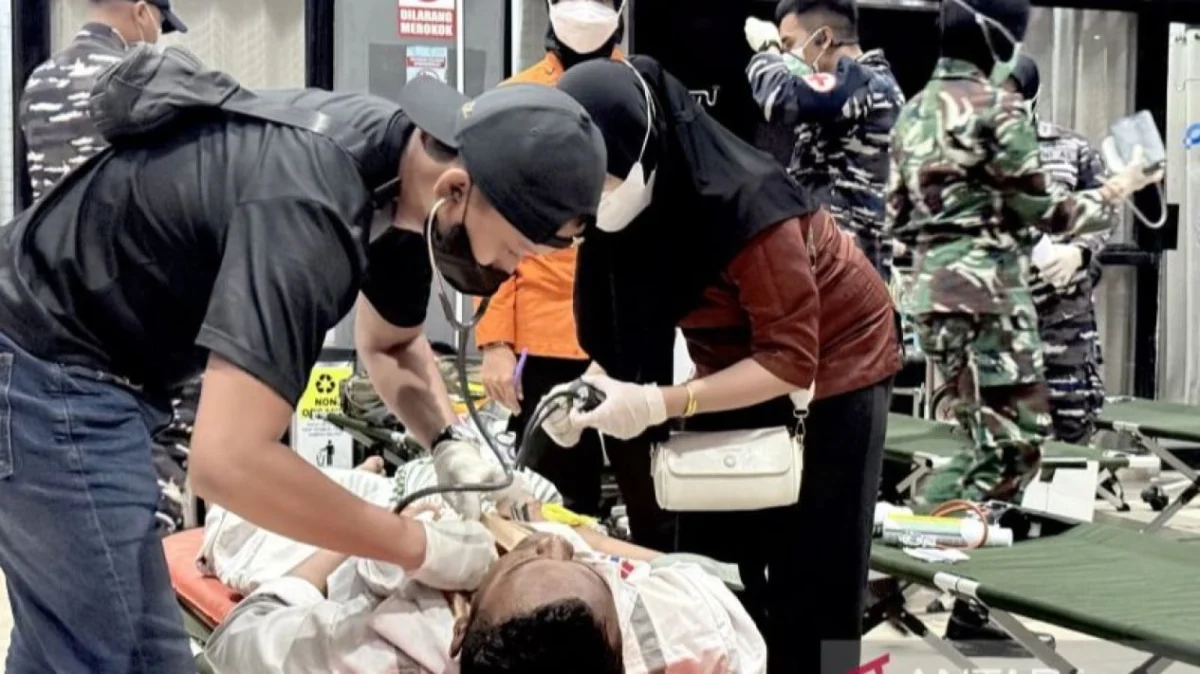
In a decisive move to address the immediate aftermath of the tragedy, Governor of South Kalimantan, Muhidin, issued an explicit directive to all hospitals and public health centers under his jurisdiction. Emphasizing the gravity of the situation, the Governor underscored that the provincial government will not tolerate any delay in medical services due to insurance documentation, identity verification, or administrative paperwork.
"We cannot allow a single victim to perish or suffer further due to administrative bottlenecks," Governor Muhidin stated during a press briefing on Monday. "In a state of emergency, human life is the absolute priority. I have instructed all health facilities in South Kalimantan to provide unconditional emergency treatment to every survivor brought in from the incident site."
This directive is part of a broader commitment by the South Kalimantan provincial government to provide comprehensive support for the victims and their families. The Governor has also established a crisis center tasked with coordinating between the provincial government, local health agencies, and the central SAR command to ensure a seamless flow of aid to the survivors.
Communication and Public Information Management
Recognizing the potential for misinformation to exacerbate the trauma experienced by families, Governor Muhidin issued a stern plea to the public. He urged citizens to refrain from circulating unverified images, videos, or news regarding the identities of the victims on social media platforms.
"We owe it to the families to provide clear, accurate, and responsible information," Muhidin noted. "The government is working diligently to verify all data, and we request that the public respects the privacy and dignity of the victims by waiting for official announcements from the designated authorities."
The provincial government is currently setting up a dedicated communication channel to provide real-time updates to families waiting in Banjarmasin, ensuring that they receive official confirmation before any public disclosures are made.
Maritime Safety Implications in the Masalembo Corridor
The loss of KM Virgo Transport 8 brings renewed attention to the safety of inter-island ferry travel in Indonesia. The Masalembo waters, located between the islands of Java, Kalimantan, and Sulawesi, have long been categorized as a high-risk zone for maritime accidents. The interaction of deep-sea currents and seasonal monsoon winds often creates volatile conditions that can quickly overwhelm smaller or improperly loaded vessels.
Experts in maritime safety suggest that this incident will necessitate a comprehensive investigation into the seaworthiness of the vessel, the adherence to loading capacity regulations, and the effectiveness of current early warning systems in the Java Sea. While preliminary reports have not cited the specific cause of the incident—whether it be engine failure, hull breach, or weather-related capsizing—the government has been adamant that investigations will be conducted strictly by authorized bodies based on forensic evidence.
"We must allow the relevant authorities to conduct a thorough and transparent investigation," the Governor added. "Speculation only serves to complicate the process and causes unnecessary distress to the affected families. We will rely on facts, technical inspections, and the findings of the National Transportation Safety Committee (KNKT)."
Economic and Logistical Impact
The incident has caused significant disruption to the sea lane connectivity between East Java and South Kalimantan. As one of the primary logistical routes for both passengers and cargo, the suspension of normal service for vessels traversing this route is expected to cause minor delays in the supply chain. However, the immediate focus remains squarely on the rescue and recovery efforts.
The provincial government’s quick response in medical mobilization is a critical component of disaster mitigation. By removing administrative barriers, the government is effectively streamlining the triage process, allowing medical personnel to focus entirely on stabilization and recovery.
Looking Ahead
As the sun sets on the second day of the search, the resolve of the search and rescue teams remains unshaken. The coordination between the provincial government, Basarnas, and local maritime authorities serves as a template for emergency management in the region.
The upcoming hours are considered the "golden period" for search and rescue operations. Every effort is being made to maximize the reach of the 15 deployed units, with the hope of finding more survivors in the designated search zones. For the residents of South Kalimantan, the focus remains on the safe return of their loved ones and the provision of necessary care for those who have already been saved.
The incident of KM Virgo Transport 8 serves as a sobering reminder of the inherent risks of maritime travel in the archipelago and the ongoing necessity for strict enforcement of safety regulations. As the investigation progresses, the government is expected to release further details on the causes of the tragedy, which will likely lead to a review of existing safety standards for passenger ferries operating in high-risk zones.
For now, the focus is singular: save lives, provide medical relief without delay, and support the families impacted by this unfolding tragedy. The South Kalimantan government remains on high alert, with all emergency services prepared for the continued influx of survivors, ensuring that the necessary care is provided until the very last person on the manifest is accounted for.