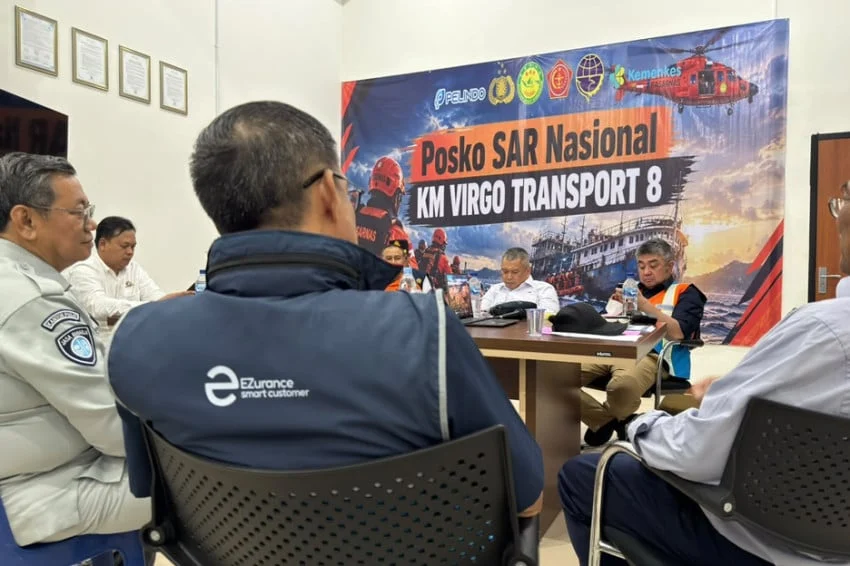
The maritime community and the nation are currently grappling with the aftermath of a significant tragedy in the Java Sea, where the Kapal Motor (KM) Virgo Transport 8 lost contact and subsequently sank in the early hours of Sunday, September 13, 2026. As rescue operations shift from search-and-rescue (SAR) efforts to recovery and victim identification, the Jasa Raharja Group has mobilized its leadership to the Trisakti Port in Banjarmasin to oversee the provision of essential services and the processing of insurance claims for those affected by the catastrophe.
Chronology of the Disaster
The incident began in the pre-dawn hours of Sunday, September 13, 2026. Reports indicate that KM Virgo Transport 8, which was traversing the Java Sea, encountered severe weather conditions and operational complications that led to a sudden loss of contact with maritime authorities. The distress signal was received by the nearest vessel traffic monitoring station, but by the time rescue teams arrived at the coordinates, the vessel had already succumbed to the elements.
Initial assessments by the National Search and Rescue Agency (Basarnas) confirmed that the vessel was carrying a significant number of passengers, crew members, and cargo. By the time emergency response teams were fully operational, 113 passengers had been successfully evacuated and brought to safety. However, the tragedy remains grim, with six confirmed fatalities reported at the scene and an extensive search operation currently underway for approximately 130 individuals who remain missing at sea.
High-Level Response and On-Site Coordination
In an immediate move to demonstrate government accountability and support for the victims’ families, the management of Jasa Raharja Group arrived at the Posko Koordinasi Penanganan Musibah (Disaster Handling Coordination Post) at Trisakti Port. The delegation included the President Director of PT Jasa Raharja (Persero), Muhammad Awaluddin; the Director of Operations, Ariyandi; and the Technical Director of PT Asuransi Jasaraharja Putera, Suhardiman.
The presence of these executives at the port is designed to expedite the administrative burden on families, who are often overwhelmed during such crises. By coordinating directly with the local SAR command center, hospital administrators, and the police, the Jasa Raharja Group aims to create a "one-stop" service point. This centralized approach ensures that victim verification—a process that often involves complex DNA testing and family authentication—is completed with both accuracy and empathy.
Minister of Transportation, Dudy Purwagandhi, also visited the site to inspect the logistics of the evacuation. His presence underscores the gravity of the incident and the government’s commitment to investigating the cause of the sinking, specifically regarding maritime safety standards and vessel maintenance protocols.
The Scope of Financial Protection
The Jasa Raharja Group’s involvement is structured through a two-tiered protection framework. As a state-owned enterprise mandated by Law No. 33/1964, PT Jasa Raharja provides compulsory passenger accident insurance. Under this mandate, the company is committed to providing a death benefit of IDR 50 million to the verified legal heirs of each victim.
Furthermore, the involvement of PT Asuransi Jasaraharja Putera adds an additional layer of protection. While Jasa Raharja focuses on basic statutory passenger protection, the subsidiary provides supplementary coverage for cargo, vehicles, and specialized assets carried by the vessel. This integrated response is intended to stabilize the financial impact on both individual families and the logistics businesses that relied on the vessel’s transport services.
Muhammad Awaluddin emphasized the priority of the mission during his address to the press at the port. "In a situation as harrowing as this, our primary focus is the welfare of the victims and their families. We are working around the clock to ensure that the evacuation and medical treatment processes are seamless. We will remain on the ground until every affected individual is accounted for, and we will ensure that the disbursement of insurance claims is handled with the urgency this situation demands," Awaluddin stated.
Maritime Safety Implications and Regulatory Review
The sinking of KM Virgo Transport 8 has reignited a broader national conversation regarding maritime safety in the Indonesian archipelago. The Java Sea is one of the busiest maritime lanes in the world, and sudden incidents involving passenger-cargo vessels (Ro-Ro ships) have historically been linked to issues ranging from overloading and mechanical failure to inadequate safety equipment and poor weather forecasting protocols.
Industry analysts note that while insurance providers like Jasa Raharja are effective at managing the aftermath, the frequency of such incidents points to a need for more rigorous inspection cycles by the Ministry of Transportation. The fact that the vessel sank with over 200 people on board suggests that there will be a forensic investigation into the ship’s manifest, the condition of its life-saving equipment, and the communication protocols that were followed leading up to the loss of contact.
Furthermore, the financial impact of this disaster extends beyond the immediate insurance payouts. As the investigation progresses, the shipping industry may face stricter compliance audits. This would likely involve an increase in mandatory safety drills, the installation of more advanced real-time tracking systems, and more stringent cargo weight verification processes at ports like Trisakti.
Data and Victim Management Challenges
Managing the recovery of 130 missing persons remains the most significant hurdle for the authorities. The search area in the Java Sea is expansive, and unpredictable currents continue to challenge the SAR teams. For the Jasa Raharja Group, the uncertainty regarding the missing persons presents a complex challenge for administrative processing.
Typically, the disbursement of life insurance benefits requires official confirmation of death. However, in maritime disasters, the transition from "missing" to "presumed deceased" requires specific legal documentation. The Jasa Raharja Group has committed to working closely with the Ministry of Home Affairs and the police to streamline the issuance of death certificates based on manifests and survivor testimony, ensuring that families do not face undue delays in receiving their entitlements.
The Role of Public and Private Synergy
The incident serves as a case study for the integration of state-mandated social insurance and private-sector liability coverage. By operating as a group, Jasa Raharja and Jasaraharja Putera are demonstrating a model of "integrated protection." This synergy allows the victims’ families to receive support that covers both human life and material loss simultaneously.
For the families of the 113 survivors, the focus is currently on medical support. Many of those who were successfully evacuated are being treated for hypothermia, shock, and trauma. Jasa Raharja’s field teams are providing psychological support and assisting with the costs associated with hospital stays, ensuring that the financial barrier to recovery is removed for those who have already lost their livelihoods in the disaster.
Looking Ahead
As the search operations continue through the coming days, the nation waits for more information regarding the cause of the KM Virgo Transport 8 tragedy. The government has promised a transparent investigation, and the results of this inquiry are expected to influence future maritime safety regulations.
The Jasa Raharja Group, meanwhile, maintains that its operations in Banjarmasin will continue until the last victim is identified and all claims are processed. The disaster stands as a somber reminder of the inherent risks of maritime transit in Indonesia and the vital necessity of having a robust, responsive, and well-funded insurance infrastructure to support the citizens during their most vulnerable moments.
While the administrative and financial aspects of the disaster are being handled with professionalism, the emotional toll on the affected families remains immeasurable. The collaborative efforts of the government, the SAR teams, and the Jasa Raharja Group represent a unified front in addressing one of the most significant maritime challenges of the year, providing a semblance of order and support in the midst of a tragic, chaotic event. As the investigation continues, the focus will remain on the safety of the seas and the enduring responsibility to protect those who rely on them for their daily commerce and travel.