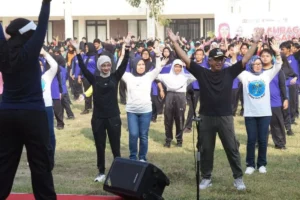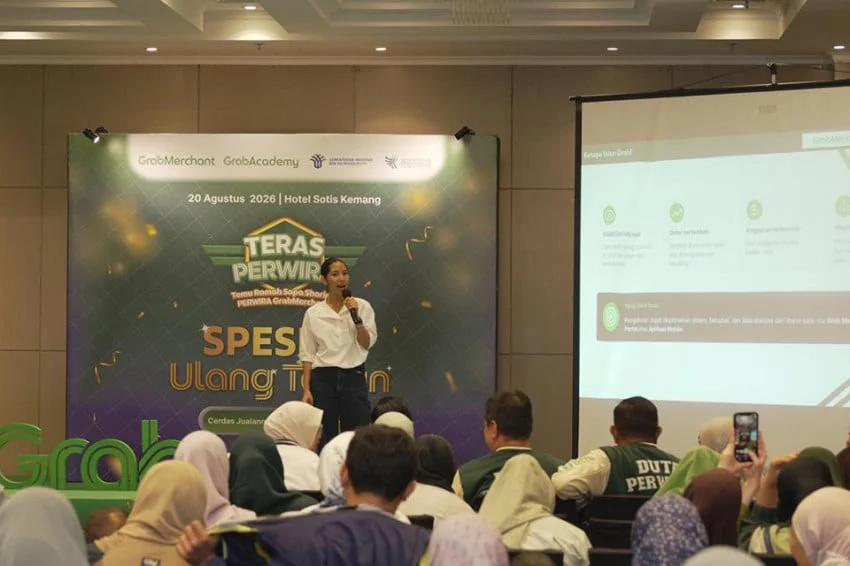
Grab, in strategic partnership with OVO Finansial, has officially concluded the 2026 edition of Teras Perwira (Temu Ramah Sapa dan Sharing Perkumpulan Wirausaha), a comprehensive capacity-building initiative designed to elevate the competitiveness of Indonesian micro, small, and medium enterprises (MSMEs). The program, which marked its fifth consecutive year, spanned ten major cities across the archipelago, serving as a pivotal platform for digital transformation and financial literacy among the GrabMerchant partner ecosystem.
Running from mid-August through early September 2026, the initiative was strategically timed to coincide with Indonesia’s National MSME Day, celebrated annually on August 12, and the broader Financial Literacy Month spearheaded by the Financial Services Authority (OJK). By reaching 1,400 selected merchants, the 2026 iteration of Teras Perwira represents a significant scaling of efforts to bridge the gap between traditional business practices and the demands of the modern digital economy.
A Strategic Roadmap for Economic Resilience
The theme for this year’s program, "Cerdas Jualannya, Tangguh Usahanya" (Smart Selling, Resilient Business), underscores the dual focus of the curriculum. In an era defined by rapid technological shifts and changing consumer behaviors, the program aimed to equip participants with a toolkit that balances immediate operational efficiency with long-term financial stability.
The program’s reach spanned a diverse geographical footprint, reflecting the varying needs of MSMEs across Indonesia. The tour commenced in Makassar on August 19, serving as the launchpad for a series of workshops that traveled through Medan, Bandung, Palembang, Semarang, Yogyakarta, Surabaya, Denpasar, and Balikpapan, before concluding with simultaneous sessions in Palembang and Semarang on September 7.
The Curriculum: Addressing the Core Pillars of Business Growth
The pedagogical approach of Teras Perwira 2026 was structured around three fundamental challenges identified by the organizers as critical to the survival and growth of local merchants: product discoverability, precise pricing, and market insight.
1. Digital Marketing and GrabAds Integration
A significant portion of the workshop was dedicated to GrabAds. As digital competition intensifies, the ability to be "discovered" by consumers on a crowded platform has become a primary driver of revenue. Merchants were trained in the nuances of digital advertising, learning how to deploy targeted campaigns that ensure their storefronts appear at the right time to the right customer base. This move toward data-driven marketing represents a shift from organic growth to intentional, algorithm-optimized reach.
2. Financial Precision with BisaMatika
Financial mismanagement is frequently cited as a leading cause of MSME failure in Indonesia. To combat this, the program introduced BisaMatika, a tool designed to assist merchants in calculating the Cost of Goods Sold (COGS). By integrating service fees and promotional costs into their pricing models, participants learned how to determine accurate online selling prices. This transition toward rigorous accounting is intended to prevent the common pitfall of "hidden losses," where high transaction volumes mask poor net profitability.
3. AI-Driven Business Consulting
Perhaps the most forward-looking aspect of the curriculum was the training on the GrabMerchant AI Assistant. This virtual consultant provides real-time analysis of store performance, offering data-backed suggestions for menu innovation and promotional strategies. For many participants, this served as their first encounter with generative AI as a practical, everyday business tool, effectively democratizing access to high-level consultancy that was previously reserved for larger corporate entities.
Financial Inclusion and the OJK Mandate
The alignment of Teras Perwira with the OJK’s Financial Literacy Month highlights the broader national agenda to formalize the financial habits of small business owners. Access to credit remains a significant barrier for many Indonesian MSMEs. Through the program, Grab and OVO Finansial provided intensive education on responsible financial management and the utilization of digital financial products.
Central to this was the discussion surrounding "GrabModal Mantul" by OVO Finansial. By providing access to working capital with simplified application processes and flexible, low-interest installment plans, the initiative aims to keep MSMEs afloat during seasonal fluctuations or unexpected economic downturns. Furthermore, the introduction of the "Jeda Bayar" (Payment Pause) feature offers a critical safety net, allowing merchants to defer payments during personal or family emergencies—a feature specifically designed to improve the resilience of micro-entrepreneurs who lack the buffers of institutional businesses.
Industry Context and Economic Implications
The 2026 MSME landscape in Indonesia is characterized by both immense opportunity and mounting pressure. While digital penetration has increased, the "digital divide" remains a concern for merchants operating outside major metropolitan hubs. By hosting sessions in ten cities—including secondary cities like Balikpapan and Palembang—the organizers demonstrated a commitment to inclusive growth.
Economic analysts observe that initiatives like Teras Perwira act as a stabilizer for the local economy. As MSMEs contribute to more than 60% of Indonesia’s GDP, their ability to navigate digital platforms is a matter of national economic security. The focus on AI integration and digital marketing is not merely about increasing Grab’s transaction volume; it is about standardizing the professional operations of the MSME sector, thereby increasing their "bankability" and long-term viability.
Participant Selection and Community Building
The success of the program relied heavily on the curation process. Participants were not merely recipients of information; they were selected based on their demonstrated motivation to learn and their potential to act as local ambassadors for digital transformation. This peer-to-peer learning model is a cornerstone of the Teras Perwira philosophy. By fostering a community where merchants share their successes and failures, Grab and OVO Finansial have built an informal support network that extends beyond the classroom.
The feedback from these sessions suggests a growing appetite for sophisticated tools. Many merchants who previously viewed technology as a luxury are now identifying it as a necessity for survival. The transition from manual bookkeeping to AI-assisted management reflects a broader, positive shift in the mindset of the Indonesian small-business community.
Looking Ahead: The Future of MSME Support
As Teras Perwira concludes its 2026 circuit, the focus now shifts to the long-term impact of these interventions. While 1,400 merchants represents a substantial cohort, the challenge remains in scaling these insights to the millions of MSMEs operating nationwide.
Industry experts suggest that the future of such programs will likely lean toward hybrid learning—combining in-person mentorship with persistent digital modules. The effectiveness of the 2026 program lies in its ability to translate complex financial and technological concepts into actionable steps for the average merchant.
By providing the infrastructure for digital marketing, the analytical tools for pricing, and the safety nets for financial hardship, the collaboration between Grab and OVO Finansial serves as a template for private-sector engagement in national development. As the digital economy continues to mature, the resilience of these 1,400 businesses will serve as a bellwether for the broader MSME sector’s capacity to thrive in an increasingly automated and interconnected marketplace.
In summary, the 2026 Teras Perwira program has successfully moved beyond basic digital onboarding. It has entered a more sophisticated phase of business development, where the focus is on optimizing profitability, leveraging artificial intelligence, and ensuring financial health. As Indonesia continues its trajectory toward becoming one of the world’s leading digital economies, the empowerment of its grassroots entrepreneurs remains the most critical factor in ensuring that growth is both equitable and sustainable.