Every year on September 9th, Indonesia observes National Sports Day, widely known as Hari Olahraga Nasional (Haornas). This significant annual commemoration serves as both a retrospective journey into the nation’s athletic roots and a forward-looking catalyst for public health, community cohesion, and economic vitality. Far from being a mere ceremonial fixture on the national calendar, Haornas encapsulates the indomitable spirit of a newly independent nation that utilized sports as an instrument of diplomacy, national identity, and resilience. As the country marks the 43rd anniversary of Haornas in 2026, the occasion prompts a comprehensive examination of how far Indonesian sports have evolved—from modest, post-independence domestic competitions to a multi-billion-dollar ecosystem encompassing grassroots physical fitness, elite international achievements, and burgeoning sectors like sport tourism.
The Genesis of National Sports Day: The 1948 Solo PON
The historical roots of National Sports Day are inextricably linked to the birth of the National Games, or Pekan Olahraga Nasional (PON), which held its inaugural edition from September 9 to September 12, 1948, in Solo (Surakarta), Central Java. To fully comprehend the gravity of this event, one must contextualize the geopolitical and social climate of Indonesia in 1948. Having proclaimed its independence on August 17, 1945, the young republic was still locked in a fierce diplomatic and physical struggle to secure international recognition and sovereignty against Dutch colonial forces attempting to reclaim the archipelago.
During this turbulent period, Indonesian athletic pioneers harbored ambitions to project the nation onto the global stage by participating in the XIV Olympic Games, scheduled for London in 1948. However, the international community, largely influenced by colonial dynamics, did not yet formally recognize Indonesia’s administrative sovereignty. Consequently, the International Olympic Committee (IOC) and the organizers of the London Olympics stipulated that Indonesian athletes could only participate under a Dutch colonial flag or face insurmountable bureaucratic barriers that denied their independent national status.
Displaying remarkable resolve, Indonesian sports leaders, youth organizations, and government visionaries rejected these conditional terms. Led by figures such as Sri Sultan Hamengku Buwono IX—then serving as the head of the Indonesian Olympic Committee—and foundational sports administrators, the nation pivoted inward to demonstrate its organizational capacity, sovereignty, and physical prowess. The solution was the creation of PON I.
The staging of the first PON in Solo was nothing short of miraculous given the severe logistical constraints, economic blockades, and infrastructural limitations of the era. Athletes from various regions across Java and beyond converged on Solo to compete in track and field, football, swimming, and other disciplines. The opening day of this historic event—September 9, 1948—instantly transformed into a powerful symbol of national unity. It proved to the world and to the domestic populace that Indonesia could independently organize a massive, multi-sport national championship. Decades later, this foundational date was enshrined as the official birthday of Indonesian sportsmanship.
Formalization and Institutionalization in 1983
While September 9 marked the historical birth of competitive multi-sport events in Indonesia, the formal designation of Hari Olahraga Nasional as a recognized national observance did not occur until nearly four decades later. On September 9, 1983, then-President Soeharto officially proclaimed Haornas during a ceremony to inaugurate the comprehensive restoration and modernization of the historic Sriwedari Stadium in Surakarta—the very city that hosted the inaugural PON.
The 1983 proclamation was strategically designed to revitalize the national sports movement, encourage grassroots physical education, and foster a culture of wellness among the general populace. Recognizing that sustainable elite athletic achievement must be anchored in a healthy, active society, the government sought to institutionalize sports as an essential pillar of national development.
This presidential proclamation was subsequently reinforced by formal legal architecture through Presidential Decree (Keputusan Presiden or Keppres) Number 67 of 1985 concerning National Sports Day. This decree officially codified September 9 as Haornas, mandating nationwide observances, athletic competitions, and promotional campaigns aimed at enhancing sports training, infrastructure development, and public participation across all provinces.
Evolution of Haornas: Beyond Medals to Public Health and Economic Growth
In contemporary times, the Ministry of Youth and Sports (Kemenpora) has continually redefined the scope and objectives of Haornas. While the pursuit of international medals at the Olympic Games, Asian Games, and SEA Games remains a high-visibility priority, modern sports policy places an equally heavy emphasis on "sport development" and "sport for all."
According to contemporary policy guidelines issued by Kemenpora, Haornas serves as a multi-dimensional platform. The modern ethos of the commemoration emphasizes that sports are not merely about elite victories or podium finishes; rather, physical activity is a vital instrument for character building, discipline cultivation, mental well-being, and social integration. In an era marked by sedentary lifestyles and non-communicable diseases, public health campaigns tied to Haornas actively urge citizens of all ages to integrate routine physical activity into their daily routines.
Furthermore, the economic dimension of sports has gained unprecedented prominence in recent years. Leadership within Kemenpora has frequently underscored that a thriving sports ecosystem generates massive secondary economic benefits. The intersection of sports, health, and commerce has unlocked lucrative streams in sports apparel manufacturing, fitness center management, sports science, and large-scale event hosting.
A prime example of this economic integration is the burgeoning sector of sport tourism. By strategically pairing major athletic competitions with regional tourism promotion, Indonesia has transformed sporting events into powerful engines for local economic growth. Initiatives such as awarding upcoming multi-sport events to regions like Sumba Timur (East Sumba) for the 2028 PON, or organizing specialized championships like the upcoming National Beach Games (PON Pantai) in Ancol, demonstrate how sports can stimulate hospitality, transportation, culinary, and artisanal micro-enterprises in host regions.
Addressing Infrastructure Gaps and Future Challenges
Despite the rich history and positive economic trajectories, Indonesia’s sports landscape continues to confront significant structural challenges. Stakeholders across the athletic community frequently point to historical underfunding, disparities in regional training facilities, and the urgent need for world-class sports science integration.
To bridge these gaps, federal authorities have advocated for aggressive budgetary expansions. Notably, Kemenpora has highlighted the necessity of substantial financial investments—including budget proposals scaling toward Rp1.5 trillion—dedicated explicitly to constructing modern academies, regional training centers, and sports science hubs. These investments are deemed critical if Indonesia aims to consistently produce world-class athletes capable of dominating regional arenas and claiming gold medals on the global Olympic stage.
The modernization of training regimens reflects a broader professionalization of Indonesian sports administration. Rather than relying solely on raw talent, contemporary athletic programs increasingly incorporate biomechanics, advanced nutrition, psychological conditioning, and data analytics. This systematic approach ensures that grassroots participation fostered during Haornas can successfully funnel talented individuals into highly competitive elite pathways.
Observing Haornas in the Modern Era: The 43rd Commemoration in 2026
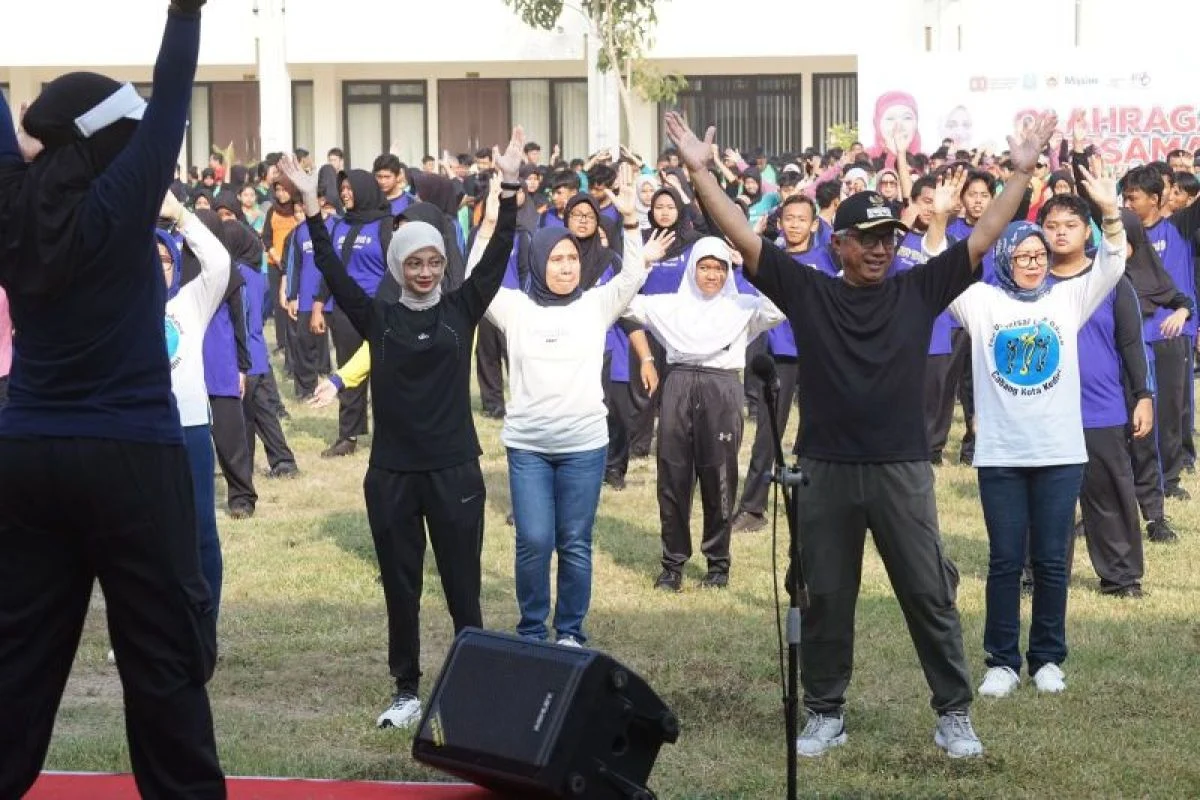
As Indonesia marks the 43rd anniversary of Haornas on Wednesday, September 9, 2026, the nationwide commemoration takes on a renewed sense of purpose. Across the archipelago, government offices, educational institutions, community groups, and private organizations observe the day through a diverse array of activities. These include community aerobic sessions, fun runs, inter-village sports tournaments, award ceremonies for veteran athletes, and educational campaigns aimed at introducing children to the fundamentals of physical fitness.
For the average citizen, Haornas 2026 serves as an annual prompt to evaluate personal health habits, support national athletes competing on international circuits, and foster an environment where family and community members embrace active lifestyles.
Conclusion: A Continuous Journey of National Resilience
From the makeshift tracks and modest fields of Solo in September 1948 to state-of-the-art sports science academies and billion-rupiah sport tourism ventures of the modern era, the trajectory of Indonesian sports mirrors the journey of the nation itself: resilient, adaptive, and relentlessly ambitious.
Hari Olahraga Nasional remains much more than an anniversary of a historical document or a single athletic tournament. It is a living testament to the power of human movement and collective will. By honoring the pioneers who insisted on running their own games in the midst of a war for independence, modern Indonesians continue to draw inspiration, reinforcing the foundational truth that a healthy, active, and united nation is the ultimate victory of the sporting spirit.