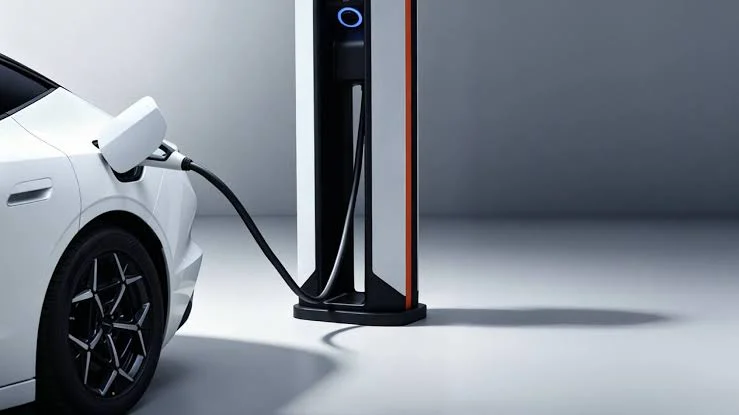
In a move that signals a paradigm shift in the global electric vehicle (EV) infrastructure landscape, Geely Auto has officially unveiled its proprietary "Geely Smart Charge" technology, boasting a staggering peak power capacity of 2,250 kW (2.25 MW). This announcement, which positions the Chinese automaker at the forefront of ultra-fast charging development, comes as a direct challenge to industry leaders like BYD and XPeng, who have dominated the conversation regarding rapid energy replenishment for passenger vehicles. The technological breakthrough, unveiled in Beijing, centers on the integration of artificial intelligence to manage energy distribution, thermal stability, and charging protocols, effectively pushing the boundaries of what was previously considered physically feasible for a single-connector charging system.
The Technical Foundation of the 2,250 kW Breakthrough
At the core of the Geely Smart Charge ecosystem lies "Xingrui PowerMind," a sophisticated AI-driven energy management model. Unlike conventional charging systems that rely on static or pre-programmed charging curves, the Xingrui PowerMind utilizes predictive thermal algorithms. This system is capable of anticipating battery temperature fluctuations with a 30-second lead time, allowing the charger to modulate current delivery dynamically.
The technology is defined by three primary functional pillars:
- Extreme Charge: Designed for maximum throughput, this mode utilizes the full capacity of the 2.25 MW infrastructure, enabling rapid electron transfer that mimics the speed of conventional refueling.
- Smart Charge: This mode prioritizes battery longevity and grid efficiency by optimizing the power delivery based on the specific chemistry and state-of-health (SoH) of the vehicle’s battery pack.
- Auto Charge: Focused on user experience, this protocol facilitates seamless handshaking between the vehicle and the charging station, automating authentication and payment processes to reduce idle time.
By maintaining a sophisticated feedback loop between the charger and the vehicle’s Battery Management System (BMS), Geely claims it can keep the average battery temperature below 55 degrees Celsius, with peak temperatures strictly controlled under 65 degrees Celsius, even during the most aggressive charging phases.
Chronology of Competitive Charging Development
The race toward "megawatt-scale" charging has accelerated significantly over the past 24 months. To understand the significance of Geely’s announcement, it is essential to view it within the broader timeline of Chinese EV infrastructure development:
- 2022–2023: The industry focused on 480 kW "supercharging" stations. Brands like XPeng and NIO began deploying liquid-cooled cables to handle high current, setting the standard for the 800V architecture era.
- Early 2024: BYD and other major manufacturers began experimenting with dual-gun charging solutions to achieve higher throughput, effectively splitting the load to reach 600 kW to 800 kW peaks.
- September 2026: Geely sets a new industry benchmark by demonstrating a single-connector output of 2,250 kW. This marks a departure from the multi-cable approach, simplifying infrastructure requirements for public charging stations.
This timeline underscores how quickly the domestic Chinese market has moved from standard Level 3 charging (typically 50–150 kW) to ultra-fast systems that prioritize minimal downtime for consumers.
Empirical Data and Performance Validation
The claims made by Geely were supported by data from the China Automotive Technology and Research Centre (CATARC). During rigorous stress testing, a Lynk & Co 10—a flagship model within the Geely group—was subjected to the new charging protocol. The vehicle recorded a sustained peak charging power of 1,093 kW.
Perhaps more impressive than the peak power is the thermal management efficiency demonstrated during the test. When charging the battery from 10 percent to 97 percent capacity, the system maintained a temperature threshold below 55 degrees Celsius for 57 percent of the total duration. This is a critical data point, as extreme heat is the primary driver of lithium-ion battery degradation. By keeping the thermal footprint low, Geely suggests that their 2.25 MW technology does not necessarily compromise the long-term cycle life of the battery, a common concern among critics of ultra-fast charging.
Industry Reactions and Market Implications
While Geely has not provided a specific rollout date for the commercial deployment of 2,250 kW public stations, industry analysts suggest the move is a strategic offensive against BYD’s "blade battery" ecosystem. BYD has historically focused on vertical integration, controlling every aspect of the battery and vehicle supply chain. By introducing a charging standard that is exponentially faster than the current market average, Geely is forcing competitors to reconsider their charging infrastructure roadmaps.
Independent observers have noted that while the hardware capability is 2,250 kW, the real-world utility will depend on the grid’s ability to handle such high-voltage surges. "The hurdle is no longer the connector or the battery, but the distribution grid," says a lead analyst at a Shanghai-based automotive consultancy. "If Geely can integrate this with large-scale battery energy storage systems (BESS) at their charging sites, they solve the peak-load issue, making this a viable commercial product."
Addressing Thermal Management Challenges
The physics of transferring 2.25 MW of power into a passenger vehicle presents significant challenges, primarily related to resistive heating. The cables themselves, even with liquid cooling, must be incredibly robust to prevent thermal runaway. Geely’s predictive thermal algorithm is the "secret sauce" here. By anticipating temperature spikes before they occur, the system can throttle the current by milliseconds, effectively "smoothing out" the power delivery curve. This proactive approach to thermal management is what allows the system to sustain such high power levels without triggering emergency safety shutdowns.
Broader Impact: The End of "Range Anxiety"?
The implications for the broader EV market are profound. For years, the primary barrier to mass adoption has been "range anxiety" and the time required for charging. If a consumer can recover 80 percent of their battery capacity in the time it takes to grab a cup of coffee, the functional gap between internal combustion engine (ICE) vehicles and EVs effectively vanishes.
Geely’s advancement also places pressure on international standards bodies. As China continues to lead in high-power charging, the European and North American markets—currently struggling to standardize the Combined Charging System (CCS) or North American Charging Standard (NACS)—may find themselves trailing in infrastructure capability. This could lead to a divergence in global charging protocols, where Chinese manufacturers may export their own high-power standards to emerging markets, further cementing their dominance in the EV supply chain.
Future Outlook and Challenges Ahead
As Geely prepares to integrate this technology into its future lineup, including the high-end Lynk & Co series and potentially their Zeekr brand, the focus will shift from laboratory tests to real-world reliability. The company must address the cost of deploying such infrastructure. 2,250 kW chargers require substantial capital investment in transformer upgrades and power electronics.
Moreover, there is the question of battery chemistry. While the Xingrui PowerMind system manages heat effectively, the internal chemical stresses of taking a charge at 1,000+ kW are immense. Geely will likely need to pair this charging technology with its next-generation solid-state or semi-solid-state battery developments to ensure that the hardware longevity matches the speed of the recharge.
In conclusion, Geely’s announcement of a 2,250 kW charging capacity is a watershed moment for the automotive industry. It moves the conversation beyond mere vehicle performance—range and horsepower—and shifts the competitive focus to the "energy ecosystem." As the company continues to refine its AI-managed charging protocols, the prospect of a fully charged vehicle in minutes is rapidly transitioning from a theoretical aspiration to a tangible consumer reality. Whether this forces a collaborative industry-wide shift toward a new global charging standard or prompts a fractured, proprietary race, remains to be seen. However, one thing is certain: the bar for EV charging performance has been raised significantly, and the rest of the industry is now playing catch-up.