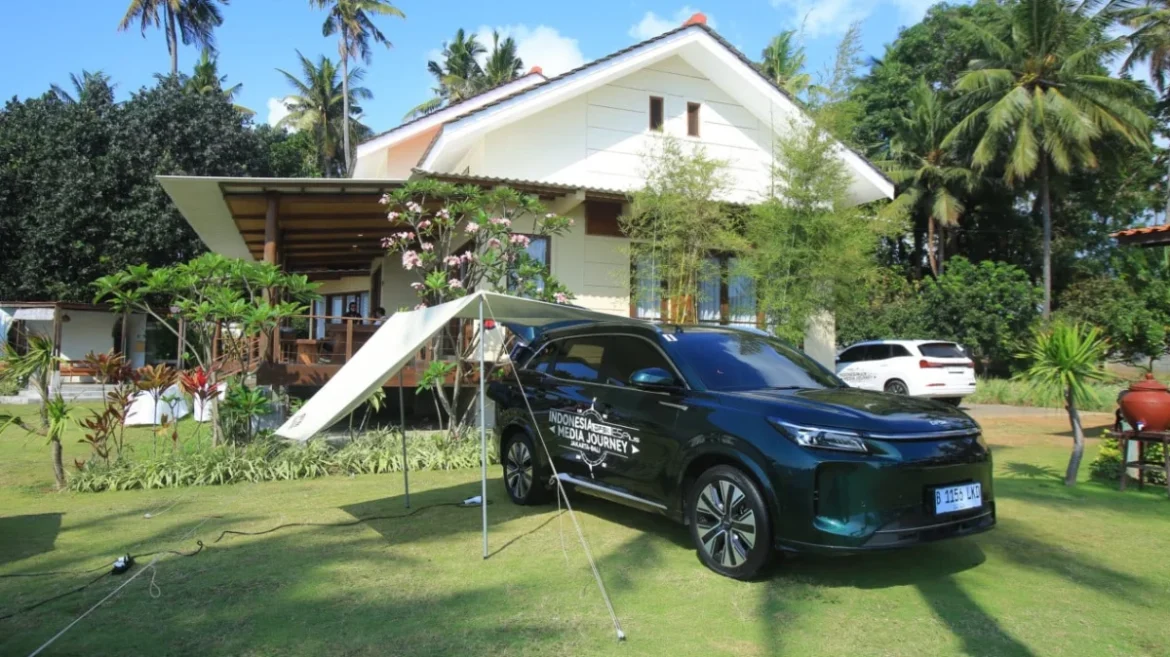
The Indonesian automotive landscape is undergoing a profound transformation as electrification shifts from a futuristic concept to a practical, everyday reality. In this dynamic environment, PT Sokonindo Automobile, the sole distributor of DFSK and Seres vehicles in Indonesia, has initiated a rigorous and ambitious testing ground for its latest offering. The DFSK E5 Plus, a sophisticated plug-in hybrid electric vehicle (PHEV) proudly assembled at the company’s manufacturing facility in Cikande, Banten, has officially hit the open road. Embarking on the E5 Plus Indonesia Media Journey, a convoy of these premium urban SUVs is currently charting a multi-day course from the bustling capital of Jakarta all the way to the scenic island of Bali.
This extensive cross-island expedition is designed to do far more than merely transport vehicles and passengers across provinces. It serves as a comprehensive, real-world stress test for the E5 Plus, evaluating its dual-energy powertrain, fuel efficiency, ride comfort, and advanced features across a diverse spectrum of Indonesian geography. From stop-and-go urban gridlock in Jakarta and high-speed toll road cruising to winding provincial routes and challenging mountain passes with steep inclines and sharp descents, the journey is meticulously engineered to push the vehicle through conditions that everyday Indonesian motorists encounter. Furthermore, the expedition highlights a particularly versatile technological asset embedded within the vehicle: the Vehicle-to-Load (V2L) system, which transforms the SUV’s high-capacity battery pack into a mobile power generator capable of sustaining external electronic devices far from the traditional electrical grid.
The Genesis of the Journey: Moving Beyond the Showroom Floor
The journey from Jakarta to Bali represents a critical milestone in the commercial lifecycle of the DFSK E5 Plus. Following its initial public introduction at the prestigious Gaikindo Indonesia International Auto Show (GIIAS) earlier in 2026, followed by a series of regional rollouts aimed at acquainting local markets with the brand’s latest flagship, PT Sokonindo Automobile recognized the necessity of bridging the gap between static showroom presentations and dynamic, lived driving experiences.
Automotive marketing and engineering strategies often rely on specification sheets, press releases, and controlled track demonstrations to convey a vehicle’s capabilities. However, the management team at DFSK understood that building deep consumer trust in advanced electrified powertrains requires tangible, unfiltered proof. By inviting select automotive journalists, media representatives, and prominent key opinion leaders (KOLs) to take the wheel themselves, the manufacturer has chosen an open-book approach. Participants are tasked with driving the vehicles through changing weather, varying traffic densities, and contrasting road surfaces, ensuring that every claim made regarding performance, efficiency, and comfort is rigorously vetted under authentic driving conditions.
Franz Wang, Chief Operating Officer (COO) of PT Sokonindo Automobile, underscored the philosophy behind the media journey during the official send-off event in Jakarta on Saturday, September 26, 2026.
"We do not want our colleagues in the media and our key opinion leaders to only know the E5 Plus through formal presentations, static specifications, or read-only press releases," Wang stated. "Through this dedicated Media Journey, our objective is to provide a direct, immersive experience of how the E5 Plus actually operates, allowing everyone involved to feel and evaluate firsthand how the vehicle delivers a superior driving experience in real-world driving conditions."
Decoding the Dual-Energy Philosophy: Electric for Daily, Hybrid for Journey
At the heart of the DFSK E5 Plus appeal is its positioning as a Dual-Energy Premium Urban SUV. The automotive sector has long debated the ideal transitional powertrain for emerging markets like Indonesia, where charging infrastructure is expanding rapidly in major metropolitan areas but remains sparse in remote rural regions and inter-city transit corridors. While fully battery-electric vehicles (BEVs) offer zero tailpipe emissions, range anxiety remains a psychological and logistical hurdle for drivers planning long-distance interstate travel.
To address this challenge, DFSK engineered the E5 Plus around a flexible plug-in hybrid architecture that merges the immediate torque and efficiency of electric propulsion with the long-range convenience and rapid refueling capability of a traditional internal combustion engine. This dual nature is neatly summarized by the company’s guiding philosophy for the model: "Electric for Daily, Hybrid for Journey."
For daily urban commuting, the vehicle operates primarily on its electric powertrain. Drivers can navigate congested city streets relying entirely on battery power, effectively eliminating fuel consumption and reducing daily operational costs for home-to-office commutes and local errands. The electric motor delivers smooth, silent, and responsive acceleration, perfectly suited for stop-and-go traffic conditions typical of cities like Jakarta, Surabaya, or Denpasar.
However, when weekend getaways or cross-province business trips beckon—such as the grueling hundreds of kilometers stretching from West Java through Central Java, East Java, and across the Bali Strait—the internal combustion engine seamlessly integrates into the propulsion cycle. Rather than forcing the driver to hunt for public charging stations along remote highways, the system intelligently manages power delivery, utilizing the gasoline engine to sustain the vehicle’s momentum and charge the battery when necessary. This seamless synergy eliminates range anxiety entirely, offering motorists the best of both worlds without compromise.
Unlocking Energy Independence: The Power of Vehicle-to-Load (V2L) Technology
One of the most innovative and heavily tested features during the Jakarta-Bali expedition is the Vehicle-to-Load (V2L) technology integrated into the Cikande-assembled SUV. Traditionally, automotive batteries are viewed strictly as captive energy sources dedicated exclusively to powering the vehicle’s onboard electronics, climate control systems, and electric motors. V2L technology fundamentally alters this paradigm by turning the car into a mobile power bank.
The V2L system enables the high-voltage energy stored within the vehicle’s traction battery to be safely inverted and channeled outward through specialized power outlets. This allows occupants and outdoor enthusiasts to plug standard household electrical appliances directly into the vehicle. During the media journey, participants have had opportunities to put this feature to practical use during rest stops and scenic stopovers, powering everything from high-output LED lighting rigs and laptop computers to professional photography equipment, portable refrigerators, and electric cooking stoves.
The implications of V2L extend far beyond recreational convenience. In a country prone to natural phenomena and occasional power grid instability, having a high-capacity mobile power source can prove invaluable during emergency response scenarios, outdoor commercial ventures, or remote field operations. By establishing that a locally manufactured SUV can double as a reliable portable generator, DFSK is introducing a practical utility feature that resonates strongly with modern consumers who value versatility and outdoor lifestyles. Naturally, the system is designed with built-in safety parameters, ensuring that power output is regulated and that the vehicle retains sufficient battery reserves to complete its journey without compromising mobility.
Comfort and Cabin Sophistication: Designed for Long-Haul Endurance
While powertrain innovation and power-export capabilities form the technological backbone of the E5 Plus, a cross-country endurance journey serves as an uncompromising test of interior comfort, ergonomics, and cabin technology. Covering vast distances across multiple days places significant physical demands on both drivers and passengers. Recognizing this, DFSK has equipped the E5 Plus with an array of premium amenities engineered to mitigate travel fatigue and elevate the in-cabin experience to luxury-tier standards.
During the second leg of the journey, attention shifts naturally from mechanical performance to interior refinement. The vehicle features an expansive 15.6-inch rear entertainment display, designed to keep passengers engaged and entertained during long stretches of highway driving. This is complemented by an advanced climate and air quality control system featuring a built-in PM2.5 air purification sensor, ensuring that cabin occupants breathe clean, filtered air regardless of external pollution levels or heavy truck traffic encountered along major logistical routes.
Furthermore, long-distance driving comfort is heavily dependent on seating ergonomics. The E5 Plus is equipped with ventilated seats across both the first and second rows. In tropical climates such as Indonesia’s, seat ventilation plays a crucial role in preventing thermal discomfort during extended hours behind the wheel, maintaining a cool and refreshing seating surface for the driver and front-row passenger, as well as those seated in the rear. Combined with sound-insulation materials designed to minimize road and wind noise at highway speeds, the cabin of the E5 Plus functions as a serene, mobile sanctuary amidst the sensory overload of inter-city transit.
Strategic Significance of Local Production in Cikande
Beyond engineering specifications and experiential marketing, the E5 Plus media journey carries profound economic and industrial significance. Every unit participating in the convoy has rolled off the assembly lines of PT Sokonindo Automobile’s advanced manufacturing facility located in Cikande, Serang Regency, Banten.
The decision to manufacture the E5 Plus domestically is a cornerstone of DFSK’s long-term strategy in the Indonesian market. By investing heavily in local manufacturing infrastructure, supply chain integration, and workforce training, the company demonstrates its commitment to supporting the Indonesian government’s ambitious roadmap toward vehicle electrification and industrial self-reliance. Local assembly not only ensures competitive pricing structures that make advanced plug-in hybrid technology more accessible to domestic consumers, but it also guarantees a streamlined supply chain for spare parts, maintenance support, and after-sales service.
The Cikande plant adheres to stringent international manufacturing and quality control standards, ensuring that vehicles built locally match or exceed the build quality of their global counterparts. Putting these domestically produced SUVs through the rigorous topographical and climatic challenges of an overland journey spanning thousands of kilometers serves as a public validation of Cikande’s manufacturing excellence. It signals to prospective buyers that vehicles built in Banten are thoroughly engineered to withstand the demanding realities of Indonesian infrastructure.
The Broader Automotive Context: The Rise of PHEVs in Indonesia
The timing of the DFSK E5 Plus expedition coincides with a fascinating evolutionary phase in Indonesia’s automotive sector. While public discourse has frequently centered on a binary choice between conventional internal combustion engine (ICE) vehicles and pure battery electric vehicles (BEVs), market analysts note a growing appreciation for transitional technologies like plug-in hybrids.
PHEVs offer a pragmatic bridge for motorists who wish to significantly reduce their carbon footprint and embrace electric mobility without being tethered to the current limitations of public charging infrastructure outside major urban centers. By providing a vehicle that can handle daily emissions-free commuting while offering unlimited long-distance touring capabilities via a gasoline backup, manufacturers are effectively lowering the psychological and practical barriers to entry for green technology.
As the E5 Plus convoy presses onward toward its final destination in Bali, the data collected, media reviews generated, and consumer reactions observed will undoubtedly shape the trajectory of DFSK’s market strategy in the months to come. By boldly opening up its vehicles to transparent, long-haul scrutiny, PT Sokonindo Automobile has not only showcased the mechanical and technological merits of the E5 Plus but has also reinforced a culture of accountability and consumer-centric innovation within Indonesia’s rapidly evolving automotive industry.