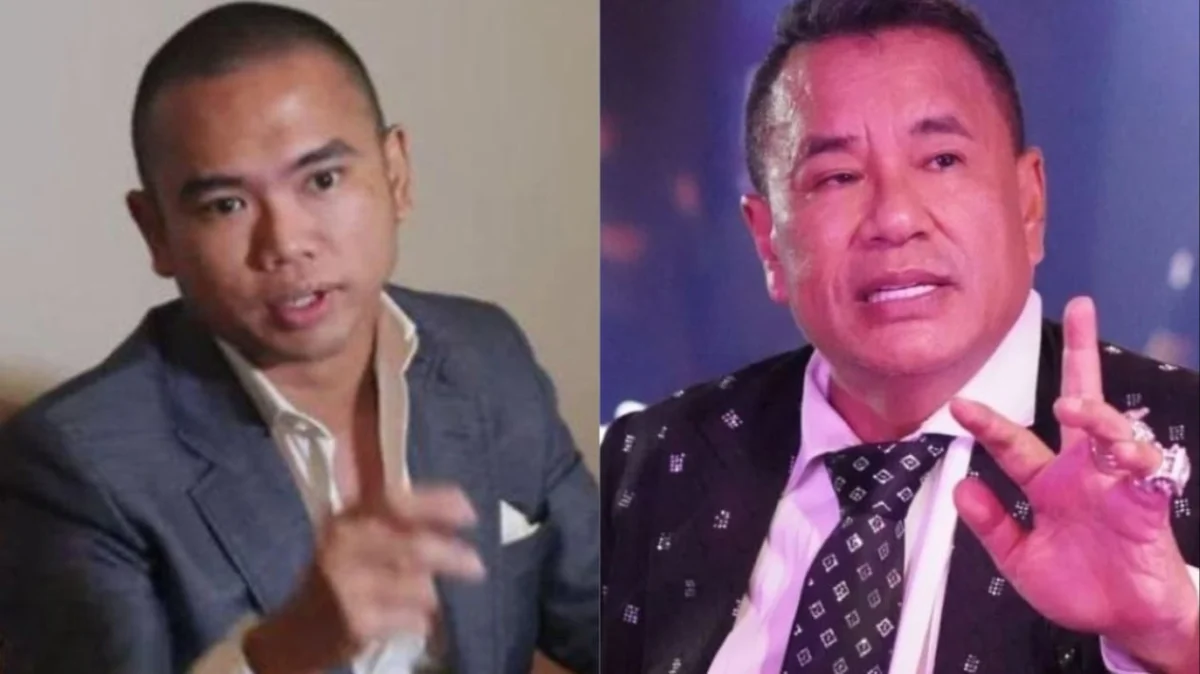
The professional and personal relationship between Indonesia’s most prominent attorney, Hotman Paris Hutapea, and his eldest son, Frank Hutapea, has once again become a focal point of national discourse following a series of public exchanges that have sparked widespread speculation. On Tuesday, July 21, 2026, the narrative surrounding their reported friction took a sharp turn as allegations surfaced suggesting the conflict was not a genuine family dispute but rather a calculated maneuver designed to shield high-profile legal matters from public scrutiny. Specifically, critics and social media observers have posited that the viral nature of the father-son disagreement serves as a strategic "smoke screen" to divert attention from the ongoing legal proceedings involving Febrie Adriansyah, the former Junior Attorney General for Special Crimes (Jampidsus).
Frank Hutapea, a corporate lawyer who has long sought to distinguish his professional identity from his father’s flamboyant media persona, responded with uncharacteristic bluntness to these accusations. The controversy reached a boiling point after a digital content creator, identified as @ariholau, published an analysis suggesting that the friction between the two Hutapeas was a manufactured "drama" orchestrated by Hotman Paris. Frank’s rebuttal, delivered via social media, emphasized his independence from the entertainment-driven side of the legal profession and rejected the notion that his personal life is being leveraged for public relations optics.
The Genesis of the Allegations
The speculation regarding a "staged" conflict began to gain momentum in mid-July 2026, when various social media platforms were flooded with reports of a rift between Hotman and Frank. In Indonesia, where Hotman Paris is as much a celebrity as he is a legal practitioner, his family dynamics are frequently subjected to intense public interest. However, the timing of this particular dispute coincided with critical developments in the case of Febrie Adriansyah, for whom Hotman Paris has been providing legal counsel.
Content creator @ariholau articulated a theory that resonated with a skeptical segment of the public. He argued that the "Hutapea vs. Hutapea" narrative was a classic example of "agenda-setting" and "issue diversion." According to this theory, by saturating the news cycle with domestic tension, the more complex and potentially damaging details of the Jampidsus-related case would be pushed to the periphery of public consciousness. The creator suggested that Hotman Paris, a master of media manipulation, was utilizing his son as an unwitting or willing participant in a broader strategy to control the narrative.
Frank Hutapea’s Forceful Rebuttal
Responding directly to the "drama" allegations, Frank Hutapea clarified his stance in a series of pointed comments. He asserted that his professional livelihood is entirely decoupled from the public eye, unlike many figures in the "viral economy." Frank stated that as a business and corporate lawyer, his "domain" is the world of high-stakes commerce and institutional law, not the court of public opinion or the world of social media influencers.
"I am a business lawyer; my domain is the business world, not the general public," Frank remarked, emphasizing that he does not rely on popular approval or "likes" to sustain his career. He further dismantled the idea that he was seeking fame through family turmoil, stating, "I don’t make a living from the people. I am not an artist who lives off endorsements, and I am not seeking popularity among the masses." His response was seen by many legal analysts as an attempt to protect his reputation as a serious practitioner whose clients include major corporations and international entities that value discretion over publicity.
The Shadow of the Febrie Adriansyah Case
To understand why the public is so quick to suspect a distraction, one must look at the gravity of the case involving Febrie Adriansyah. As a former Jampidsus, Adriansyah held one of the most powerful positions in the Indonesian legal system, overseeing the investigation and prosecution of "extraordinary crimes," including systemic corruption and major financial fraud.
The transition of a high-ranking official from the prosecutor’s office to a subject of legal inquiry—or a participant in a high-stakes legal battle—always carries significant political and social weight. Hotman Paris’s involvement as a legal representative adds a layer of theatricality that often accompanies his cases. Critics argue that when the "Bling-Bling Lawyer" takes on a case involving state apparatus figures, the legal battle is often fought on two fronts: the courtroom and the media.
The allegations against Adriansyah, which have been the subject of intense investigation throughout early 2026, involve complex layers of administrative law and criminal procedure. For the public, these details are often dry and difficult to follow. In contrast, a family feud between a famous father and his successful son is easily digestible, emotionally engaging, and highly shareable, making it the perfect vehicle for diverting attention.
Hotman Paris’s Dual-Front Strategy
Legal analysts have long observed that Hotman Paris Hutapea employs a distinct "Two-Arena" strategy when handling sensitive cases. This approach involves:
- The Legal Arena: This is the traditional battleground where Hotman and his team engage with evidence, statutes, and judicial procedures. In the context of the Febrie Adriansyah case, this involves navigating the intricacies of the Indonesian Criminal Procedure Code (KUHAP) and addressing specific allegations of misconduct or procedural errors.
- The Public Opinion Arena: Hotman is a pioneer in using social media to build a "protective shield" around his clients. By creating a massive digital presence, he can mobilize public sentiment, highlight perceived injustices, or, as critics allege, create enough "noise" to drown out negative facts.
The current theory suggests that the friction with Frank is a component of the "Public Opinion Arena." By making himself the center of a "human interest" story, Hotman effectively manages the "Top of Mind" awareness of his audience, ensuring that the first thing people think of when they hear his name is his family life rather than the legal specifics of his controversial clients.
Professional Ethos: Corporate Law vs. Litigation PR
The tension between Frank and Hotman also highlights a fundamental divide in the legal profession. Frank Hutapea has consistently positioned himself within the niche of corporate litigation and commercial arbitration. This field requires a high degree of confidentiality and a professional image that aligns with the expectations of institutional boards and international investors.
In contrast, Hotman Paris’s brand is built on visibility. His "Kopi Johny" sessions, where he provides free legal advice to the public, and his frequent television appearances have made him a household name. This visibility is a double-edged sword; while it grants him immense influence, it also makes him a target for claims of sensationalism. Frank’s insistence that he is "not an artist" is a clear attempt to distance himself from the "showbiz" elements of his father’s career, suggesting that the friction between them may stem from a genuine disagreement over professional philosophy rather than a scripted play.
Chronology of the Controversy
The timeline of these events suggests a rapid escalation of both the family dispute and the underlying legal case:
- May 2026: Investigations into the tenure of former Jampidsus Febrie Adriansyah intensify, with the Attorney General’s Office (AGO) reviewing several high-profile case filings.
- June 2026: Hotman Paris is officially confirmed as part of the legal team representing interests related to the Adriansyah inquiry.
- Early July 2026: Social media posts from both Hotman and Frank begin to hint at internal family disagreements regarding "lifestyle choices" and "professional directions."
- July 15-18, 2026: The friction goes viral after a series of cryptic Instagram stories and comments. Public interest in the Adriansyah case sees a measurable dip in social media engagement metrics during this period.
- July 20, 2026: Content creators like @ariholau begin publishing "deep dives" into the possibility of the feud being a strategic distraction.
- July 21, 2026: Frank Hutapea issues his "menohok" (stinging) response, denying any involvement in a "drama" and asserting his independence from the public-facing legal industry.
Implications for the Indonesian Legal Landscape
This episode underscores a growing trend in the Indonesian justice system: the "Social Media Trial." When high-profile figures are involved, the legal reality is often overshadowed by the digital narrative. For the Indonesian public, the challenge lies in discerning between genuine news and strategic communication.
Furthermore, the situation puts a spotlight on the ethics of legal representation. If a lawyer uses their personal life or family members to influence the public’s perception of a client’s case, it raises questions about professional boundaries. However, Frank Hutapea’s firm denial serves as a counter-narrative, suggesting that even within a family of lawyers, there are those who refuse to allow their personal identity to be subsumed by the demands of "viral" strategy.
As the legal proceedings for Febrie Adriansyah continue, the focus is likely to shift back to the courtroom. Whether the "Hutapea Drama" was a calculated move or a genuine family fallout, it has successfully demonstrated the power of personality-driven news in the digital age. For Frank Hutapea, the priority remains clear: maintaining a boundary between the corporate legal world he inhabits and the media circus that often surrounds his father. For the public, the lesson remains one of critical consumption—questioning the timing of viral events when they coincide with matters of significant national importance.