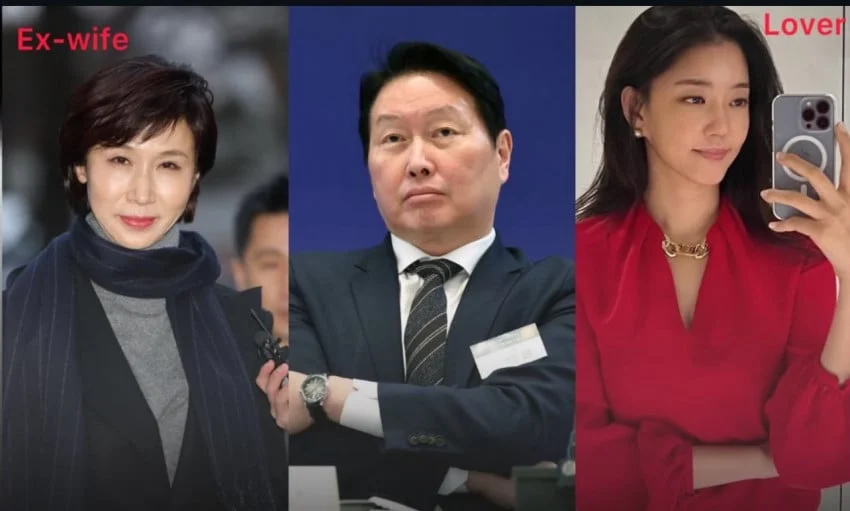
The high court’s ruling represents a slight downward adjustment from an earlier, even more massive valuation. In early 2024, a lower court had initially ordered Chairman Chey to pay 1.38 trillion won. However, following a rigorous review and appeals process, the figure was revised to the current 944 billion won. Despite the reduction, the amount remains unprecedented, underscoring the immense wealth concentrated within the SK Group leadership and the complex intersection of family ties, political history, and corporate expansion in South Korea.
The Magnitude of the Settlement
The financial scale of the settlement is nearly impossible to overstate. To put the 944 billion won figure into perspective, it represents a significant portion of the liquid assets available to one of the world’s most powerful business leaders. The case has captivated the public not only because of the wealth involved but because of the status of the individuals. Chey Tae-won leads SK Group, the second-largest conglomerate in South Korea by market capitalization, trailing only Samsung. His ex-wife, Roh Soh-yeong, is the daughter of the late Roh Tae-woo, a former general who served as the President of South Korea from 1988 to 1993.
The legal battle has focused heavily on how much of Chey’s wealth—much of which is tied up in SK Group shares—is considered "separate property" versus "marital property." Under South Korean law, assets acquired during a marriage are generally subject to division, but assets inherited or owned prior to the marriage are often exempt. The court’s decision to award such a high amount suggests that the judiciary recognized Roh’s indirect contributions to the company’s stability and growth over their three-decade-long marriage.
The History of a High-Profile Union
The union of Chey Tae-won and Roh Soh-yeong was once seen as the ultimate "power marriage," bridging the worlds of high-stakes commerce and top-level politics. The pair married in 1988, the same year Roh’s father was inaugurated as president. At the time, SK Group (then known as the Sunkyong Group) was a successful but mid-sized conglomerate primarily focused on textiles and oil refining.
Over the next thirty years, SK Group underwent a meteoric rise, diversifying into telecommunications, semiconductors, and green energy. A pivotal moment in this expansion was the acquisition of Korea Mobile Telecommunications Corp (now SK Telecom) in the 1990s, a move that critics and legal analysts have long debated. Roh’s legal team argued during the divorce proceedings that her father’s political influence and secret funds provided to the Chey family were instrumental in facilitating these acquisitions and shielding the group from various regulatory hurdles.
The Public Scandal and Legal Escalation
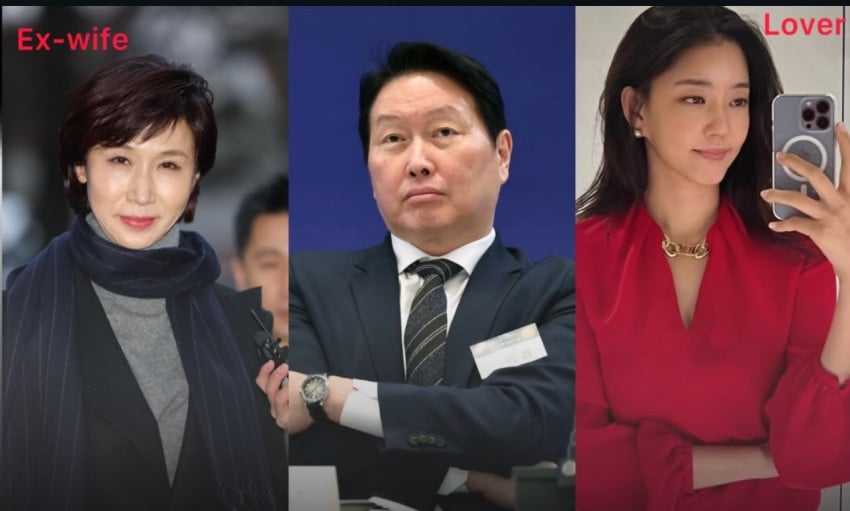
The demise of the marriage became a public scandal in 2015 when Chey Tae-won took the extraordinary step of publishing a letter in a major newspaper. In the letter, he admitted to having a child out of wedlock with another woman and expressed his intention to seek a divorce from Roh. He revealed that his relationship with Roh had been strained for many years and that he had found "emotional comfort" with a new partner, later identified as Kim Hee-young, the chairperson of the T&C Foundation.
Initially, Roh Soh-yeong resisted the divorce, citing a desire to keep the family together despite the public humiliation. However, in 2019, she changed her stance and filed a countersuit, demanding a significant portion of Chey’s shares in SK Inc., the holding company of the group. This shifted the case from a standard matrimonial dispute into a high-stakes corporate battle that threatened the management control of one of the world’s most vital technology suppliers.
The Legal Dispute Over Asset Division
The crux of the legal argument centered on the 17.6% stake Chey holds in SK Inc. Roh argued that the value of these shares grew substantially during their marriage due to the "slush funds" and political protection provided by her father. She initially demanded 50% of his stake. Chey’s legal team countered that the shares were "special property" inherited from his father, Chey Jong-hyun, and therefore should not be subject to division.
In the 2022 lower court ruling, the judge sided largely with Chey, awarding Roh only 66.5 billion won in cash and a small amount of alimony, ruling that the SK shares were indeed separate property. Roh appealed, and the high court’s subsequent 2024 ruling (and this latest revision) fundamentally disagreed with the lower court’s assessment. The high court acknowledged that Roh Tae-woo’s influence played a role in the "protective shield" that allowed SK Group to thrive, thereby making the wealth generated during that period subject to division.
Financial Implications for SK Group
The ruling has profound implications for the governance of SK Group. Because the majority of Chey’s wealth is tied up in shares of SK Inc., there are concerns that he may be forced to sell a portion of his holdings or take out massive loans to settle the 944 billion won payment. Such a move could potentially weaken his control over the conglomerate and leave the company vulnerable to hostile takeovers or activist investor pressure.
SK Group is a cornerstone of the South Korean economy. It manages a vast portfolio of companies, the most prominent of which is SK Hynix. As the world’s second-largest memory chip maker, SK Hynix is a critical player in the global semiconductor supply chain. Any instability at the top of the parent holding company could have ripple effects across the tech industry, particularly as SK Hynix is currently a primary supplier of High Bandwidth Memory (HBM) chips to Nvidia, the leader in the Artificial Intelligence (AI) chip market.
The Role of SK Hynix in the Global Market
The timing of this divorce settlement coincides with a period of unprecedented growth and strategic importance for SK Hynix. The company recently made headlines for its record-breaking performance and its pivotal role in the AI revolution. By providing the essential memory components required for AI processing, SK Hynix has seen its stock price soar and its market influence expand.
Industry analysts are closely watching whether Chairman Chey will be forced to dilute his stake in the holding company to pay Roh. If he loses a significant portion of his voting rights, it could lead to changes in the board of directors or shifts in the company’s long-term investment strategies. This is particularly sensitive given the intense competition with rivals like Samsung Electronics and Micron Technology.
The Legacy of Roh Tae-woo and Political Influence
The court’s recognition of the role played by former President Roh Tae-woo adds a layer of historical and political complexity to the case. For decades, the relationship between South Korea’s political elite and the "chaebol" families has been a subject of intense scrutiny and occasional prosecution. This ruling effectively codifies the idea that political connections during the military-backed and early democratic eras of South Korea had a direct, quantifiable impact on corporate wealth accumulation.
By acknowledging that Roh Soh-yeong’s lineage contributed to SK Group’s success, the court has opened a Pandora’s box regarding how other chaebol fortunes might be viewed in future legal disputes. It challenges the narrative of the "self-made" billionaire in the context of South Korea’s unique economic history.
Societal Impact and the Future of Chaebol Governance
Beyond the finances, the "divorce of the century" reflects changing social norms in South Korea. Traditionally, the legal system was conservative regarding asset division, often favoring the primary breadwinner (usually the husband in high-profile cases). This ruling signals a more progressive interpretation of marital partnership, recognizing that the spouse of a CEO provides a form of "internal support" and social capital that is essential to the leader’s professional success.
Furthermore, the case highlights the ongoing call for "chaebol reform." Many in South Korea are calling for greater transparency and more robust corporate governance to prevent personal family matters from impacting the stability of companies that are vital to the national interest. The fact that a divorce can potentially disrupt the leadership of a global semiconductor giant is seen by some as a systemic risk inherent in the chaebol structure.
Official Responses and Next Steps
Following the announcement of the revised settlement, Chairman Chey Tae-won’s legal team issued a statement expressing deep regret over the public concern caused by the proceedings. "Chairman Chey Tae-won is very sorry that the process has caused worry for many people," the statement read. The lawyers emphasized that they would review the court’s reasoning in detail before filing a specific response or further appeals.
Despite the "finality" of high court rulings, in the South Korean legal system, there are still avenues for the Supreme Court to review the case if there are questions regarding the application of the law. As it stands, the 944 billion won order is a mandate that Chey must prepare for. Roh Soh-yeong’s legal team, meanwhile, has largely viewed the ruling as a victory for the recognition of a spouse’s rights, though they have not ruled out further legal maneuvers to ensure the prompt payment of the assets.
As the legal dust begins to settle, the focus shifts from the courtroom to the boardroom. The world will be watching how Chey Tae-won navigates this personal financial crisis while maintaining his grip on a corporate empire that sits at the heart of the global technology race. The "divorce of the century" may have reached a financial conclusion, but its impact on the future of SK Group and the landscape of South Korean business is likely to be felt for decades to come.