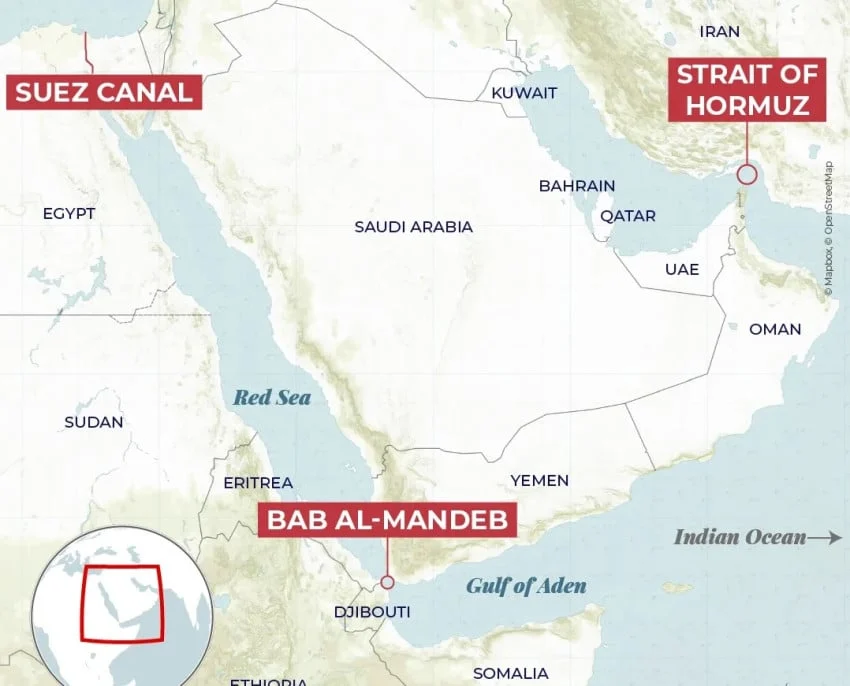
The geopolitical landscape of the Middle East has reached a critical inflection point as the United States military continued its sustained air campaign against Iranian targets for the 13th consecutive night. In the early hours of Friday, July 24, 2026, massive explosions were reported across several Iranian provinces, signaling a significant escalation in a conflict that has now effectively paralyzed two of the world’s most vital maritime chokepoints: the Strait of Hormuz and the Bab al-Mandeb. While the United States Central Command (CENTCOM) maintains that these strikes are "precision-targeted" to degrade Iran’s offensive capabilities, the ripple effects are being felt globally, with oil markets reacting to a near-total standstill of traffic through the Persian Gulf.
According to official statements from CENTCOM issued at 01:00 GMT on Friday, the latest wave of strikes targeted a sophisticated network of military assets. These included central command-and-control hubs, advanced drone manufacturing and storage facilities, telecommunications infrastructure used for military coordination, and coastal surveillance installations. The operation also specifically aimed at neutralizing Iran’s "maritime denial" capabilities—the array of fast-attack boats, anti-ship missiles, and naval mines that Tehran has long used as leverage to threaten international shipping.
Iranian state media, including the Islamic Republic of Iran Broadcasting (IRIB), confirmed that blasts rocked the cities of Khondab, Khorramabad, Konarak, and Jask. The geographical spread of these targets is significant; while Khondab is home to sensitive nuclear-related infrastructure, the coastal cities of Konarak and Jask serve as pivotal naval bases overlooking the Gulf of Oman. The targeting of Khorramabad suggests a focus on inland missile silos and logistical supply chains. Although Tehran has yet to release a full casualty count, local reports indicate that emergency services were deployed in force throughout the morning hours.
A Chronology of Escalation: 13 Days of Conflict
The current hostilities did not emerge in a vacuum. The 13-day streak of US kinetic operations represents the culmination of months of deteriorating relations and a series of "red line" crossings in the region.
- July 11, 2026: Following a series of drone strikes on US installations in Iraq and Syria attributed to Iranian-backed militias, Washington authorized "limited" retaliatory strikes on IRGC (Islamic Revolutionary Guard Corps) facilities.
- July 15, 2026: Iran responded by conducting "harassment maneuvers" against commercial vessels in the Strait of Hormuz, prompting the US to increase its carrier strike group presence in the Arabian Sea.
- July 18, 2026: A major cyberattack, which Tehran blamed on Western intelligence, temporarily crippled Iranian port operations. In retaliation, proxy forces in Yemen—the Houthi movement—announced an expanded maritime exclusion zone.
- July 20, 2026: The Houthis declared a formal naval blockade against any vessels originating from or bound for Saudi Arabia, citing the Kingdom’s perceived alignment with Western military objectives.
- July 23-24, 2026: The US launched its most intensive bombardment to date, shifting from tactical targets to strategic infrastructure, leading to the current state of regional high-alert.
The Strait of Hormuz: A Global Artery Under Cardiac Arrest
The most immediate and alarming consequence of the military escalation is the near-total cessation of commercial activity in the Strait of Hormuz. Ship tracking data analyzed on Thursday revealed a staggering statistic: only one oil tanker successfully transited the strait. This represents the lowest volume of traffic recorded since May 7, 2024, and marks a functional closure of the waterway for the global energy market.
Under normal circumstances, the Strait of Hormuz sees the passage of approximately 20 to 21 million barrels of oil per day—roughly one-fifth of global liquid petroleum consumption. The "one tanker" recorded on Thursday highlights the extreme risk aversion currently dominating the shipping industry. Insurance premiums for "war risk" in the Persian Gulf have reportedly surged by over 400% in the last 72 hours, making transit economically unviable for many independent operators.
Industry analysts at the London Stock Exchange Group (LSEG) noted that most major shipping conglomerates have instructed their fleets to "hover" in the Arabian Sea or the Indian Ocean, waiting for a de-escalation that currently seems nowhere in sight. The paralysis of the Hormuz transit route has already caused a 12% spike in Brent Crude prices within a 48-hour window, with traders bracing for a potential triple-digit price per barrel if the impasse continues into next week.
The Bab al-Mandeb Anomaly: China’s Strategic Immunity
While the Strait of Hormuz remains largely dormant, the situation at the Bab al-Mandeb—the gateway to the Red Sea—presents a more complex and paradoxical picture. Despite the Houthi movement’s declared blockade against Saudi-linked shipping, data from LSEG confirmed that two Chinese "super-tankers" (Very Large Crude Carriers or VLCCs) successfully exited the strait on Friday morning.
Intriguingly, these vessels were carrying crude oil sourced directly from Saudi Arabian terminals. The ability of Chinese-flagged vessels to bypass a blockade that is ostensibly aimed at Saudi interests suggests a high-level diplomatic "understanding" between Beijing and the Houthi leadership, and by extension, Tehran.
This development underscores China’s unique position in the current crisis. As a primary purchaser of both Iranian and Saudi oil, Beijing has maintained a posture of "principled neutrality," refusing to join US-led maritime security coalitions while leveraging its economic influence to ensure its own energy security. Analysts suggest that the Houthis are granting safe passage to Chinese vessels to avoid antagonizing the world’s second-largest economy, even when those vessels are carrying the very Saudi oil the Houthis claim to be blocking.
Official Responses and Diplomatic Stagnation
The international community remains deeply divided over the US military’s sustained campaign. In Washington, the White House issued a brief statement late Thursday night, emphasizing that "the United States does not seek war with Iran, but we will not hesitate to dismantle the infrastructure used to threaten our personnel and the freedom of global commerce." This sentiment was echoed by the Department of Defense, which characterized the strikes as "degradative and defensive."
In contrast, the Iranian Foreign Ministry condemned the attacks as "unprovoked acts of aggression" and a "gross violation of international law and national sovereignty." A spokesperson for the IRGC warned that "the finger of the Iranian people is on the trigger," suggesting that Tehran may be preparing a more comprehensive conventional response beyond the use of proxies.
Regional powers are also reacting with increasing alarm. Saudi Arabia, despite being the beneficiary of US protection against Houthi threats, has called for "maximum restraint" to prevent a total regional conflagration that could damage its "Vision 2030" economic diversification projects. Meanwhile, the European Union has urged for an immediate ceasefire and the opening of a diplomatic corridor, though EU officials privately acknowledge that the window for negotiation is rapidly closing.
Broader Implications: A New Era of Maritime Insecurity
The events of July 23-24, 2026, suggest a fundamental shift in the nature of Middle Eastern conflict. The "shadow war" between the US and Iran has moved into a phase of open, sustained kinetic engagement. The implications for the future are profound:
- Redefining Maritime Norms: The functional blockade of the Strait of Hormuz and the selective blockade of the Bab al-Mandeb indicate that global "chokepoints" are no longer governed by international maritime law but by the immediate tactical needs of regional actors. The "China exception" in the Red Sea suggests a fragmented global order where safety at sea depends on bilateral diplomatic clout rather than universal norms.
- Economic Volatility: The global economy, still recovering from the inflationary pressures of the early 2020s, faces a renewed threat. If the Strait of Hormuz remains closed for more than 14 days, economists predict a global recessionary "shockwave" that could impact everything from fuel prices in Europe to manufacturing costs in Asia.
- Technological Warfare: The US focus on "drone storage" and "communication networks" highlights the evolution of modern warfare. Iran’s reliance on low-cost, high-impact asymmetric technologies (like suicide drones and sea mines) has forced the US to utilize expensive, high-precision munitions, creating a "war of attrition" in terms of military spending.
- The Role of Proxies: The Houthi blockade on Saudi Arabia demonstrates the growing autonomy of proxy groups. While Tehran exerts significant influence, these groups now possess the capability to disrupt global trade independently, complicating the diplomatic efforts to hold "state actors" accountable.
As the sun rises over the Persian Gulf on Friday, the smoke from the overnight strikes continues to billow over the Iranian coastline. The international community now watches with bated breath to see if the 14th night will bring further escalation or the first signs of a tactical pause. For now, the world’s most important energy corridors remain a theater of war, and the "one tanker" in the Strait of Hormuz stands as a lonely testament to a global economy under siege.